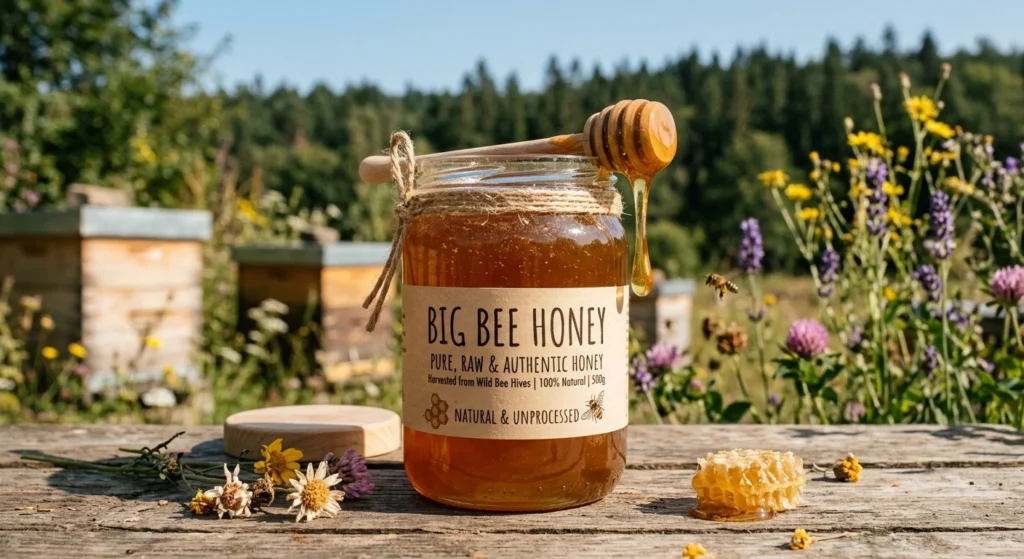
Honey has been collected by humans for thousands of years, but not all honey reaches our table through the same process. Wild Honey vs Beekeeping Honey is an important distinction when understanding how honey is produced, harvested, and brought to consumers. Some honey comes from naturally established or wild bee colonies, while other honey is produced by bees living in managed hives maintained by beekeepers.
So, what is the actual difference between wild honey and beekeeping honey? Does one taste better? Is wild honey always more natural? How do beekeepers manage bees, and does managing a colony change the honey?
In this guide, we explain the difference between wild-harvested honey and honey produced from managed bee colonies, including how the bees live, where they collect nectar, how honey is harvested, and why the final taste, colour and aroma can vary.
What Is Honey?
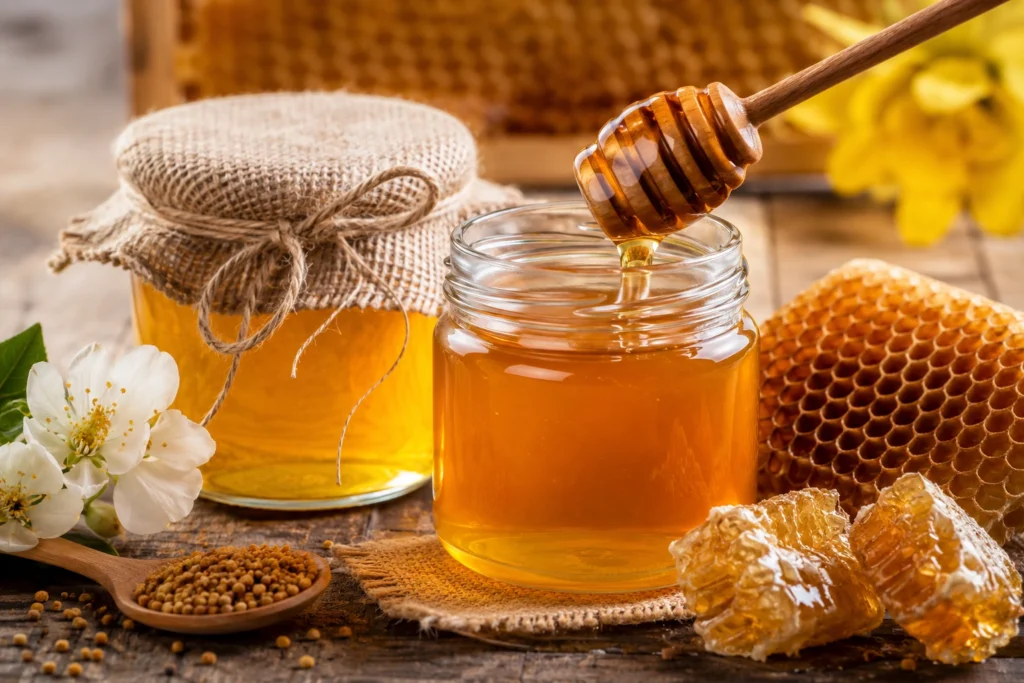
Honey is a natural sweet substance made by honeybees from plant nectar. Bees collect nectar from flowers and transform it inside the colony into honey through a natural process involving enzymes, evaporation and storage in honeycomb.
The plant source has a major influence on the final characteristics of honey. This is why honey from different flowers can have noticeably different flavours, aromas, colours and textures.
For example, honey produced predominantly from one floral source may have a distinctive character, while honey collected from many different plants may have a more complex or mixed flavour.
What Is Wild or Naturally Established Bee Honey?
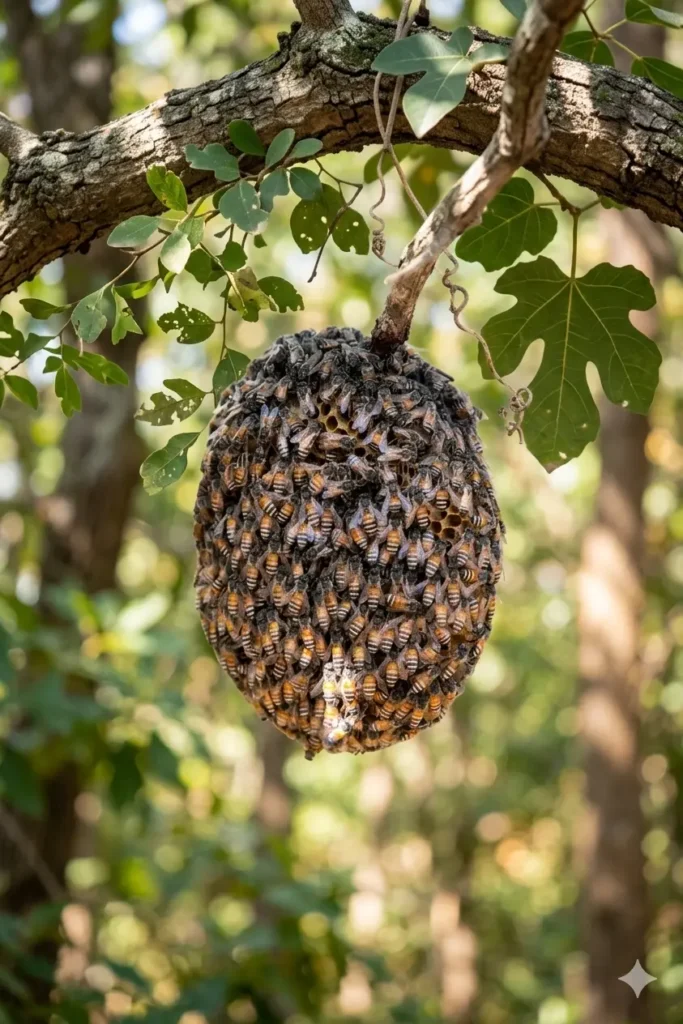
Wild honey generally refers to honey produced by bees living in a naturally established colony rather than a colony maintained in a conventional managed hive.
Wild colonies may establish nests in places such as:
- Hollow trees
- Rock crevices
- Forest areas
- Cliffs
- Natural cavities
- Other sheltered locations
The bees choose their nesting location themselves and forage according to the flowers and plants available in their natural surroundings.
FAO distinguishes beekeeping from honey-hunting: beekeeping involves managing bee colonies, while honey-hunting involves obtaining honey from wild nests.
Does Wild Honey Come From Different Flowers?
It can.
A naturally established colony may forage across a wide surrounding area, depending on the local vegetation, season and availability of flowering plants.
As a result, wild honey can be multifloral, although its exact floral profile depends on the environment where the colony lives.
The flowers available to bees can influence the honey’s:
- Taste
- Aroma
- Colour
- Consistency
- Natural characteristics
This is one reason honey from different regions can taste very different.
What Is Beekeeping Honey?
Beekeeping honey comes from bee colonies that are managed by a beekeeper.
The bees themselves still make the honey naturally. The beekeeper does not manufacture the honey or teach bees how to make it.
Instead, the beekeeper provides and manages a suitable environment in which the colony can live and produce honey.
Modern beekeeping may involve:
- Providing suitable hives
- Monitoring colony health
- Managing the queen and brood
- Controlling swarming
- Monitoring food availability
- Protecting colonies from pests and diseases
- Adding or removing honey supers when appropriate
- Harvesting mature honey
- Maintaining hive equipment
FAO describes beekeeping as the management of social bee colonies for honey and other products, while research shows that managed honey-bee colonies are an important part of modern honey production worldwide.
Do Beekeepers Train Bees to Make Honey?
No.
This is an important misconception.
Bees do not need to be trained to make honey.
Honey production is part of the natural behaviour of honeybees. Bees collect nectar from plants, bring it back to the colony and process it into honey for storage.
The beekeeper’s role is primarily to manage the colony and provide an appropriate environment, rather than teach the bees how to make honey.
In other words:
The bee makes the honey. The beekeeper manages the bees and the hive.
How Do Bees Make Honey?
The process begins when worker bees visit flowers.
1. Bees collect nectar
Worker bees fly from flower to flower and collect nectar.
2. Nectar is carried back to the colony
The collected nectar is transported back to the nest or hive.
3. Bees process the nectar
Enzymatic activity and repeated handling help transform nectar into honey.
4. Water is reduced
Bees help reduce the water content of the nectar through natural evaporation and ventilation.
5. Honey is stored in honeycomb
Once the honey reaches an appropriate condition, bees store it in the wax cells of the honeycomb.
6. Bees seal the honey
The bees can cover mature honey with a thin wax cap, helping preserve the stored food.
This basic process occurs whether the colony lives in a natural location or a managed hive.
Wild Honey vs Beekeeping Honey: The Main Difference
The biggest difference is not that one is made by bees and the other is made by humans.
Both are made by bees.
The major difference is where the colony lives and how humans interact with it.
| Feature | Wild / Naturally Established Honey | Beekeeping Honey |
|---|---|---|
| Bee colony | Naturally established | Managed by beekeeper |
| Hive location | Natural environment | Man-made or managed hive |
| Bee management | Little or no routine management | Regular colony management |
| Nectar source | Depends on natural surroundings | Depends on available forage and beekeeper’s location |
| Floral diversity | Often naturally mixed | Can be mixed or intentionally located near specific floral sources |
| Harvesting | Often more challenging | More controlled |
| Production | Usually less predictable | Generally easier to manage |
| Taste | Depends strongly on local flowers | Depends strongly on floral source |
| Colour | Naturally variable | Naturally variable |
| Aroma | Depends on plants and environment | Depends on plants and environment |
Does Wild Honey Taste Different?
It can, but there is no single “wild honey taste.”
The taste of honey is strongly influenced by the plants from which bees collect nectar.
Wild honey may have a distinctive flavour when bees forage in a diverse natural environment. Depending on the plants available, it may be:
- Floral
- Rich
- Woody
- Herbal
- Mild
- Strong
- Earthy
- Fruity
However, these characteristics cannot be guaranteed for every wild honey.
Two wild honeys from different forests can taste completely different because the bees may have access to different flowers.
Does Beekeeping Honey Taste Different?
It can also vary significantly.
Beekeeping does not automatically create one particular flavour.
For example, if managed bees forage predominantly from one floral source, the resulting honey may have a recognizable floral character. If they forage from many different plants, the honey can have a multifloral profile.
The USDA notes that honey’s flavour and aroma are evaluated in relation to its predominant floral source.
So, when comparing honey, floral source can be more important to taste than simply whether the bees were wild or managed.
Is Wild Honey More Natural?
Wild honey can be described as coming from a naturally established bee colony, but “natural” should not automatically be treated as a scientific measure of quality.
A honey’s quality can depend on several factors, including:
- Floral source
- Bee species
- Harvesting practices
- Moisture
- Storage
- Processing
- Cleanliness
- Handling
- Temperature exposure
Therefore, it would be inaccurate to say that every wild honey is automatically superior to every beekeeping honey.
The better question is:
Where did the honey come from, what plants did the bees forage on, and how was the honey harvested and handled?
Why Can Wild Honey Be More Difficult to Harvest?
A managed hive is designed to make colony inspection and honey harvesting more practical.
A wild colony, on the other hand, may establish itself in a tree, rock cavity or another difficult-to-access location.
FAO notes that honey-hunting from wild nests differs from beekeeping because beekeeping encourages bees to nest in human-made hives, making honey production and collection more convenient.
This means wild honey harvesting can require greater knowledge of the local environment and careful handling of the colony.
What About the Bees?
This is another major difference.
A beekeeper can monitor a managed colony and take steps to support its health and survival.
Wild colonies live without routine human management and must respond to their natural environment.
Recent research comparing wild and managed honeybee populations has found measurable biological differences between the two groups, including differences in their gut microbial communities. This research does not, however, mean that wild honey is automatically healthier for humans.
That distinction is important.
Differences between wild and managed bees do not automatically translate into differences in the health benefits of the honey.
What Makes ZKKS Honey Different?
At ZKKS HONEY, our focus is on honey from naturally established/wild bee colonies, rather than presenting ordinary managed-apiary honey as wild honey.
Our approach is centred on preserving the natural character of honey produced by bees in their natural environment.
This means the honey’s character can reflect the environment in which the bees forage, including the plants and flowers available to them.
Because floral sources influence honey’s colour, aroma, flavour and consistency, naturally sourced honey can have a distinctive regional character.
ZKKS HONEY brings naturally established/wild bee honey to customers who appreciate honey with a connection to its natural source.
Important: If ZKKS HONEY’s exact harvesting, filtering, heating, testing or extraction process differs by product, those details should be added to the article only according to your actual process.
Wild Honey vs Beekeeping Honey: Which One Is Better?
There is no universal answer.
If you prefer honey associated with naturally established bee colonies and natural foraging environments, wild honey may be the type you are looking for.
If you prefer consistent supply, controlled harvesting and predictable production, honey from managed colonies may be more suitable.
Neither category should automatically be considered superior simply because of the label.
The most important factors include authenticity, floral source, harvesting practices, handling and product quality.
Final Thoughts
Wild honey and beekeeping honey both begin with the same remarkable process: bees collecting nectar from plants and transforming it into honey.
The key difference is the relationship between the bees and humans.
With wild honey, the colony establishes itself naturally and honey is collected from its natural environment. With beekeeping, humans provide and manage a hive while allowing the bees to carry out their natural honey-making behaviour.
The final taste and aroma are influenced strongly by the plants available to the bees, which is why honey from different environments can have completely different characteristics.
For those looking for honey connected to naturally established bee colonies, ZKKS HONEY offers naturally sourced/wild bee honey, allowing customers to experience honey associated with a natural foraging environment.
Explore More About Pure Honey
Continue exploring our collection of helpful honey guides to learn more about choosing, using, storing, and enjoying pure natural honey.
-
10 Signs You’re Buying Fake Honey
Learn how to identify common warning signs before purchasing honey. -
How to Test if Your Honey is 100% Pure and Raw at Home
Discover simple ways to better understand the characteristics of genuine honey. -
Raw Honey vs Processed Honey: Which One Is Better?
Compare the differences between raw and processed honey. -
How to Use Honey Every Day: 15 Healthy Ideas
Learn about proper storage, shelf life, and crystallization. -
The Sunnah of Raw Honey: Healing and Health Benefits in Islamic Tradition
Explore the significance of honey in Islamic teachings and tradition.