Introduction
Honey has been treasured for thousands of years as one of nature’s purest and most beneficial foods. It is mentioned in the Holy Quran as a source of healing, and it has been valued in many cultures for its natural sweetness, nutritional value, and medicinal properties. Today, millions of people choose raw honey for its rich taste and potential health benefits. Knowing the signs of fake honey can help consumers make more informed decisions when buying honey.
Unfortunately, the increasing demand for honey has also led to the rise of fake and adulterated honey in many markets around the world. Some products are diluted with sugar syrup, corn syrup, or other sweeteners, while others are heavily processed until they lose many of the qualities that make raw honey special.
For the average buyer, it can be difficult to tell the difference between genuine raw honey and an imitation product. Attractive packaging and misleading labels often make fake honey appear authentic.
This guide explains ten practical signs that may help you identify fake honey and make informed purchasing decisions. While no single sign can guarantee authenticity, considering several of these factors together can help you choose higher-quality honey from reputable sources.
Why Fake Honey Exists
Producing genuine honey requires significant work from bees and beekeepers. Thousands of bees visit millions of flowers to produce just a small amount of honey. Because of this effort, authentic raw honey naturally costs more than many processed sweeteners.
To increase profits, some manufacturers may dilute honey with inexpensive sugar syrups or market processed honey in ways that make it appear more natural than it is. In other cases, imported honey may pass through several processing stages that remove pollen and alter its natural characteristics.
For consumers, understanding these practices is the first step toward making better purchasing decisions.
1. The Price Seems Too Good to Be True
Price alone does not determine quality, but it can be an important clue.
Raw honey requires:
- Healthy bee colonies
- Experienced beekeepers
- Seasonal harvesting
- Careful extraction
- Proper storage
All of these steps require time and effort. If you find honey being sold at a price that is significantly lower than similar products, it is worth asking why.
Very cheap honey may indicate:
- Added sugar syrup
- Artificial sweeteners
- Highly processed honey
- Low-quality imported blends
While bargains do exist, authentic raw honey generally reflects the cost of responsible beekeeping.
Buying Tip
Compare prices from several trusted local producers before making a purchase.
2. The Label Doesn’t Clearly State the Source
A trustworthy honey producer is usually transparent about where the honey comes from.
Look for labels that mention:
- Floral source (such as Sidr, Acacia, Clover, Wildflower)
- Country or region of origin
- Producer information
- Net weight
- Batch number
Be cautious if the label contains only vague terms such as:
- Pure Honey
- Natural Honey
- Premium Honey
without providing any additional details about its origin.
Reliable producers are generally proud to share information about their honey and the beekeeping practices behind it.
3. It Has an Artificial Flavor or Aroma
One of the easiest ways to judge honey is by using your senses.
Authentic raw honey often has a rich, floral aroma that varies depending on the flowers visited by the bees.
For example:
- Wildflower honey usually has a complex floral fragrance.
- Acacia honey tends to have a mild, delicate aroma.
- Forest honey may have deeper, earthy notes.
If the honey smells like plain sugar syrup or has an unusually artificial scent, it may not be as natural as advertised.
Similarly, genuine honey offers a balanced sweetness with subtle flavors, while fake honey often tastes like simple sugar without any depth.
Although taste alone cannot confirm authenticity, it can provide useful clues when combined with other signs.
4. It Never Crystallizes (or Crystallizes Unnaturally)
One of the biggest myths about honey is that crystallized honey is fake. In reality, crystallization is often a natural process that occurs in genuine raw honey.
Raw honey contains natural sugars, primarily glucose and fructose. Over time, the glucose may separate from the liquid and form tiny crystals. This process is completely natural and does not mean the honey has gone bad.
The speed of crystallization depends on several factors, including:
- The floral source of the honey
- Natural glucose content
- Storage temperature
- Moisture content
Some varieties, such as clover honey, crystallize relatively quickly, while others, like acacia honey, may remain liquid for much longer.
However, be cautious if honey develops unusual layers, strange sediment, or an odd consistency that doesn’t resemble natural crystallization. These may indicate poor storage conditions or product quality issues.
Buying Tip
If your raw honey crystallizes naturally, simply place the sealed jar in warm (not boiling) water until the crystals dissolve. Avoid overheating, as excessive heat may reduce some of the natural qualities of raw honey.
5. The Texture Feels Unusual
Texture can reveal a lot about the quality of honey.
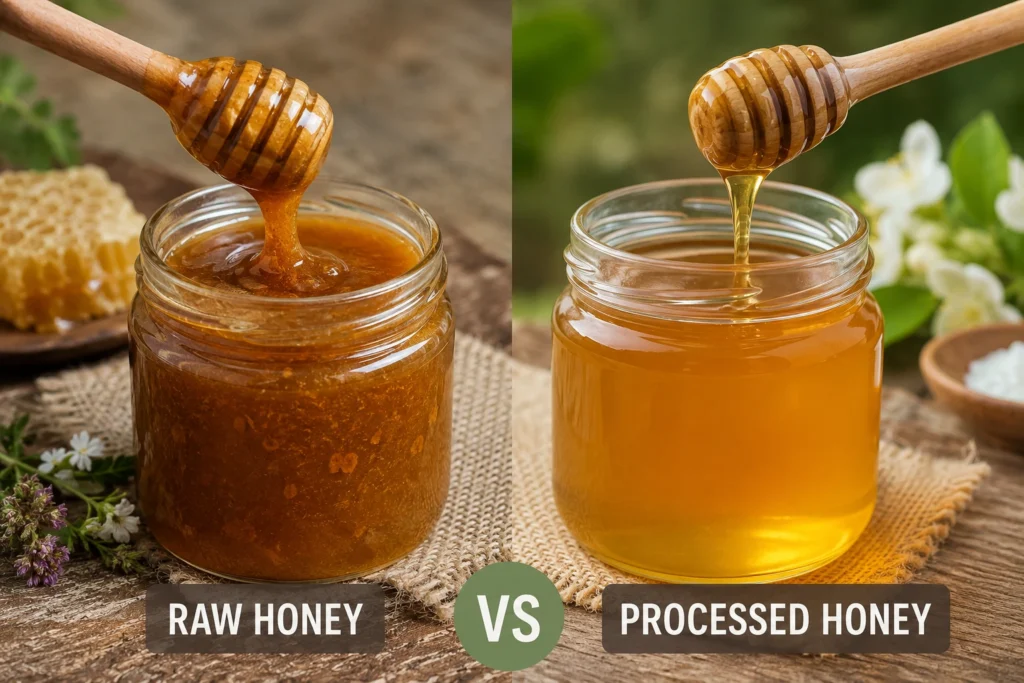
Authentic raw honey usually has a smooth, thick consistency. Depending on the variety, it may pour slowly from a spoon and feel rich rather than watery.
When examining honey, pay attention to its texture.
A high-quality raw honey often:
- Flows slowly
- Feels smooth and dense
- Leaves a light coating on the spoon
- Has a consistent appearance
On the other hand, lower-quality or adulterated honey may:
- Be unusually thin or watery
- Separate into different layers
- Feel sticky like syrup rather than natural honey
- Contain unexpected foam or bubbles after long storage
Keep in mind that different floral varieties naturally have different textures, so texture alone should never be used as the only indicator.
Buying Tip
Purchase honey from trusted beekeepers or reputable brands that explain how their honey is harvested and processed.
6. Suspicious Ingredients on the Label
When buying packaged honey, always take a few moments to read the ingredient label carefully.
Pure honey should ideally contain only one ingredient:
Ingredients: 100% Honey
If you notice additional sweeteners or vague ingredient descriptions, it’s worth asking questions before purchasing.
Be cautious of products that mention ingredients such as:
- Corn syrup
- Glucose syrup
- Sugar syrup
- Artificial sweeteners
- Flavorings
- Added colors
Some products are marketed as “Honey Blend” or “Honey Syrup,” which may contain genuine honey mixed with other sweeteners.
Always read both the front and back labels, as the marketing claims on the front may not tell the complete story.
Buying Tip
The shorter and clearer the ingredient list, the better. Genuine honey generally doesn’t need extra ingredients.
7. No Information About the Producer
Transparency is a strong sign of quality.
Reputable honey producers are usually proud to share information about their beekeeping practices and product origins.
Look for details such as:
- Company or beekeeper name
- Contact information
- Country or region of origin
- Batch or lot number
- Production or packing details
These details help build confidence and make the product more traceable.
If a jar provides almost no information about who produced it or where it came from, it may be more difficult to verify its authenticity.
Many trusted beekeepers also provide educational information about their bees, harvesting methods, or the flowers their bees forage on.
Buying Tip
Whenever possible, purchase honey from businesses that are transparent about their sourcing and willing to answer customer questions.
8. Misleading Marketing Claims
Modern packaging can sometimes make products appear more natural than they really are.
Words such as:
- Premium
- Natural
- Farm Fresh
- Organic Style
- Pure Taste
may sound impressive, but they don’t always provide meaningful information about the honey itself.
Instead of relying only on attractive marketing, look for factual details such as:
- Floral source
- Harvest location
- Processing method
- Ingredient list
- Producer information
Some labels may use images of bees, flowers, or honeycombs to create an impression of authenticity without providing evidence about the product’s quality.
As a consumer, it’s always wise to read beyond the front label and evaluate the complete product information.
Buying Tip
Marketing claims should support genuine product information—not replace it.
Explore More About Pure Honey
Continue exploring our collection of helpful honey guides to learn more about choosing, using, storing, and enjoying pure natural honey.
-
10 Signs You’re Buying Fake Honey
Learn how to identify common warning signs before purchasing honey. -
How to Test if Your Honey is 100% Pure and Raw at Home
Discover simple ways to better understand the characteristics of genuine honey. -
Raw Honey vs Processed Honey: Which One Is Better?
Compare the differences between raw and processed honey. -
How to Use Honey Every Day: 15 Healthy Ideas
Learn about proper storage, shelf life, and crystallization. -
The Sunnah of Raw Honey: Healing and Health Benefits in Islamic Tradition
Explore the significance of honey in Islamic teachings and tradition.
⚠️ Official Authorities on Honey Adulteration & Testing
US FDA (Honey Adulteration & Safety)
Adulteration AlertOfficial warnings on ultra-filtered honey, added corn or rice syrups, and regulatory standards for pure honey labeling.
Intertek / NMR Testing (Honey Profiling)
Lab AnalysisScientific details on Nuclear Magnetic Resonance (NMR) testing and C3/C4 sugar screening used to detect fake honey.
International Honey Commission (IHC)
Global CriteriaEstablished international criteria for electrical conductivity, diastase activity, and pollen analysis to verify genuine honey.