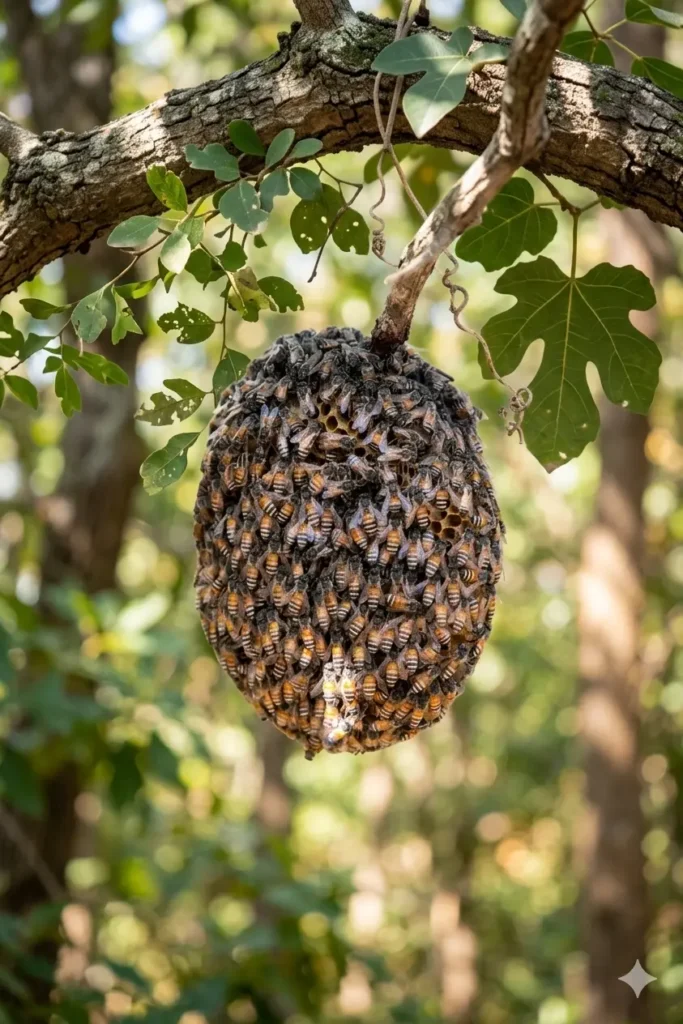
Wild honey is produced by bees living in naturally established colonies rather than colonies deliberately placed and maintained in conventional beekeeping hives. These bees may establish their nests in trees, cliffs, forests, rock formations, or other natural environments.
Unlike commercial honey production, wild honey collection often depends on the natural movement of bee colonies, flowering seasons, weather, forests, and the availability of nectar-producing plants.
One important point is that there is no reliable global ranking showing exactly which country produces the most wild honey. International agricultural statistics generally report total honey production rather than separating honey collected from wild colonies from honey produced by managed beekeeping. FAO also notes that honey production data can underestimate production in countries where informal collection and traditional systems are common.
However, several countries are particularly well known for traditional wild honey harvesting and naturally established bee colonies.
1. India – One of the Major Regions for Wild Honey Collection
India is one of the most important countries to discuss when talking about wild honey.
FAO has documented that colonies of wild-nesting bees are a major source of honey in many areas of India. Traditional honey hunters may climb trees, reach naturally established colonies, remove honeycombs, and lower them to the ground.
The giant honey bee, Apis dorsata, is particularly important for forest honey. It naturally builds large exposed combs and is not managed in the same way as conventional hive bees.
Historical FAO material estimated that thousands of tonnes of wild honey were collected by honey hunters in India, although these figures should not be treated as a current nationwide total because wild-honey collection is difficult to measure and data collection methods have changed over time.
This makes India an important example of a country where natural bee colonies and traditional honey hunting have long contributed to honey production.
2. Nepal – Famous for Himalayan Wild Cliff Honey
Nepal is particularly famous for its wild Himalayan cliff honey.
One of the country’s remarkable wild bees is Apis laboriosa, commonly known as the Himalayan cliff bee. Nepal’s government Apiculture Development Centre reports that this bee occurs at roughly 1,200–3,000 metres above sea level and builds large single combs on cliffs.
These colonies are naturally established and can be found on steep Himalayan cliffs.
Traditional honey hunters have developed techniques to reach these difficult colonies, making Nepal one of the world’s best-known locations for traditional wild honey harvesting.
Nepal also has other wild honey bees, including Apis dorsata and Apis florea, while other species such as Apis cerana and Apis mellifera are used in managed beekeeping.
Himalayan Cliff Honey
The remarkable thing about Himalayan cliff honey is not simply that it is “wild.” Its characteristics can also be influenced by:
- altitude
- flowering plants
- season
- climate
- surrounding forests
- bee species
- harvesting location
Therefore, wild honey from one Himalayan region may taste very different from wild honey collected somewhere else.
3. Bangladesh – Wild Honey from the Sundarbans
Bangladesh is another important country for natural forest honey.
The Sundarbans, the world’s largest contiguous mangrove forest, has a long tradition of wild honey collection. FAO sources document honey hunting in the Sundarbans, where the giant honey bee Apis dorsata establishes colonies in the forest.
Traditional honey collectors, often known as Mowalis, enter the forest during the permitted harvesting season.
The bees collect nectar from important mangrove plants, including:
- Aegiceras corniculatum
- Ceriops decandra
- Sonneratia apetala
Historical FAO data estimated the Sundarbans honey harvest in Bangladesh at approximately 130–185 tonnes annually during the period documented. These figures are historical rather than a current production estimate.
Because the Sundarbans is a protected forest ecosystem, honey collection is regulated and requires permission from the relevant forestry authorities.
4. Sundarbans in India – Another Important Wild Honey Region
The Sundarbans is shared by Bangladesh and India, so wild honey is also traditionally collected on the Indian side.
FAO documentation describes wild Apis dorsata honey collection in the Indian Sundarbans. Traditional collectors obtain permits, and honey collection is regulated within designated areas.
This region is particularly interesting because the honey is closely connected with the natural mangrove ecosystem.
The bees forage on naturally occurring flowering plants, meaning the surrounding environment can strongly influence the honey’s aroma, color and flavor.
5. Tanzania and Other African Countries
Wild and forest-based honey production is also important in several African countries.
Tanzania has a particularly strong tradition of forest-based honey production. FAO documentation describes traditional beekeepers making their livelihoods from forests, with hives placed in carefully selected trees. Honey is considered one of Tanzania’s important forest products.
However, there is an important distinction:
Forest honey does not always mean wild honey.
A beekeeper may place a hive inside a forest and allow bees to forage naturally. The resulting honey is forest-sourced but comes from a managed hive, not necessarily a naturally established wild colony.
This distinction is important when comparing countries and honey types.
Why Are Some Countries Rich in Wild Honey?
Wild honey is strongly connected to the natural environment.
Countries with large forests, mountains, grasslands, mangroves and diverse flowering plants can provide excellent habitats for wild bee colonies.
Several factors are particularly important:
1. Abundant flowering plants
Bees need nectar and pollen. Areas with diverse vegetation can provide food throughout different seasons.
2. Natural nesting locations
Wild bees need suitable places to establish colonies.
These may include:
- tree branches
- tree cavities
- cliffs
- rock formations
- forest structures
3. Suitable climate
Temperature, rainfall and seasonal changes influence bee activity and flowering.
4. Large natural ecosystems
Forests and other relatively natural landscapes can provide extensive foraging areas.
Which Wild Bees Produce Honey?
Several honey bee species are associated with wild honey collection.
Apis dorsata
The giant honey bee is an important wild honey bee across parts of South and Southeast Asia.
It commonly builds large exposed single-comb colonies.
Apis laboriosa
This is the famous Himalayan cliff bee associated particularly with Nepal and Himalayan regions.
It establishes colonies on steep cliffs and is an important source of traditional cliff honey.
Apis florea
This is a smaller honey bee that can establish small exposed colonies in vegetation. Nepal’s Apiculture Development Centre reports relatively low honey production per colony compared with larger wild bee species.
Does the Country Determine the Taste of Wild Honey?
Not by itself.
The taste of wild honey is influenced by the plants from which bees collect nectar.
This is why honey from different regions can have completely different:
- sweetness
- aroma
- color
- texture
- floral character
Even within the same country, honey from a mountain forest may taste completely different from honey collected in a tropical forest or mangrove ecosystem.
FAO notes that honey’s color, aroma and consistency depend strongly on the flowers bees forage on.
Is Wild Honey More Natural Than Beekeeper Honey?
The distinction is primarily about where and how the bee colony lives.
Wild honey comes from colonies that establish themselves naturally.
Beekeeper honey comes from colonies maintained in managed hives.
This does not automatically mean that every wild honey is better or healthier than every beekeeper honey. Honey quality depends on the floral source, purity, harvesting practices, handling and storage.
That distinction is important for consumers who want to understand exactly what they are buying.
What Makes Naturally Established Wild Honey Special?
Naturally established colonies interact directly with their surrounding environment.
The bees decide:
- where to establish their colony
- which plants to forage
- when to relocate or migrate
- how much honey to store
The resulting honey can therefore reflect the ecological characteristics of its region.
For people interested in authentic natural honey, this connection between bee, environment and floral source is one of the most interesting characteristics of wild honey.
ZKKS HONEY and Naturally Established Wild Honey
At ZKKS HONEY, our focus includes honey sourced from naturally established/wild bee colonies.
Rather than describing wild honey simply as “better,” the important distinction is its natural origin. The bees establish their colonies in their natural environment and forage according to the flowers and plants available around them.
Because natural conditions vary, wild honey can naturally differ in:
- color
- aroma
- flavor
- texture
- seasonal characteristics
This natural variation is part of what makes naturally sourced honey unique.
So, Which Country Has the Most Wild Honey?
There is no scientifically reliable global ranking for this specific question.
Countries such as India, Nepal and Bangladesh have strong documented traditions of harvesting honey from naturally established wild bee colonies, while several African countries also have important forest and traditional honey systems.
It is important not to take a country’s total honey production ranking and call it a ranking of wild honey. For example, current global production statistics place China, India, Türkiye, Ethiopia and Iran among major honey producers, but those figures include honey from managed beekeeping and do not tell us how much came specifically from wild colonies.
The most accurate conclusion is therefore: there is no verified worldwide “number one” country for wild honey production, but India, Nepal and Bangladesh are among the best-documented regions for traditional harvesting of honey from naturally established bee colonies.
Explore More About Pure Honey
Continue exploring our collection of helpful honey guides to learn more about choosing, using, storing, and enjoying pure natural honey.
-
10 Signs You’re Buying Fake Honey
Learn how to identify common warning signs before purchasing honey. -
How to Test if Your Honey is 100% Pure and Raw at Home
Discover simple ways to better understand the characteristics of genuine honey. -
Raw Honey vs Processed Honey: Which One Is Better?
Compare the differences between raw and processed honey. -
How to Use Honey Every Day: 15 Healthy Ideas
Learn about proper storage, shelf life, and crystallization. -
The Sunnah of Raw Honey: Healing and Health Benefits in Islamic Tradition
Explore the significance of honey in Islamic teachings and tradition.
🍯 External Authorities on Wild Honey Harvesting & Ecology
FAO (Non-Wood Forest Products)
Official United Nations documentation on wild bee harvesting, honey hunting traditions, and forest ecosystems worldwide.
UNESCO World Heritage (Sundarbans)
Insights into traditional honey collectors (Mawalis) in the mangrove forests of Bangladesh and India.
National Geographic (Himalayan Honey Hunters)
Documentary features on cliff honey hunting techniques in Nepal and giant Asian honey bee (Apis dorsata) colonies.