Understanding Small Bee Honey
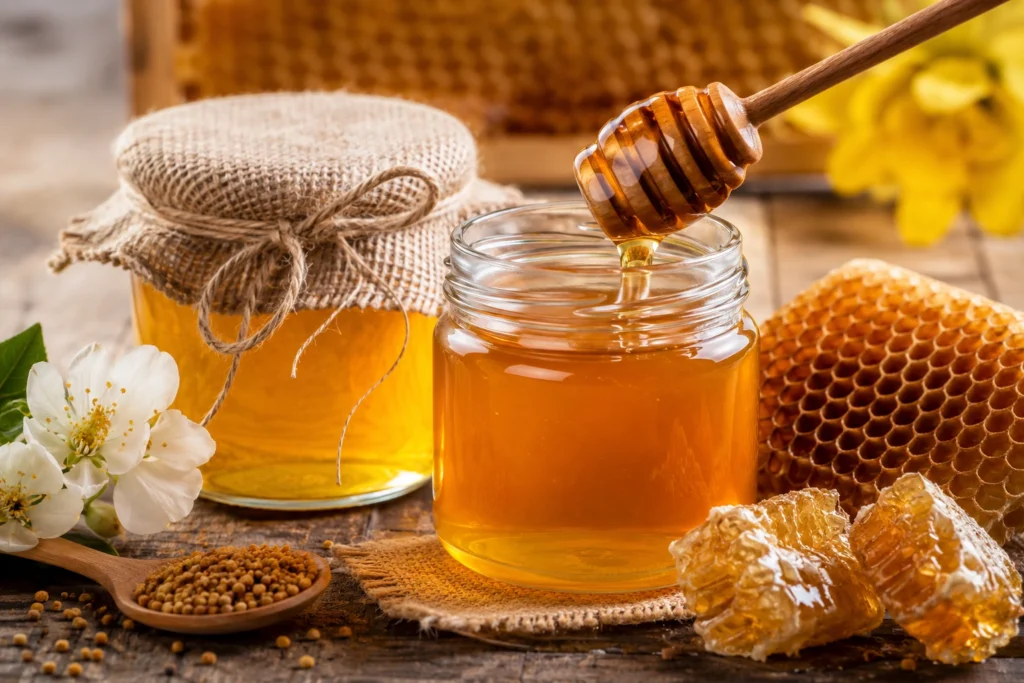
Honey is generally classified by the species of bee that produces it. Small Bee Honey, widely known in South Asia as Choti Makhi Ka Shahad, is crafted by Apis florea—a dwarf honeybee species native to wild tropical and subtropical environments.
Unlike commercial honeybees (Apis mellifera) which are domesticated and reared inside controlled wooden boxes on farms, small bees are strictly wild. They build single-comb hives in open spaces, typically hidden deep within wild forest canopies, thorny bushes, and remote mountain cliffs. Because these hives are small and exposed to the elements, harvesting this honey requires immense patience and traditional tracking skills, making it one of the rarest liquid golds in the world.
The Botanical Secret Behind Its Superiority
The biological nature of the small bee gives its honey a distinct edge over regular variants:
- Access to Deep Nectar: Due to their miniature size, these bees can penetrate small, delicate wildflowers and rare medicinal herbs that larger bees cannot access.
- Biodiverse Foraging: Small bees do not forage on monoculture crop fields. Their nectar comes from a vast, diverse range of wild forest flora, which naturally infuses the honey with a complex blend of phytochemicals.
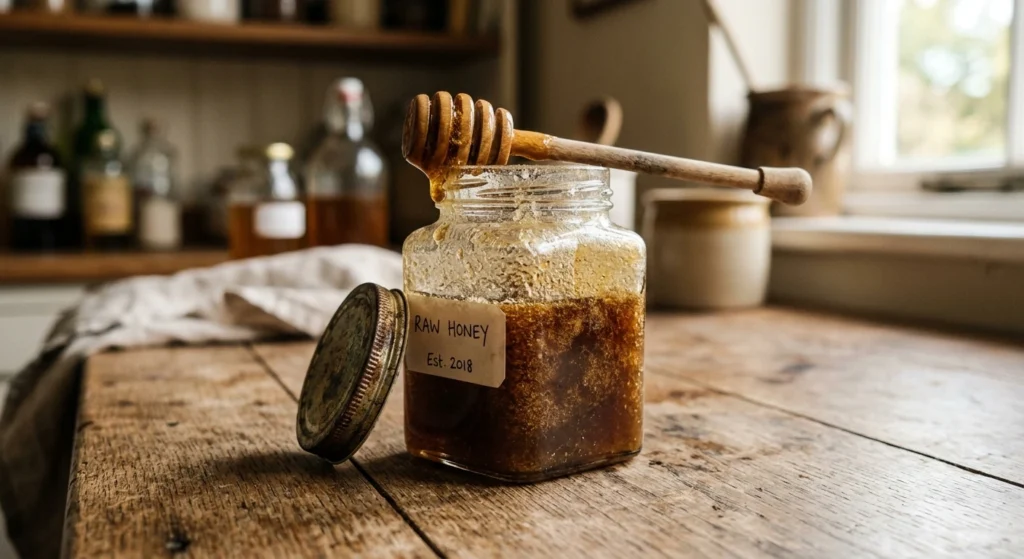
- Low Water Content: Wild small bee honey is naturally cured by the wind and sun in open hives, resulting in a thick, dense texture with a lower moisture percentage, which helps lock in its natural shelf life and potency.
Deep Medicinal Values and Health Benefits
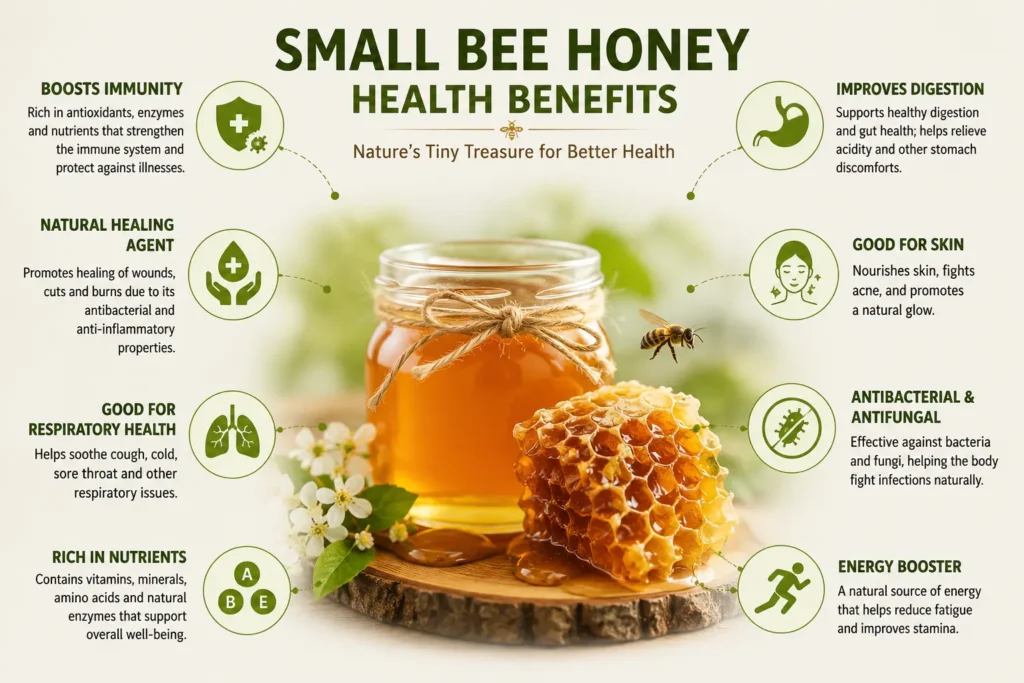
For centuries, traditional Eastern medicine (including Ayurveda and Unani systems) has regarded Choti Makhi honey not as a kitchen sweetener, but as a therapeutic drug. Modern science now backs many of these traditional claims:
- Unrivaled Antioxidant Profile: Small bee honey contains exceptionally high concentrations of phenolic compounds and flavonoids. These active compounds scavenge free radicals in the human body, reducing cellular oxidative stress and slowing down aging markers.
- Natural Antibiotic and Antimicrobial Agent: Due to high enzymatic activity and natural hydrogen peroxide production, this honey serves as a potent inhibitor against various bacterial strains, making it excellent for dressing wounds and fighting internal infections.
- Respiratory Therapeutics: It acts as a natural demulcent, coating the inner lining of the throat. It is widely used to calm persistent spasmodic coughs, reduce bronchial inflammation, and ease chest congestion.
- Metabolic and Gut Regulation: Unlike refined sugars, the natural fructose and glucose in small bee honey are easily metabolized without causing sharp insulin spikes. It also acts as a powerful prebiotic, feeding beneficial gut bacteria and improving overall digestive tract health.
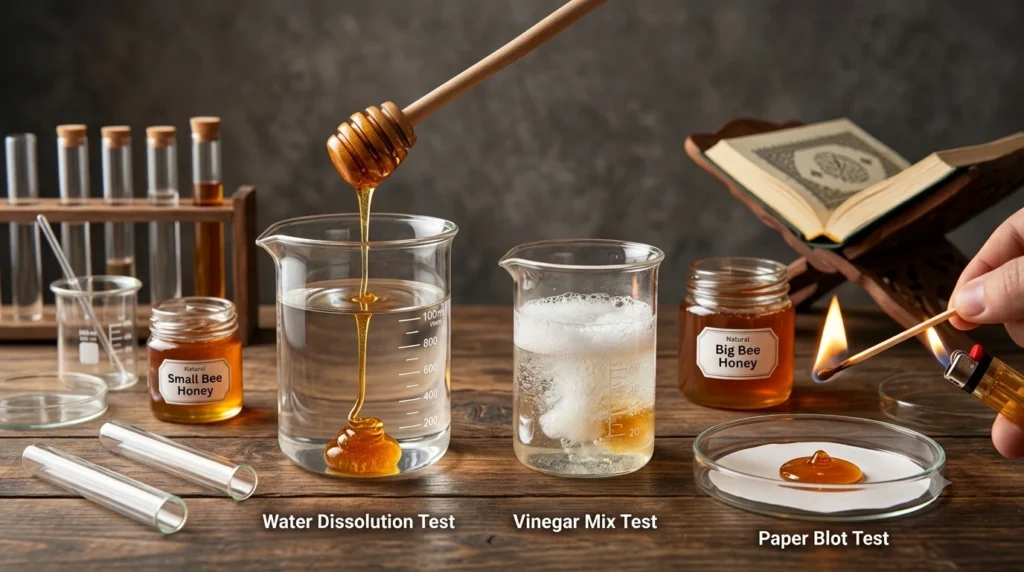
Physical Characteristics: How to Identify Genuine Small Bee Honey
Because of its rare nature, understanding its physical properties is crucial for identification:
| Property | Typical Characteristics of Small Bee Honey |
| Color | Ranges from a rich golden-amber to a very dark brown, depending on the forest season and floral source. |
| Viscosity | Naturally thick and slow-pouring, yet smooth and completely free from coarse sugar crystals when fresh. |
| Aroma | Intensely aromatic with a strong, distinct smell of wild wood, crushed flora, and subtle herbal undertones. |
| Taste Profile | Deeply sweet, followed immediately by a complex, slightly tangy or sharp medicinal aftertaste. |
Seasonal Relevance: When is it Best to Consume?
Small bee honey can be consumed throughout the year, but its therapeutic properties and patterns of usage change with the seasons:
Peak Seasons: Winter & Autumn (The Gold Standard)
Immunity Wall: Winter and autumn are the absolute best times to maximize the use of Choti Makhi honey. Cold weather naturally lowers body temperature and challenges the immune system. Consuming it during these months creates an internal warming effect (natural thermodynamic response) that shields the body from seasonal chills.
Respiratory Shield: Since wild small bee honey is rich in natural pollen extracts from wild herbs, consuming it daily in winter prevents dry coughs, throat infections, and chest congestion before they even start.
Mild Seasons: Summer & Spring (The Moderation Phase)
Allergy Relief: Spring is notorious for pollen allergies. Consuming microscopic amounts of wild small bee honey during this transition helps the body build natural tolerance against airborne allergens.
Summer Moderation: Because Choti Makhi honey has a highly potent, warm nature (taseer), it is best consumed in moderation during extreme summer heat. Instead of taking it directly, dissolving a small teaspoon in room-temperature water or mixing it into morning smoothies helps regulate body heat while still providing essential nutrients.
Optimal Daily Timing: When to Take It for Maximum Benefit
To get the highest bio-availability of its live enzymes, timing matters just as much as the season:
- The Dawn Ritual (Empty Stomach): The absolute best time to consume small bee honey is early morning, at least 20–30 minutes before breakfast. When taken on an empty stomach with lukewarm water, the gut absorbs the natural glucose, antioxidants, and minerals instantly, providing clean cellular energy without digestive lag.
- Pre-Workout or Mid-Day Slump: Around 3:00 PM to 4:00 PM, when the body’s natural cortisol levels dip and fatigue sets in, a small spoonful of this honey acts as an immediate metabolic booster, sharpening mental alertness.
- The Nighttime Calm: Consuming a teaspoon of small bee honey in a warm cup of milk or chamomile tea before bed promotes better sleep. It helps regulate glycogen storage in the liver, preventing the brain from triggering a midnight waking response.
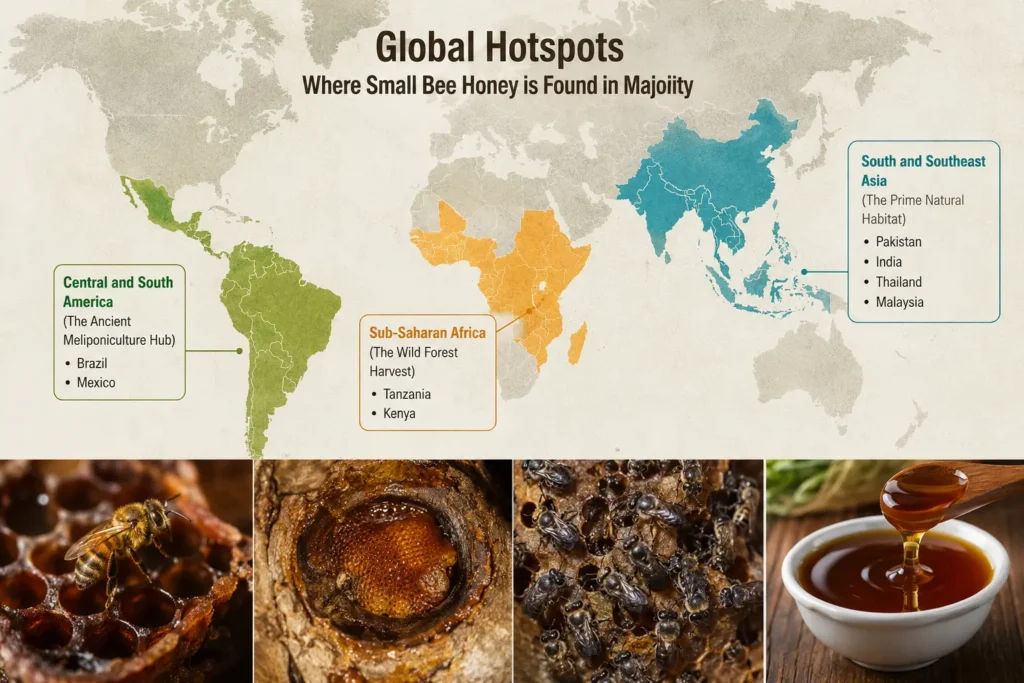
Global Hotspots: Where Small Bee Honey is Found in Majority
Small bee honey—primarily produced by stingless bees (such as the Meliponini tribe) and dwarf honey bees (Apis florea)—is highly sought after for its medicinal properties. Because these bees thrive in tropical, subtropical, and dense forest ecosystems, its production and majority usage are heavily concentrated in specific regions of the world.
1. South and Southeast Asia (The Prime Natural Habitat)
This region is the global stronghold for wild, small bee honey development, particularly from the dwarf honey bee (Apis florea).
- Pakistan: In the forested areas, sub-Himalayan tracks, and northwestern regions, small bees naturally build their single-comb hives on tree branches and bushes. It is heavily utilized in traditional local remedies.
- India: Found abundantly in the tropical forests of the Western Ghats and the central woodland regions, where tribal communities harvest it as a premium medicinal asset.
- Thailand and Malaysia: Home to a massive diversity of stingless bee species (Kelulut). In Malaysia, stingless bee honey is recognized as a national “superfood,” driving massive domestic consumption and specialized farming.
2. Central and South America (The Ancient Meliponiculture Hub)
Neotropical rainforests host the richest variety of stingless small bees on the planet.
- Brazil: The absolute leader in stingless bee diversity. Indigenous populations and modern organic markets utilize honey from bees like the Jataí and Uruçu for both gourmet culinary pieces and health treatments.
- Mexico (Yucatan Peninsula): The Maya civilization domesticated the Melipona beecheii (small stingless bee) centuries ago. Today, the Yucatan remains a major cultural and production hub where this rare honey is used as a sacred medicinal remedy.
3. Sub-Saharan Africa (The Wild Forest Harvest)
- Tanzania and Kenya: In East Africa’s dense forest pockets, small stingless bees (locally known as Melipona or Trigona) construct hidden hives in hollow trees and underground cavities. The honey is highly prized by local populations for its intense antibacterial properties and is used predominantly in traditional African medicine.
Why Consumption is Concentrated in These Regions
Unlike commercial honey bee species (Apis mellifera), small bees produce significantly less honey per hive annually. Consequently, the majority of this honey is consumed right where it is harvested:
- Medicinal Necessity: In these specific countries, small bee honey is treated more like a natural pharmacy than a sweetener—used for treating wounds, respiratory issues, and eye ailments.
- Local Foraging Secrets: Because the bees are small, they access tiny, deep-necked wild botanical flowers that larger bees cannot reach, imbuing the local honey with unique regional health benefits.
Explore More About Pure Honey
Continue exploring our collection of helpful honey guides to learn more about choosing, using, storing, and enjoying pure natural honey.
-
10 Signs You’re Buying Fake Honey
Learn how to identify common warning signs before purchasing honey. -
How to Test if Your Honey is 100% Pure and Raw at Home
Discover simple ways to better understand the characteristics of genuine honey. -
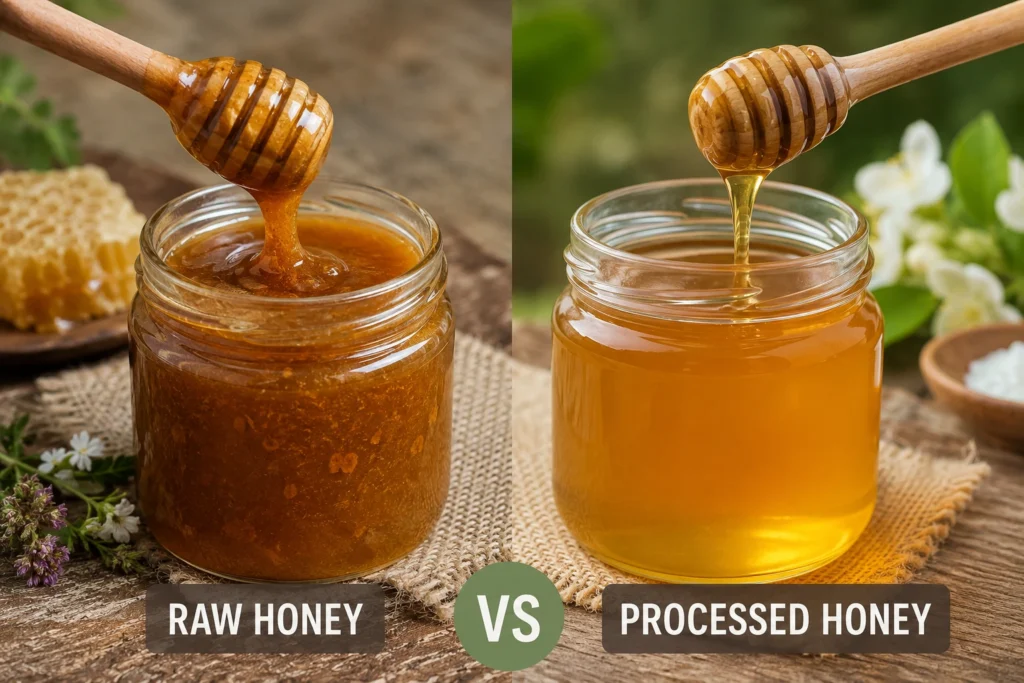
Raw Honey vs Processed Honey: Which One Is Better?
Compare the differences between raw and processed honey. -
How to Use Honey Every Day: 15 Healthy Ideas
Learn about proper storage, shelf life, and crystallization. -
The Sunnah of Raw Honey: Healing and Health Benefits in Islamic Tradition
Explore the significance of honey in Islamic teachings and tradition.
🐝 Scientific & Entomological Resources on Small Bee Species
FAO (Beekeeping & Apiculture Guidelines)
Global StandardsOfficial documentation on wild bee species management, non-wood forest product harvesting, and sustainable honey extraction.
NCBI (Dwarf Honey Bee Bio-Properties)
Scientific StudyPeer-reviewed research detailing the antimicrobial activity, phenolic content, and unique medicinal profile of small bee honey (*Apis florea*).
The World Bee Project (Pollinator Conservation)
Ecosystem & HabitatGlobal initiative insights on wild honeybee diversity, ecosystem protection, and preserving indigenous bee species across Asia.