When you buy a jar of honey, you aren’t just buying a sweetener; you are purchasing a thousands-of-years-old golden elixir celebrated for its incredible wellness benefits, rich history, and spiritual significance.
But as demand for pure honey rises, so does the presence of “fake” or adulterated honey on supermarket shelves. Many cheap commercial brands dilute their honey with high-fructose corn syrup (HFCS), rice syrup, cane sugar, or water to cut costs.
So, how can you tell if the jar in your pantry is the real deal?
Below, we break down the science of pure honey, guide you step-by-step through 7 easy home tests, and teach you how to read honey labels like a pro.
The Difference: Real vs. Fake Honey
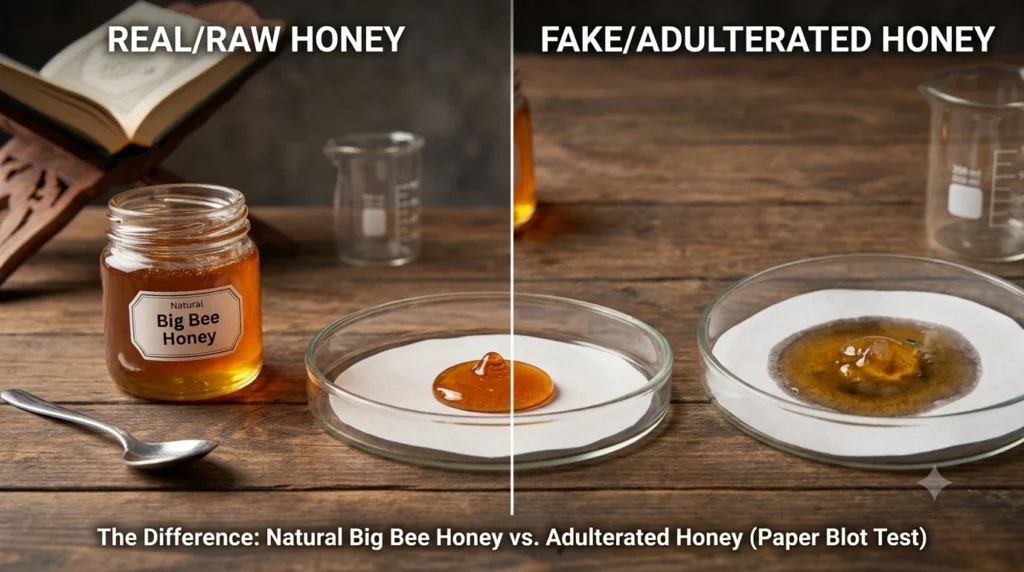
Before we test, we must understand what we are comparing.
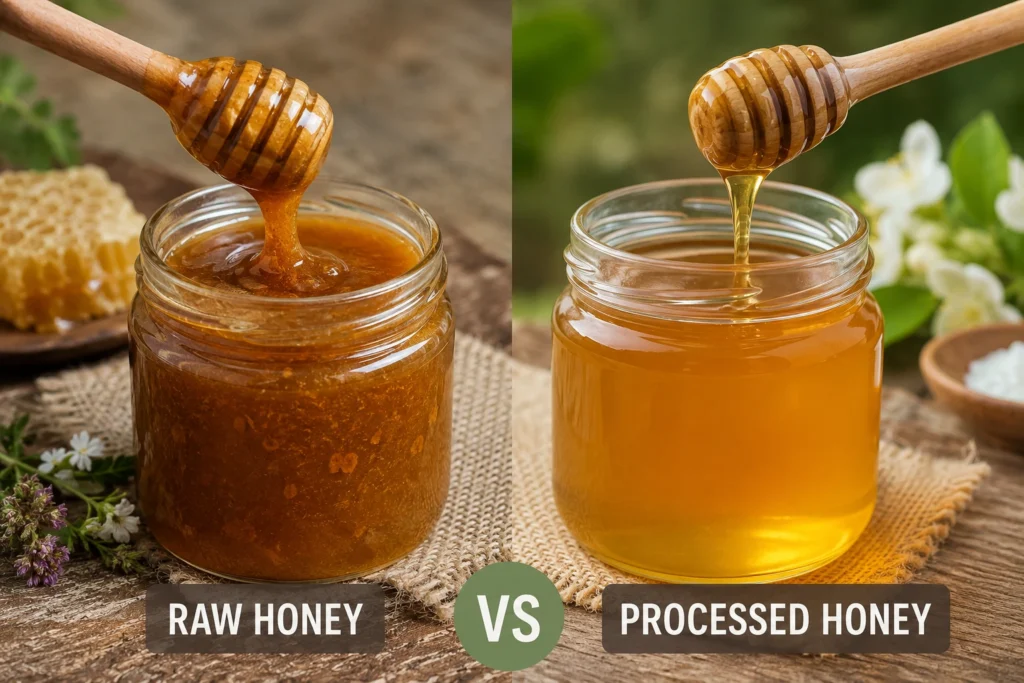
- 100% Pure, Raw Honey: This is honey exactly as the bees made it. It is extracted from the hive, strained gently to remove large debris (like wax), and bottled. It retains all its natural pollen, active enzymes, antioxidants, and trace nutrients.
- Fake (Adulterated) Honey: This is chemically altered or stretched. It might be ultra-filtered and pasteurized under high heat (which kills the healthy enzymes) or physically blended with cheap industrial sugar syrups.
7 Easy DIY Home Tests for Honey Purity
While no home test is a 100% replacement for a chemical laboratory, these simple kitchen experiments leverage the unique physical properties of real honey—specifically its high density, low moisture content, and chemical acidity—to help you spot obvious fakes.
1. The Water Dissolution Test (The Gold Standard)
Pure honey has a very low water content (usually under 20%) and a high natural density, making it highly resistant to dissolving quickly.
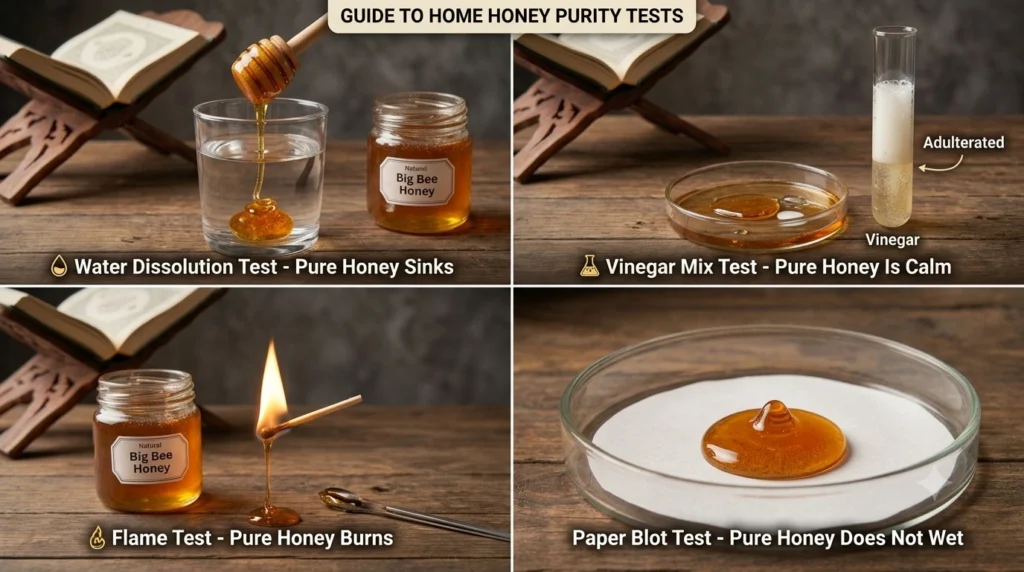
- How to do it: Fill a clear glass with room-temperature water. Gently drop a spoonful of honey into the water without stirring.
- The Result:
- Pure Honey: Will sink straight to the bottom and settle in a tight, solid lump.
- Fake Honey: Will immediately start dissolving, leaving cloudy sugar trails in the water as it sinks.
2. The Thumb (Viscosity) Test
Pure honey is incredibly sticky and viscous; it holds its shape because of its complex molecular structure.
- How to do it: Wash and dry your hands. Place a single drop of honey on your thumbnail. Hold your thumb flat for two minutes.
- The Result:
- Pure Honey: Will remain as a rounded, neat droplet on your thumb.
- Fake Honey: Is more watery and will quickly spread, run, or drip down your finger.
3. The Paper Blot Test (The Moisture Check)
Real raw honey has very little water. Added sugar syrups contain high amounts of moisture.
- How to do it: Place a drop of honey onto a piece of paper towel, white printing paper, or blotting paper. Leave it undisturbed for 5 to 10 minutes.
- The Result:
- Pure Honey: Will sit firmly on top of the paper without sinking in or wetting the paper.
- Fake Honey: Will quickly soak into the paper, leaving a visible, wet ring on the back of the sheet.
4. The Flame Test (Low Moisture Indicator)
Because of its exceptionally low moisture content, pure raw honey is actually flammable!
- How to do it: Dip the tip of a dry matchstick or cotton bud into your honey. Strike the matchstick or try to light the cotton bud with a lighter.
- The Result:
- Pure Honey: The matchstick will ignite and burn steadily despite the honey coating.
- Fake Honey: The matchstick will fail to light, or it will sputter and fizz because the excess water in the adulterated syrup dampens the wood.
5. The Bread Test
This is a fun, passive test that highlights how raw honey absorbs moisture rather than releasing it.
- How to do it: Spread a tablespoon of honey on a soft slice of fresh bread. Let it sit for 10 minutes.
- The Result:
- Pure Honey: The bread will actually harden and become firm or crisp where the honey was spread.
- Fake Honey: The bread will become soggy, wet, and mushy due to the extra water content in the syrup.
6. The Vinegar Mix (The Chemical Reaction Test)
Pure honey is naturally acidic. Fake honey sometimes contains chalk or other alkaline chemical stabilizers to mimic honey’s thick texture.
- How to do it: Mix 1 tablespoon of honey with 2 to 3 tablespoons of water in a small glass. Add 3 to 4 drops of white vinegar and stir.
- The Result:
- Pure Honey: The liquid will remain completely calm.
- Fake Honey: The solution will start foaming, fizzing, or bubbling.
7. The Natural Crystallization Test
This isn’t a 5-minute test, but rather an ongoing observation. Many consumers think granulated or crystallized honey has gone bad, but the exact opposite is true!
- How to do it: Leave your honey jar in a cool pantry or refrigerator for a few weeks.
- The Result:
- Pure Honey: Over time, the natural glucose in raw honey will bind to microscopic pollen particles, causing the honey to crystallize into a thick, creamy, opaque, and grainy spread.
- Fake Honey: Stays perfectly clear, runny, and liquid forever, because it has been ultra-filtered to strip out all pollen and contains artificial preservatives.
⚠️ The Crucial Caveat: Why DIY Tests Aren’t 100% Perfect
While these tests are incredibly helpful, modern “honey adulterators” have gotten highly sophisticated. They formulate syrups (like specialized rice syrup) that mimic the exact density and viscosity of real honey, meaning a high-tech fake might occasionally pass a water or thumb test.
Conversely, perfectly pure but “young” or high-moisture natural honeys might occasionally fail a flame test.
Because of this, the absolute best way to ensure you are eating 100% pure, raw honey is to buy from trusted, transparent, and direct sources.
How to Buy Real Honey with Confidence
When shopping, always bypass the cheap, generic plastic squeeze bottles and keep these guidelines in mind:
- Read the Ingredient List: The only ingredient should be “Honey” or “Raw Honey”. If you see “fructose,” “glucose,” “cane sugar,” or “syrup,” leave it on the shelf.
- Look for Sourcing Details: Reputable sellers list exactly where the honey was harvested (e.g., wild forests, specific regions) rather than vague terms like “blend of multiple countries”.
- Choose Glass Over Plastic: Premium, raw honey is almost always packaged in glass jars to protect its delicate enzyme structure and prevent plastic chemicals from leaching over time.
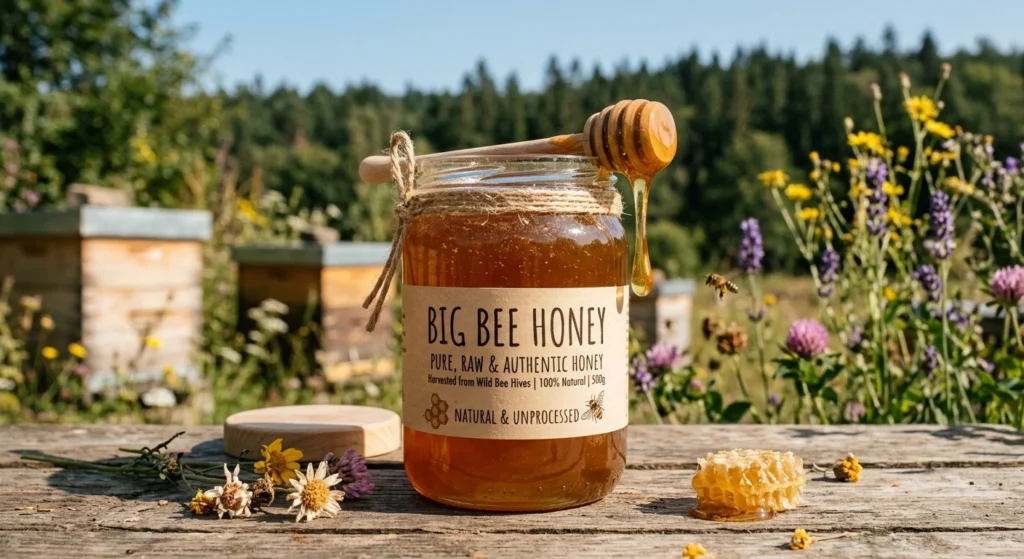
Our honey is ethically sourced, 100% raw, and completely unpasteurized. Discover our Pure Natural Small Bee Honey and Natural Big Bee Honey in our shop to taste nature exactly as the bees intended!
Common Signs of Fake Honey
- Unusually low price
- Artificially sweet taste
- No natural aroma
- Excessive foaming
- Misleading labels
Explore More About Pure Honey
Continue exploring our collection of helpful honey guides to learn more about choosing, using, storing, and enjoying pure natural honey.
-
10 Signs You’re Buying Fake Honey
Learn how to identify common warning signs before purchasing honey. -
Raw Honey vs Processed Honey: Which One Is Better?
Compare the differences between raw and processed honey. -
How to Use Honey Every Day: 15 Healthy Ideas
Learn about proper storage, shelf life, and crystallization. -
The Sunnah of Raw Honey: Healing and Health Benefits in Islamic Tradition
Explore the significance of honey in Islamic teachings and tradition.
🔬 Scientific & Regulatory Standards for Honey Verification
AOAC International (Official Methods of Analysis)
Standard MethodsGlobal scientific standards detailing physical testing methods, moisture density, solubility rules, and official laboratory protocols for honey testing.
National Honey Board (Physical Tests & Chemistry)
Industry ResearchEducational guidance explaining natural honey crystallization, moisture content variations, and the science behind home density testing.
USDA (United States Standards for Grades of Extracted Honey)
Grading SystemOfficial quality grading thresholds assessing honey clarity, defects, soluble solids, and precise moisture percentages.