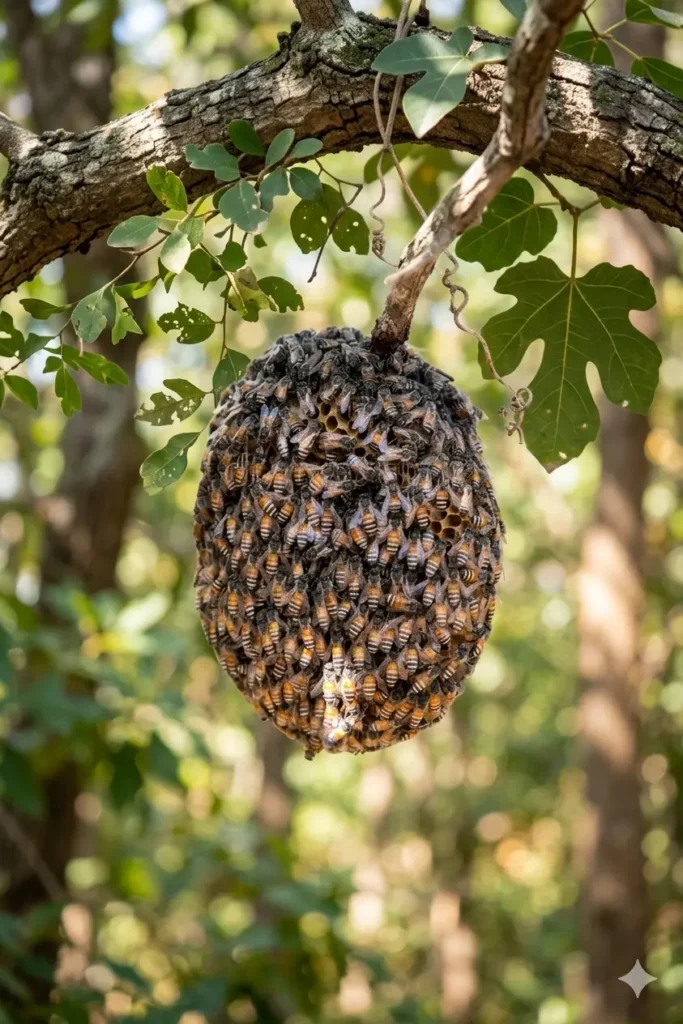
The Medicine of the Prophets has long been associated with honey, a substance that holds a special place in food, culture, and traditional healing. In Islamic tradition, honey is connected to a meaningful message about healing. The Qur’an refers to honey as something in which there is healing for people, while authentic hadith literature records the Prophet Muhammad ﷺ recommending honey in a particular case of abdominal illness.
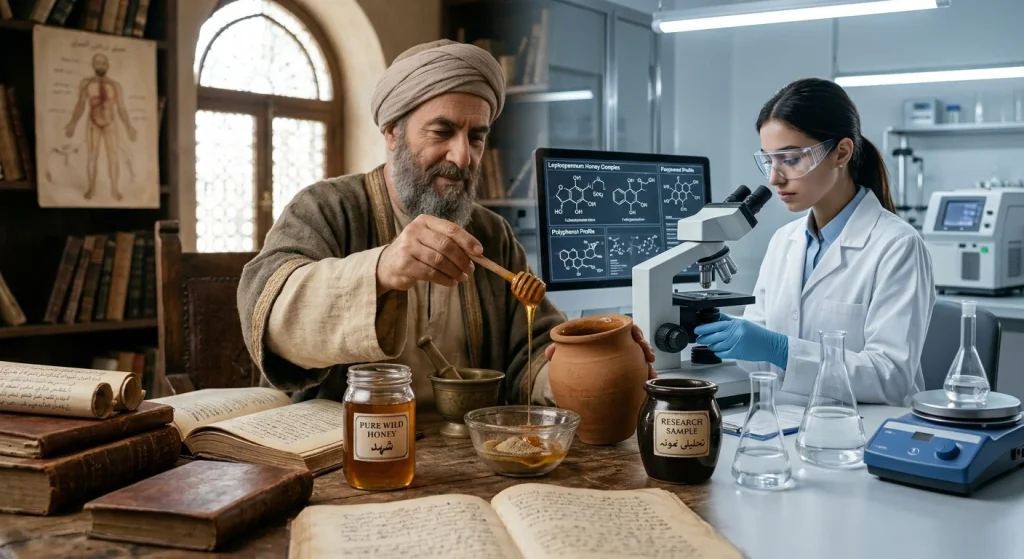
These teachings inspired generations of Muslim scholars, historians, and physicians to study honey and other natural substances. Honey became an important subject in the broader history of Islamic medicine, appearing in discussions of diet, digestion, wound care, and general health.
But what did early Islamic scholars actually say about honey? How was it used in historical medical practice? And how should readers understand these traditions alongside modern medical knowledge?
This article explores honey in the Qur’an and hadith, its place in the history of Islamic medicine, and the difference between traditional recommendations and modern clinical evidence.
Honey in the Qur’an: A Sign of Healing
One of the most well-known references to honey appears in Surah An-Nahl, verse 69. The verse describes bees and the substances they produce, including honey, and refers to healing for people.
This verse has been central to the way honey is understood in Islamic tradition. Many Muslims see it as a reminder of the blessings found in nature and the importance of reflecting on the signs of creation.
The verse is spiritually meaningful, but it should not be interpreted as a modern clinical claim that honey cures every illness. Medical conditions differ, and a treatment that may be useful in one situation may be unsuitable or ineffective in another.
For a respectful and accurate discussion, it is helpful to recognize both the religious significance of the verse and the need for appropriate medical care.
The Prophetic Tradition of Using Honey
Honey is mentioned in hadith literature as a food and as a substance used in a particular therapeutic context.
A narration in Sahih al-Bukhari describes a man who came to the Prophet Muhammad ﷺ because his brother was experiencing abdominal trouble. The Prophet ﷺ advised him to give his brother honey. The man returned more than once, reporting that the problem had not yet resolved. The narration then describes the brother recovering after honey was given again.
This report is commonly discussed in connection with the use of honey in Prophetic medicine. [1]
The narration is important to the history of Islamic healing traditions. At the same time, it describes a specific case. It does not establish that honey is a universal treatment for all digestive disorders, nor does it provide a modern diagnosis of the illness described.
Digestive symptoms can have many causes. Persistent diarrhea, dehydration, blood in the stool, severe abdominal pain, or symptoms in a vulnerable person require medical assessment rather than reliance on a home remedy.
What Was Prophetic Medicine?
The term al-ṭibb al-nabawī, often translated as “Prophetic medicine,” refers to a genre of Islamic medical writing that discusses remedies and practices associated with the Prophet Muhammad ﷺ and the Qur’an.
The National Library of Medicine explains that this genre developed alongside other medical traditions in the Islamic world. Its texts discussed diet and simple remedies, including honey, as well as a range of illnesses and health practices. [2]
It is useful to distinguish Prophetic medicine from the wider medical science practiced in the medieval Islamic world. They were related, but they were not identical.
Some writers focused on religiously grounded practices and traditions. Other physicians worked within medical systems influenced by Greek, Persian, and other scholarly traditions. Islamic medical history therefore includes a wide range of approaches, observations, and texts.
Honey appeared in this broader landscape as a familiar food and a substance that historical writers considered useful in certain circumstances.
How Early Islamic Physicians Viewed Honey
Early and medieval physicians often considered foods in relation to their perceived qualities, their effects on digestion, and their suitability for different people. These historical frameworks were not the same as modern nutrition science or clinical medicine.
Honey was discussed as a sweet food and as an ingredient in preparations. Its taste, texture, availability, and ability to mix with other substances made it a practical part of historical food and remedy traditions.
However, historical recommendations varied. They should not be treated as one universal prescription shared by every Muslim physician, nor should every remedy attributed to a historical author be assumed to have been clinically effective.
Honey in the Medical Writings of Ibn Sina
Ibn Sina, known in Latin as Avicenna, was one of the most influential physicians and philosophers of the medieval Islamic world. His medical encyclopedia, The Canon of Medicine (al-Qanun fi al-Tibb), organized medical knowledge into a systematic work that included general principles of medicine, diseases, and discussions of simple drugs. [3]
Honey and honey-based preparations appear in the broader history of traditional medicine, including historical accounts of treatments made with sweet substances.
When discussing Ibn Sina, it is important to avoid attributing a modern medical claim to him without a precise passage and reliable translation. His work belongs to a historical medical framework, and its recommendations should be studied in that context.
The lasting importance of Ibn Sina lies not in the idea that every old remedy is automatically effective, but in the history of medical scholarship, observation, and the organization of knowledge.
Honey and Chronic Ailments: What Did Historical Sources Mean?
The word “chronic” is used today to describe conditions that persist over time. Historical medical texts did not always classify illnesses in the same way as modern medicine.
A condition described in an old text may not correspond neatly to a diagnosis used today. For example, a historical description of abdominal trouble could refer to several different causes, while modern medicine distinguishes among infections, inflammatory conditions, food intolerance, and other disorders.
For this reason, historical statements about honey and long-lasting illness need careful interpretation.
The sources show that honey was valued and recommended in certain traditional contexts. They do not provide sufficient evidence to claim that honey cures modern chronic diseases such as diabetes, arthritis, heart disease, or long-term digestive disorders.
A responsible article can explain the history without turning it into a promise of treatment.
What Does Modern Research Say About Honey?
Modern researchers have studied honey for several potential uses. The evidence depends on the specific condition, the type of honey, and how it is used.
1. Honey for Cough and Throat Comfort
Honey is commonly used as a soothing ingredient in warm drinks. Some clinical research suggests it may provide short-term relief for cough symptoms, particularly in children over one year of age.
This does not mean honey treats the underlying cause of every cough. A cough that is severe, persistent, associated with breathing difficulty, or accompanied by other concerning symptoms should be assessed by a healthcare professional.
Honey must never be given to babies younger than 12 months because of the risk of infant botulism.
2. Honey in Wound Care
Medical-grade honey products have been studied and used in certain wound-care settings. These products are prepared and regulated for medical use and are not the same as ordinary honey from a kitchen jar.
A person should not assume that applying food-grade honey to a wound is safe or equivalent to professional wound care. Wounds that are deep, infected, or slow to heal need appropriate medical attention.
3. Honey as a Food
Honey can be enjoyed as a sweetener and contains small amounts of naturally occurring compounds in addition to sugars. It is still a source of free sugars and calories.
The fact that honey has a long history of traditional use does not make unlimited consumption beneficial. People monitoring blood glucose or total sugar intake should account for honey as part of their diet.
Traditional Honey Remedies: A Respectful and Careful Approach
Many families have recipes involving honey, herbs, spices, or warm drinks. Such traditions can be meaningful and may provide comfort as part of ordinary food practices.
A careful approach means:
- Treating traditional recipes as food or cultural practices unless there is reliable evidence for a medical use.
- Avoiding claims that honey cures chronic illnesses.
- Not replacing prescribed medication with honey.
- Seeking medical care for symptoms that persist or worsen.
- Using honey in moderation, especially when managing blood sugar.
- Never giving honey to infants under 12 months.
These precautions do not dismiss the cultural or religious importance of honey. They help readers understand how to use it without making unsupported medical assumptions.
Honey and Faith: Understanding Healing with Wisdom
For many Muslims, the mention of honey in the Qur’an and hadith is a source of spiritual reflection and appreciation. It can encourage gratitude for natural blessings and respect for the teachings passed down through Islamic tradition.
Seeking medical care is also compatible with taking health seriously. A person can value religious teachings, enjoy honey as a food, and still consult qualified clinicians for diagnosis and treatment.
The most useful way to discuss Prophetic medicine is to approach it with respect, historical accuracy, and a clear distinction between religious meaning and modern medical evidence.
Frequently Asked Questions
Did the Prophet Muhammad ﷺ recommend honey?
Sahih al-Bukhari includes a narration in which the Prophet ﷺ recommended honey for a man experiencing abdominal trouble. The narration describes the man recovering after honey was given again. [1]
Does the Qur’an say honey heals every disease?
Surah An-Nahl 16:69 refers to healing in connection with honey. The verse is significant in Islamic tradition, but it should not be presented as a modern medical guarantee that honey cures every disease.
Did Ibn Sina prescribe honey for chronic illnesses?
Honey and honey-based preparations belong to the broader history of traditional medicine. Specific claims about Ibn Sina’s prescriptions should be supported by a reliable passage or scholarly source. Historical medical recommendations are not automatically proven treatments by modern standards.
Can honey cure chronic diseases?
There is no reliable basis for claiming that ordinary honey cures chronic conditions such as diabetes, arthritis, or heart disease. It may have specific uses in certain contexts, but it should not replace evidence-based medical care.
Is honey safe for everyone?
No. Honey should never be given to infants younger than 12 months. People with diabetes or those monitoring sugar intake should consider its carbohydrate content. Anyone with an allergy or a relevant medical concern should seek individualized advice.
Final Thoughts
Honey has a remarkable place in Islamic tradition and the history of medicine. Its mention in the Qur’an and hadith inspired generations of readers and scholars to reflect on its value, while historical medical texts show how honey became part of broader discussions of food and remedies.
The strongest article does not need to claim that honey cures every chronic ailment. Its real value is in explaining the religious references, exploring the history of Islamic medical scholarship, and helping readers distinguish traditional use from modern clinical evidence.
Honey can remain a meaningful and enjoyable food in a balanced diet. For chronic illness, however, the safest path is to combine respect for tradition with informed medical care.
Disclaimer: This article is for educational and historical purposes only. It does not provide medical diagnosis or treatment advice. Honey and traditional remedies should not replace prescribed medicines or professional care. Consult a qualified healthcare professional about chronic symptoms or treatment decisions.
Explore More About Pure Honey
Continue exploring our collection of helpful honey guides to learn more about choosing, using, storing, and enjoying pure natural honey.
-
10 Signs You’re Buying Fake Honey
Learn how to identify common warning signs before purchasing honey. -
How to Test if Your Honey is 100% Pure and Raw at Home
Discover simple ways to better understand the characteristics of genuine honey. -
Raw Honey vs Processed Honey: Which One Is Better?
Compare the differences between raw and processed honey. -
How to Use Honey Every Day: 15 Healthy Ideas
Learn about proper storage, shelf life, and crystallization. -
The Sunnah of Raw Honey: Healing and Health Benefits in Islamic Tradition
Explore the significance of honey in Islamic teachings and tradition.
🍯 Explore Honey in Prophetic Medicine
The Holy Qur’an
Qur’anic ReferenceRead Surah An-Nahl 16:68–69, which describes the bee and mentions honey in connection with healing for people.
Sahih al-Bukhari
Hadith ReferenceExplore the narration in which the Prophet Muhammad ﷺ recommended honey for a man whose brother was experiencing abdominal trouble.
U.S. National Library of Medicine
Medical HistoryLearn about Prophetic medicine as a historical genre of Islamic medical writing and its place within the wider medical traditions of the Islamic world.
National Center for Complementary and Integrative Health
Modern ResearchReview reliable health information and research context for natural products and complementary approaches. Traditional use and modern clinical evidence are not always the same.