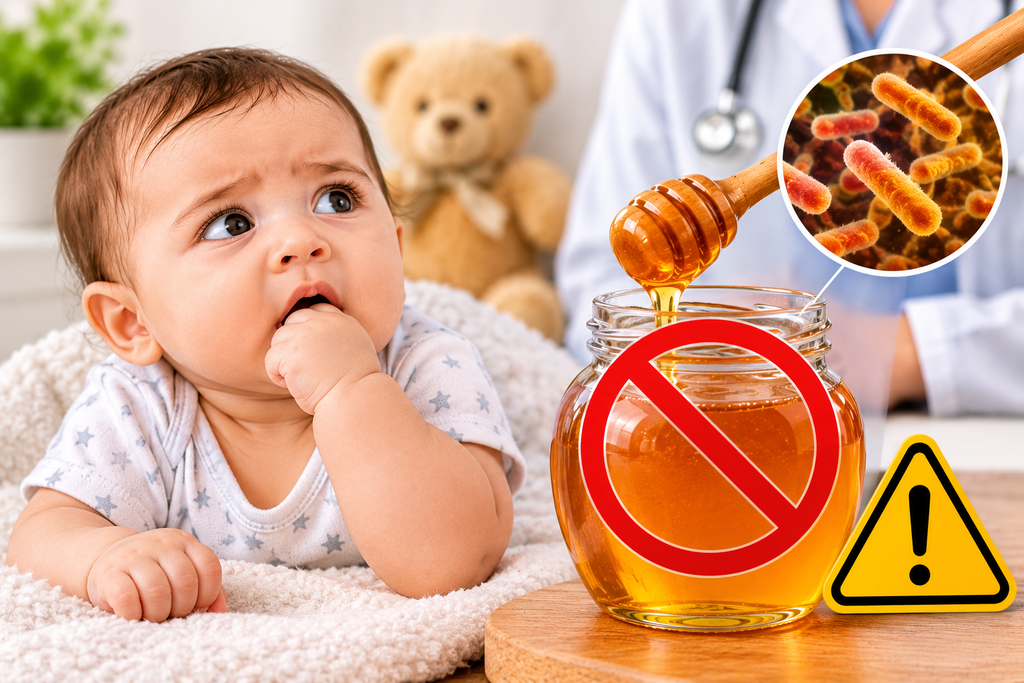
Honey is often considered a natural and wholesome food. Many families use it as a sweetener or a traditional home remedy for coughs and sore throats. However, honey for babies under 1 year is not safe—even in tiny amounts. Babies younger than 12 months should never be given honey because it may contain Clostridium botulinum spores, which can cause a rare but potentially serious illness called infant botulism.
The concern is a rare but potentially life-threatening illness called infant botulism. Honey can contain spores of Clostridium botulinum, a bacterium that may grow inside an infant’s developing digestive system and produce a dangerous toxin.
This guide explains why honey should be avoided during the first year of life, what symptoms parents should recognize, and what to do if a baby accidentally eats honey.
Safety reminder: Do not give honey to a child under 12 months old in any form. This includes raw honey, pasteurized honey, cooked or baked foods containing honey, honey mixed into water or formula, and honey-coated pacifiers. CDC
What Is Infant Botulism?
Infant botulism is a rare illness caused when Clostridium botulinum spores enter a baby’s body, settle in the intestines, and produce botulinum toxin.
This toxin affects the nerves that control muscle movement. It can cause muscle weakness and, in severe cases, interfere with swallowing and breathing.
The spores may be found in the environment, including soil and dust. Honey is a recognized possible source, which is why health authorities advise avoiding it throughout the first 12 months of life. CDC WHO
Why Is Honey Unsafe for Babies Under 1 Year?
1. Honey may contain botulism spores
Honey can occasionally contain C. botulinum spores. These spores are not the same as the toxin itself. If swallowed by a young infant, they may grow in the intestine and produce toxin.
Not every jar of honey contains these spores, and not every exposure leads to illness. However, because the risk cannot be reliably identified by looking at or testing ordinary honey at home, the safest advice is to avoid giving honey to infants under 12 months. CDC
2. A baby’s digestive system is still developing
Infants have a developing intestinal environment. In some babies, botulism spores can grow in the gut and produce toxin. This is different from typical food poisoning, where a person may swallow a toxin that has already formed in food.
The toxin interferes with nerve signals to muscles. That can lead to constipation, poor feeding, a weak cry, and reduced muscle tone.
3. Heating honey does not make it safe for infants
Do not assume that honey becomes safe when it is heated, baked, or mixed into a hot drink. Cooking honey into bread, biscuits, cakes, or other foods is not a recommended way to make it safe for a baby under 12 months.
Avoid honey-containing products too, including honey pacifiers. CDC
Infant Botulism Symptoms Parents Should Know
Symptoms may develop gradually. Early signs can be subtle and may resemble other common infant health problems.
Possible symptoms include:
- Constipation, especially if it is unusual for the baby
- Poor feeding or difficulty sucking
- A weak or unusual cry
- Drooping eyelids
- Less facial expression than usual
- Reduced muscle tone or a “floppy” appearance
- Poor head control
- Unusual tiredness or reduced activity
- Difficulty swallowing or breathing
Constipation alone does not mean a baby has botulism. It is common and can have many causes. However, constipation together with weakness, poor feeding, or a change in the baby’s cry needs urgent medical attention. CDC NHS
When Should You Seek Emergency Medical Help?
Seek emergency medical care immediately if your baby has possible botulism symptoms—especially if the baby is floppy, has trouble feeding or swallowing, has a weak cry, or is having difficulty breathing.
Do not wait for symptoms to become severe. Botulism can affect the muscles needed for breathing and requires urgent hospital assessment and treatment. NHS CDC
What If Your Baby Accidentally Eats Honey?
If your baby under 12 months accidentally eats a small amount of honey:
- Stay calm. A single exposure does not mean your baby will develop botulism.
- Do not give more honey or honey-containing products.
- Contact your baby’s pediatrician or local health service for advice, particularly if the baby is very young or the amount is uncertain.
- Watch for symptoms over the following days and weeks. If you notice constipation with poor feeding, weakness, a weak cry, or other concerning changes, seek medical care promptly.
- If your baby has difficulty breathing, swallowing, or appears unusually floppy, seek emergency help immediately.
Do not try to make your baby vomit or use home remedies. A healthcare professional can advise you based on the exposure and your baby’s condition. California Department of Public Health
Safe Alternatives to Honey for Babies
Babies do not need honey for sweetness, energy, or nutrition. For infants who are ready for complementary foods—usually around 6 months—offer age-appropriate foods without added sweeteners.
Depending on your baby’s age, development, and feeding plan, suitable options may include:
- Soft, mashed fruit such as banana or pear
- Unsweetened baby cereal prepared to an appropriate texture
- Soft-cooked vegetables, mashed or prepared safely
- Breast milk or infant formula as the main milk source during the first year
Avoid adding honey, sugar, or other sweeteners to a baby’s food. Always use age-appropriate textures and supervise feeding to reduce choking risk. For individual feeding guidance, consult your pediatrician.
Can Breastfeeding Mothers Eat Honey?
Yes. The recommendation is that the baby should not be fed honey. A breastfeeding parent does not need to avoid honey solely because they are breastfeeding. If you have questions about your own diet or your baby’s health, speak with your healthcare professional. HealthyChildren.org
Is Honey Safe After the First Birthday?
Health authorities advise avoiding honey until the child is at least 12 months old. After the first birthday, honey can generally be introduced as a food, provided the child has no specific medical or dietary restriction.
Honey is still a form of added sugar. It should be offered sparingly, and good oral hygiene is important because frequent sugary foods can contribute to tooth decay. NHS
Frequently Asked Questions
Can I give my 6-month-old baby a little honey?
No. Do not give honey to a baby younger than 12 months, even in a very small amount.
Is organic or raw honey safer for infants?
No. Organic, raw, local, and pasteurized honey should all be avoided for babies under 12 months.
Can honey be added to warm water or formula?
No. Do not add honey to water, infant formula, breast milk, or any other food or drink for a baby under 12 months.
Can a honey pacifier cause infant botulism?
Honey pacifiers and other products containing honey should not be given to infants. They can expose the baby to the same potential risk. CDC
Does every baby who eats honey get botulism?
No. Exposure does not automatically mean illness. However, honey can contain botulism spores, and there is no reliable way for parents to know whether a particular jar is contaminated. Avoiding honey before 12 months is the recommended prevention measure.
Final Thoughts
Honey may be a valued food for older children and adults, but it is not suitable for babies during their first year. The risk comes from possible Clostridium botulinum spores, which can grow in an infant’s intestines and produce a toxin that affects the muscles.
The safest rule is simple: No honey before 12 months—whether raw, pasteurized, cooked, baked, or mixed into another food.
If your baby has accidentally eaten honey, contact a pediatric healthcare professional for advice. If symptoms such as poor feeding, weakness, a weak cry, unusual floppiness, or breathing difficulty appear, seek urgent medical care.
This article is for general educational purposes and does not replace advice from a qualified healthcare professional.
Explore More About Pure Honey
Continue exploring our collection of helpful honey guides to learn more about choosing, using, storing, and enjoying pure natural honey.
-
10 Signs You’re Buying Fake Honey
Learn how to identify common warning signs before purchasing honey. -
How to Test if Your Honey is 100% Pure and Raw at Home
Discover simple ways to better understand the characteristics of genuine honey. -
Raw Honey vs Processed Honey: Which One Is Better?
Compare the differences between raw and processed honey. -
How to Use Honey Every Day: 15 Healthy Ideas
Learn about proper storage, shelf life, and crystallization. -
The Sunnah of Raw Honey: Healing and Health Benefits in Islamic Tradition
Explore the significance of honey in Islamic teachings and tradition.
🍼 Learn More About Honey Safety & Infant Botulism
Centers for Disease Control and Prevention
PreventionLearn how to reduce botulism risk, including why honey should never be given to babies younger than 12 months.
Centers for Disease Control and Prevention
Warning SignsReview botulism symptoms, including constipation, weak cry, poor feeding, muscle weakness, and breathing difficulties.
World Health Organization
Medical OverviewUnderstand what botulism is, how botulinum toxin affects the body, and why this illness can require urgent medical care.
NHS – National Health Service
Baby FeedingFind guidance on foods and drinks babies should avoid, including honey before their first birthday.