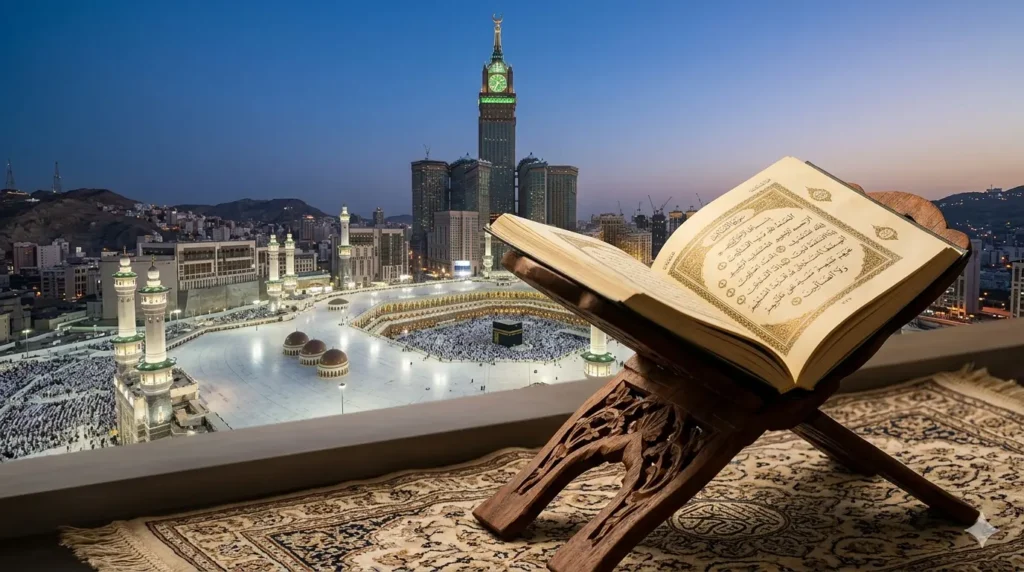
The Quran and human body are closely connected through many verses that invite people to reflect on human creation, the senses, health, and the remarkable signs of Allah within ourselves and the natural world. The Quran describes different aspects of human creation and encourages believers to observe these signs with reflection and gratitude.
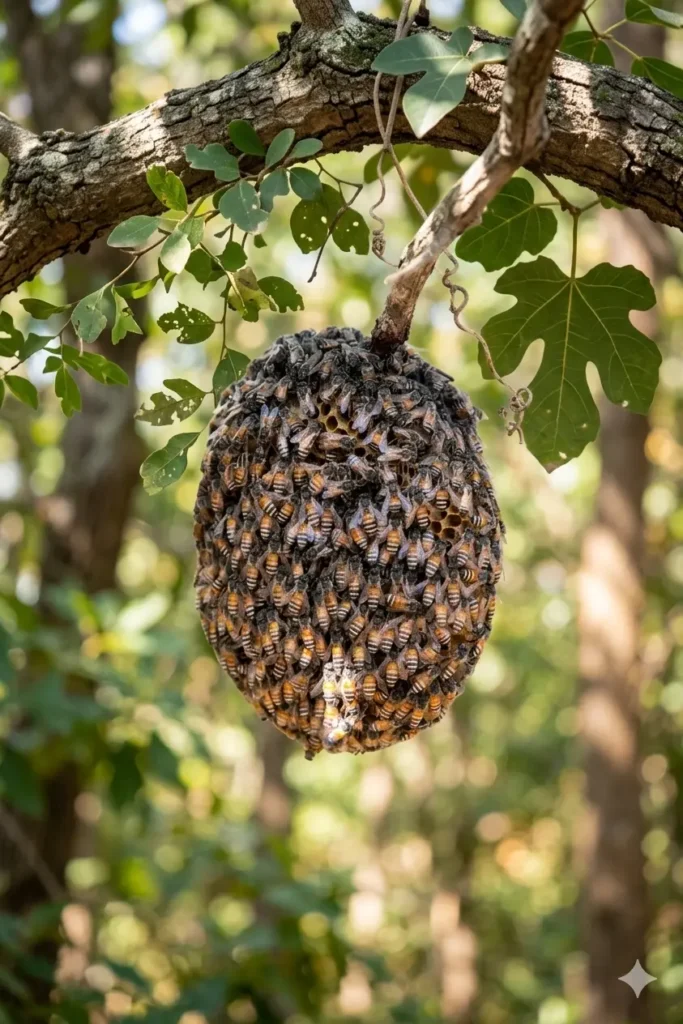
One particularly important example is honey. In Surah An-Nahl, Allah describes the bee, its behavior and the drink that comes from its body, stating that it contains healing for people. The same Qur’an also mentions human creation, hearing, sight, the heart, skin, bones, fingertips, the womb and other parts of the human body.
This article explores what the Qur’an actually says about the human body and how honey fits into this broader Qur’anic discussion.
1. Honey and Healing in the Quran
One of the clearest connections between the Qur’an, the human body and honey appears in Surah An-Nahl (16:68–69).
Allah says that He inspired the bee to make its homes in mountains, trees and structures built by people. The following verse describes a drink of different colors emerging from the bees’ bodies and says that in it is healing for people.
The relevant part of verse 16:69 is commonly translated as:
“There emerges from their bellies a drink, varying in colors, in which there is healing for people.”
This is one of the most significant Qur’anic references to honey.
The Qur’an does not merely mention honey as a food. It draws attention to the remarkable process through which bees produce a substance that can be beneficial to people.
However, this verse should be understood carefully. Saying that honey has healing properties does not mean that honey is a cure for every disease or that medical treatment should be replaced with honey.
Why is this important?
The verse encourages people to reflect on:
- the bee
- its natural behavior
- the production of honey
- the different colors of honey
- its potential benefit to people
- and the signs of Allah in creation.
The verse itself concludes by saying that this is a sign for people who think and reflect.
2. The Quran Talks About Human Creation
The Qur’an discusses human creation in several places.
One of the most frequently discussed passages is Surah Al-Mu’minun 23:12–14.
The passage describes human creation through several stages. It mentions an extract of clay, a sperm-drop placed in a secure place, a clinging stage, a lump, bones and the covering of the bones with flesh, followed by another stage of development.
The purpose of mentioning these stages is not simply biological description. The surrounding passage directs attention toward Allah’s creative power.
The passage concludes:
“So blessed is Allah, the best of creators.”
Therefore, when discussing human development in the Qur’an, it is better to focus on what the actual verses say rather than claiming that every modern embryological detail is explicitly contained in the text.
3. The Human Body Develops in the Womb
Another important verse is Surah Az-Zumar 39:6.
The verse says that Allah creates human beings in the wombs of their mothers “creation after creation” and mentions three layers of darkness.
This verse highlights the hidden environment in which human development takes place.
It also reminds the reader that human existence begins through a process that is largely hidden from ordinary human observation.
The important point for an accurate article is that the Qur’an mentions stages of creation and the womb, but interpretations of the “three darknesses” should not be presented as an undisputed modern anatomical formula. Scholars and researchers have offered different interpretations.
4. Allah Gave Humans Hearing and Sight
The Qur’an also specifically mentions human hearing and sight.
In Surah Al-Insan 76:2, Allah says that He created the human being from a mixed drop and then made the person hearing and seeing.
This is significant because hearing and sight are repeatedly mentioned as blessings and responsibilities.
The Qur’an does not treat human senses merely as physical mechanisms. They are connected with human responsibility: people hear, see, understand and are expected to respond appropriately to guidance.
5. The Quran Mentions the Eyes, Tongue and Lips
A very direct reference to the human body appears in Surah Al-Balad 90:8–10.
Allah asks:
“Have We not given them two eyes, a tongue and two lips?”
The passage then mentions that Allah showed humanity the two ways.
This creates an interesting connection between physical abilities and moral responsibility.
The eyes allow a person to see.
The tongue allows speech.
The lips assist speech and other functions.
But the passage moves beyond anatomy: these abilities are gifts that come with responsibility and choice.
6. The Heart and Human Understanding
The Qur’an frequently uses the heart (qalb) in discussions about understanding, belief and spiritual awareness.
One important example is Surah Al-Hajj 22:46.
Allah says that people have hearts with which they reason and ears with which they hear, and then states that it is not the eyes that are blind but the hearts within the breasts.
This verse is especially important when discussing the Qur’anic concept of the heart.
It would be inaccurate to automatically interpret every Qur’anic reference to the qalb as a statement about the physiological function of the anatomical heart.
In many passages, the heart has a broader meaning connected with understanding, faith, intention and spiritual perception.
7. The Skin Is Mentioned in the Quran
The Qur’an also mentions human skin.
In Surah An-Nisa 4:56, Allah describes the punishment of the Fire and says that whenever the skin is burned, it will be replaced so that the punishment can continue.
The verse specifically refers to skin (jilood).
The main context is the Hereafter and divine punishment, rather than a medical discussion of skin anatomy.
Therefore, an article should not turn this verse into an unsupported claim such as “the Qur’an discovered modern dermatology.” The actual Qur’anic context is much more important.
8. The Quran Mentions the Jugular Vein
One of the most striking references to the human body appears in Surah Qaf 50:16.
Allah says:
“We are closer to him than his jugular vein.”
The jugular vein is therefore explicitly mentioned in the Qur’an.
But the context is important.
The verse begins by saying that Allah created humanity and knows what the person’s soul whispers. The comparison with the jugular vein emphasizes Allah’s complete knowledge and nearness. Classical tafsir explains this nearness in relation to knowledge rather than suggesting physical proximity.
So the safest interpretation for an article is:
The Qur’an uses the jugular vein as an illustration of Allah’s complete knowledge and nearness to human beings.
9. Bones and the Resurrection of the Human Body
The Qur’an also discusses bones when addressing the question of resurrection.
In Surah Al-Qiyamah 75:3–4, the Qur’an responds to the idea that human bones could not be restored after death.
Allah states that He is capable even of restoring the person’s fingertips.
The point of the passage is Allah’s power to resurrect human beings completely.
It is therefore better to avoid claiming that the verse is specifically a scientific statement about modern fingerprint identification. The Qur’anic context is resurrection and Allah’s ability to recreate the human being in complete detail.
10. Fingertips Are Specifically Mentioned
The reference to fingertips in 75:4 is particularly interesting.
The verse says that Allah is able to restore even the person’s fingertips.
Modern readers sometimes connect this verse with fingerprints because fingerprints are unique characteristics of individuals.
That can be mentioned as an interesting reflection, but it should be clearly labeled as an interpretive observation, not as the explicit meaning of the verse.
The direct Qur’anic point is Allah’s ability to restore the human body completely.
11. Tongues, Hands and Feet Will Testify
The Qur’an also presents a powerful image of human body parts becoming witnesses.
In Surah An-Nur 24:24, Allah says that on the Day of Judgment, people’s tongues, hands and feet will testify about what they used to do.
Similarly, Surah Ya-Sin 36:65 says that Allah will seal people’s mouths, while their hands will speak and their feet will testify concerning their deeds.
This gives the human body an important spiritual dimension.
According to the Qur’an, the body is not merely something a person possesses. It is also part of the person’s accountability before Allah.
12. The Quran Mentions the Human Body as a Sign of Allah
When these verses are considered together, a broader Qur’anic theme becomes visible.
The Qur’an directs people to think about:
- how human beings are created
- development in the womb
- hearing
- sight
- eyes
- tongue
- lips
- heart
- skin
- bones
- fingertips
- veins
- hands
- feet
- and the human body’s ultimate return and resurrection.
These references are not presented as a conventional anatomy textbook.
Instead, they are connected to larger themes such as:
creation → gratitude → responsibility → reflection → faith → resurrection.
13. What Is the Connection Between Honey and the Human Body?
This is where your website’s honey-focused content can make the article particularly interesting.
The Qur’an gives a specific statement about honey in Surah An-Nahl 16:69, describing the drink produced by bees as containing healing for people.
At the same time, the Qur’an repeatedly directs human beings to reflect on their own creation and physical abilities.
This creates a meaningful connection:
Allah created the human being and the natural world, and the Qur’an invites people to reflect on both.
Honey is one example of a natural substance that the Qur’an specifically highlights for human benefit.
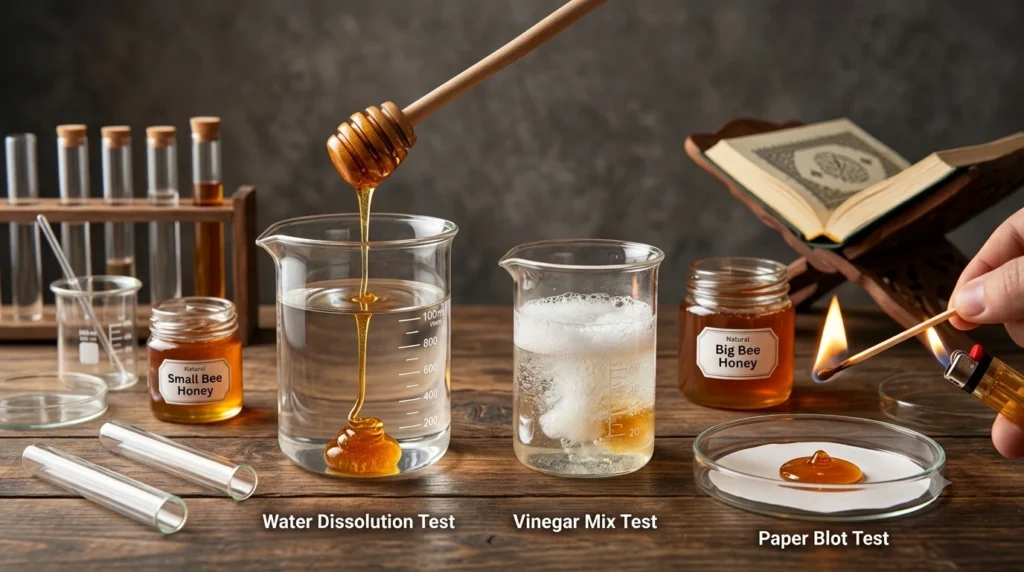
However, honey should not be presented as a universal medical treatment. Its use should be considered alongside scientific evidence, individual health circumstances and appropriate medical advice.
14. Does the Quran Say Honey Cures Every Disease?
No.
This distinction is very important for an accurate Islamic and health-related article.
The Qur’an says regarding the drink produced by bees:
“in which there is healing for people.”
The verse does not say that honey cures every disease in every person.
Therefore, claims such as:
- “Honey cures all diseases”
- “Honey replaces medicine”
- “Honey can treat every infection”
- “The Qur’an says honey is a cure for everything”
should not be presented as direct Qur’anic statements.
A responsible article should distinguish between Qur’anic guidance, traditional use, and modern medical evidence.
15. What Does the Quran Actually Teach Us About the Human Body?
The Qur’anic discussion of the human body can be understood through several major themes.
1. The human body is created by Allah
The Qur’an repeatedly directs attention toward human creation and development.
2. Human senses are blessings
The Qur’an specifically mentions hearing and sight and asks people to recognize their origin and responsibility.
3. The body has moral responsibility
The tongue, hands and feet are described as witnesses to human actions on the Day of Judgment.
4. Human creation is a sign
The Qur’an presents human development as something worthy of reflection.
5. Human beings will be resurrected
The references to bones and fingertips occur within the Qur’anic argument that Allah can restore the human body after death.
6. Natural creation also contains signs
The bee and honey are presented as signs for people who think and reflect.
Quran Verses About the Human Body — Quick Reference
| Human body / topic | Quran reference | Main point |
|---|---|---|
| Human creation | 23:12–14 | Stages of human creation |
| Womb | 39:6 | Human development in the womb |
| Hearing & sight | 76:2 | Allah gives humans hearing and sight |
| Eyes | 90:8 | Two eyes as a blessing |
| Tongue & lips | 90:9 | Human speech-related faculties |
| Heart & ears | 22:46 | Understanding and spiritual perception |
| Skin | 4:56 | Skin mentioned in context of the Hereafter |
| Jugular vein | 50:16 | Allah’s knowledge and nearness |
| Bones & fingertips | 75:3–4 | Allah’s power to resurrect |
| Tongue, hands & feet | 24:24 | Body parts testify to deeds |
| Hands & feet | 36:65 | Body parts testify on Judgment Day |
| Honey | 16:68–69 | Bee and honey; healing for people |
Important: Quran and Modern Science
There is a major difference between saying:
“The Qur’an mentions a human body part.”
and saying:
“The Qur’an scientifically discovered a modern medical fact.”
These are not necessarily the same thing.
For an accurate and trustworthy article, we should quote the Qur’anic verses, explain their context, and then—where appropriate—discuss modern scientific knowledge separately.
This approach is stronger because it avoids exaggerating the Qur’anic text while still allowing readers to appreciate the depth of its references to human creation and the natural world.
Conclusion
The Qur’an contains numerous references to the human body, human development, senses and physical abilities. It mentions the womb, stages of creation, hearing, sight, eyes, tongue, lips, heart, skin, bones, fingertips, hands, feet and the jugular vein.
Alongside these references to human beings, the Qur’an gives special attention to the bee and honey. In Surah An-Nahl, Allah describes the drink produced by bees as containing healing for people and calls attention to this as a sign for those who reflect.
The deeper message is not simply about anatomy or food. The Qur’an repeatedly calls human beings to observe, think, recognize Allah’s creation, appreciate His blessings and understand their responsibility before Him.
Honey therefore fits naturally into this wider Qur’anic theme: a remarkable creation of Allah that provides benefit to human beings and invites us to reflect on the wisdom present in the natural world.
Explore More About the Quran
Continue your journey of learning by exploring our helpful articles about the Holy Quran, its meanings, understanding, and guidance for everyday life.
-
The Quran: A Light for Every Heart
Discover why the Holy Quran is a timeless source of guidance, hope, and spiritual peace for every believer. -
Quran Translation vs Tafsir
Understand the difference between reading a translation of the Quran and studying its detailed explanation through Tafsir. -
10 Foods Mentioned in the Quran and Their Benefits
Learn about the blessed foods mentioned in the Quran and explore their significance in Islamic tradition and everyday life.