Introduction
Honey, figs, and almonds are nutritious foods that have been valued for centuries for their taste, nutritional benefits, and traditional uses. Honey and figs or almonds for strength and energy can be a useful addition to a balanced diet because these foods provide carbohydrates, fiber, healthy fats, vitamins, and minerals.
Honey is a natural sweetener that provides quick energy, figs contain dietary fiber and essential minerals, and almonds are rich in healthy fats, protein, and vitamin E. Honey and figs also have a notable place in Islamic tradition. However, while these foods can support general nutrition, they should not be considered a guaranteed treatment for weakness, fatigue, or any medical condition.
In this guide, we will explore the nutritional benefits of honey, figs, and almonds, their significance in Islamic teachings, how to include them in your daily diet, and important precautions to keep in mind.
1. Benefits of Honey for Natural Energy
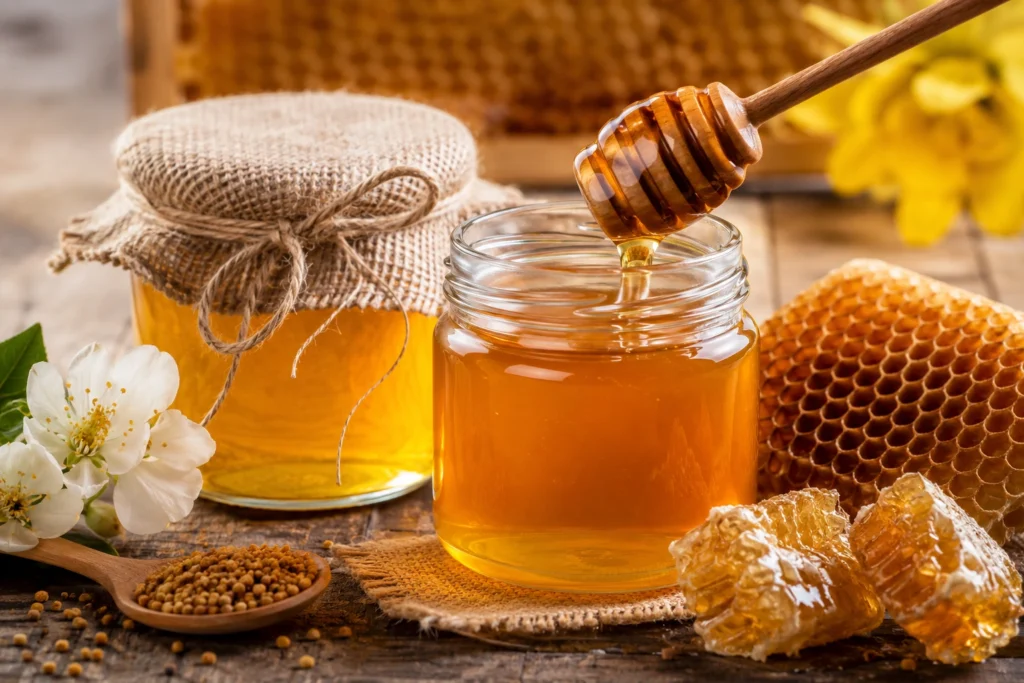
Honey is a natural sweetener containing glucose and fructose, two sugars that provide energy to the body. It can be enjoyed with breakfast, mixed into warm water, or paired with nutritious foods such as figs and almonds.
Potential Benefits of Honey
- Provides quick energy: Its natural sugars can provide readily available energy.
- Contains antioxidant compounds: Honey contains compounds that may help protect cells from oxidative stress.
- May soothe a cough: Some evidence suggests honey may help relieve cough symptoms in certain situations.
- Versatile natural sweetener: It can be used in foods and drinks, although it still counts as a source of free sugars.
The Importance of Honey in Islam
Honey is mentioned in the Quran in Surah An-Nahl, verse 69, which describes a drink of different colors coming from bees and states that it contains healing for people.
Read the reference: Quran, Surah An-Nahl 16:69
This verse highlights the significance of honey in Islamic teachings. However, it should not be interpreted as a guarantee that honey can cure every disease or replace medical treatment.
2. Benefits of Figs for Nutrition and Digestive Health
Figs are naturally sweet fruits that can be eaten fresh or dried. They provide dietary fiber and minerals, making them a nutritious option for a balanced diet. Dried figs contain less water and more concentrated natural sugars and calories than fresh figs.
Potential Benefits of Figs
- Support digestive health: The dietary fiber in figs helps support regular bowel movements.
- Provide natural energy: Their carbohydrates can help meet the body’s energy needs.
- Contain essential minerals: Figs provide minerals such as potassium and calcium in varying amounts.
- Add sweetness to meals: Dried figs can be a convenient alternative to some highly processed sweet snacks.
Are Figs Mentioned in the Quran?
The Quran contains a chapter named Surah At-Tin, meaning “The Fig.” Its opening verse mentions the fig and the olive.
Read the reference: Quran, Surah At-Tin 95:1
This gives figs a special place in Islamic reflection. However, the Quran does not prescribe a specific fig-and-honey mixture or dosage for increasing physical strength.
3. Benefits of Almonds for Strength and Energy
Almonds are nutrient-dense nuts that provide healthy unsaturated fats, plant-based protein, fiber, vitamin E, and minerals such as magnesium.
Potential Benefits of Almonds
- Provide lasting energy: Their combination of fats, protein, and fiber can help make meals and snacks more satisfying.
- Support muscle maintenance: Almonds contribute plant-based protein, although they should be combined with other protein sources to meet individual needs.
- Contain vitamin E: This vitamin plays a role in protecting cells from oxidative damage.
- Support a balanced diet: Almonds can be included in breakfast, snacks, oatmeal, or yogurt.
Almonds are nutritious, but eating more does not necessarily mean gaining more strength. Overall food intake, physical activity, sleep, and health conditions all influence energy and physical performance.
4. Honey and Figs or Almonds: Which Combination Is Better?
Both combinations can be nutritious. The best choice depends on your dietary needs, preferences, and portion sizes.
Honey and Figs
Honey and figs provide carbohydrates and natural sweetness. Figs also contribute fiber, which makes this combination a reasonable snack when eaten in moderate portions.
Honey and Almonds
Honey and almonds combine carbohydrates from honey with healthy fats, protein, and fiber from almonds. This may make the snack more filling than honey alone.
Which Should You Choose?
- For quick energy: A small amount of honey can provide readily available carbohydrates.
- For a more filling snack: Almonds provide protein, fats, and fiber.
- For additional dietary fiber: Figs are a useful option.
- For variety: You can include all three foods in moderate portions as part of a balanced diet.
Neither combination is proven to increase strength dramatically or cure persistent fatigue.
5. How to Eat Honey with Figs or Almonds
These foods can be included in your daily routine without complicated preparation.
Option 1: Honey and Figs
- Eat one or two small figs with a modest amount of honey.
- Enjoy them as part of breakfast or as an occasional snack.
- If using dried figs, remember that their natural sugars and calories are concentrated.
Option 2: Honey and Almonds
- Eat a small handful of plain almonds.
- Add a small drizzle of honey if desired.
- Enjoy this combination with breakfast or as a snack between meals.
Option 3: A Combination of All Three
You can combine one or two figs, a small handful of almonds, and a little honey. Adjust the portions according to your energy needs and overall diet.
There is no universally established medicinal dose for this combination. More is not always better, particularly when managing blood sugar or calorie intake.
6. Best Time to Eat Honey, Figs, and Almonds
There is no single scientifically proven best time to eat these foods. You can choose a time that fits your routine.
- At breakfast: Pair them with oats, plain yogurt, or whole-grain bread.
- Before physical activity: A small portion may provide carbohydrates, depending on your tolerance and activity level.
- As an afternoon snack: Almonds and figs can help make a snack more satisfying.
- After activity: Combine them with a protein-rich food if you need to replenish energy and support muscle recovery.
Eating these foods at night does not automatically increase strength, and eating them in the morning does not guarantee extra energy throughout the day.
7. Islamic Perspective on Honey, Figs, and Almonds
Islam encourages people to appreciate the provisions of Allah and maintain moderation in eating. Honey is mentioned in Surah An-Nahl, while figs are mentioned in Surah At-Tin.
These references make honey and figs meaningful foods for many Muslims. Almonds, meanwhile, can be enjoyed as a nutritious food, but there is no specific Quranic verse or authentic hadith establishing a honey-and-almond mixture as a prescribed treatment for weakness.
For Muslims who wish to follow an Islamic approach to wellness, a sensible path is to appreciate these foods, avoid waste, eat in moderation, and seek appropriate medical care when needed.
8. Possible Side Effects and Precautions
Although honey, figs, and almonds can be part of a healthy diet, some people need to take precautions.
- Blood sugar management: Honey and dried figs contain sugars and carbohydrates. People with diabetes should monitor portions and follow their healthcare professional’s dietary advice.
- Nut allergies: Almonds can cause serious allergic reactions in people with tree-nut allergies.
- Digestive discomfort: Eating large amounts of figs may cause bloating, gas, or loose stools in some people.
- Extra calorie intake: Honey and almonds are energy-dense foods. Large portions can contribute substantial calories.
- Infants: Never give honey to a child younger than 12 months because of the risk of infant botulism.
If you experience persistent tiredness, dizziness, unusual weakness, or reduced stamina, consult a healthcare professional. These symptoms can have several causes, including anemia, sleep problems, thyroid disorders, or other medical conditions.
9. Frequently Asked Questions (FAQs)
1. Are honey and almonds good for energy?
Honey provides readily available carbohydrates, while almonds provide fats, protein, and fiber. Together, they can make a nutritious snack as part of a balanced diet.
2. Can I eat honey and figs every day?
Many people can enjoy moderate portions of honey and figs as part of a balanced diet. However, portion sizes matter, particularly for people managing blood sugar or calorie intake.
3. Which is better for energy: figs or almonds?
Figs provide carbohydrates and fiber, while almonds provide healthy fats, protein, and fiber. Neither is universally better; the best choice depends on your nutritional needs.
4. Does Islam recommend honey and almonds for physical strength?
Honey is mentioned in the Quran, and figs are mentioned in Surah At-Tin. However, there is no specific authentic Islamic prescription establishing a honey-and-almond mixture as a treatment for physical weakness.
5. Can honey, figs, and almonds cure weakness?
No. These foods provide nutrients and energy, but they cannot be relied upon to cure persistent weakness or an underlying medical condition.
6. What is the best time to eat this combination?
You can eat it at breakfast or as a snack during the day. There is no universally proven best time; choose a time that suits your routine and dietary needs.
Conclusion
Honey, figs, and almonds can be valuable additions to a balanced diet when enjoyed in sensible portions. Honey provides carbohydrates for quick energy, figs contribute fiber and minerals, and almonds supply healthy fats, plant-based protein, and vitamin E.
Their nutritional qualities, together with the Islamic significance of honey and figs, make these foods an appealing choice for people interested in traditional foods and everyday wellness. Still, no single food can replace a varied diet, adequate sleep, regular exercise, or medical care when needed.
The best approach is to enjoy honey, figs, and almonds in moderation as part of a healthy lifestyle rather than treating them as a guaranteed remedy for weakness.
References and Further Reading
- The Holy Quran — Surah An-Nahl 16:69
- The Holy Quran — Surah At-Tin 95:1
- Harvard T.H. Chan School of Public Health — Nuts
- Harvard T.H. Chan School of Public Health — Carbohydrates
- World Health Organization — Healthy Diet
Explore More About Pure Honey
Continue exploring our collection of helpful honey guides to learn more about choosing, using, storing, and enjoying pure natural honey.
-
10 Signs You’re Buying Fake Honey
Learn how to identify common warning signs before purchasing honey. -
How to Test if Your Honey is 100% Pure and Raw at Home
Discover simple ways to better understand the characteristics of genuine honey. -
Raw Honey vs Processed Honey: Which One Is Better?
Compare the differences between raw and processed honey. -
How to Use Honey Every Day: 15 Healthy Ideas
Learn about proper storage, shelf life, and crystallization. -
The Sunnah of Raw Honey: Healing and Health Benefits in Islamic Tradition
Explore the significance of honey in Islamic teachings and tradition.
🍯 Learn More About Honey, Figs & Almonds
The Holy Quran
Honey in IslamRead Surah An-Nahl, verse 69, which mentions honey and its significance in Islamic teachings. Explore the original Quranic reference.
The Holy Quran
Figs in IslamExplore Surah At-Tin, verse 1, which begins with a reference to the fig and the olive. Learn about the Quranic context of this verse.
Harvard T.H. Chan School of Public Health
Almond NutritionLearn about nuts as part of a healthy diet, including their nutritional value and the role of nuts in balanced eating.
World Health Organization
Healthy DietDiscover evidence-based guidance on healthy eating, dietary balance, and limiting excess sugars as part of a healthy lifestyle.