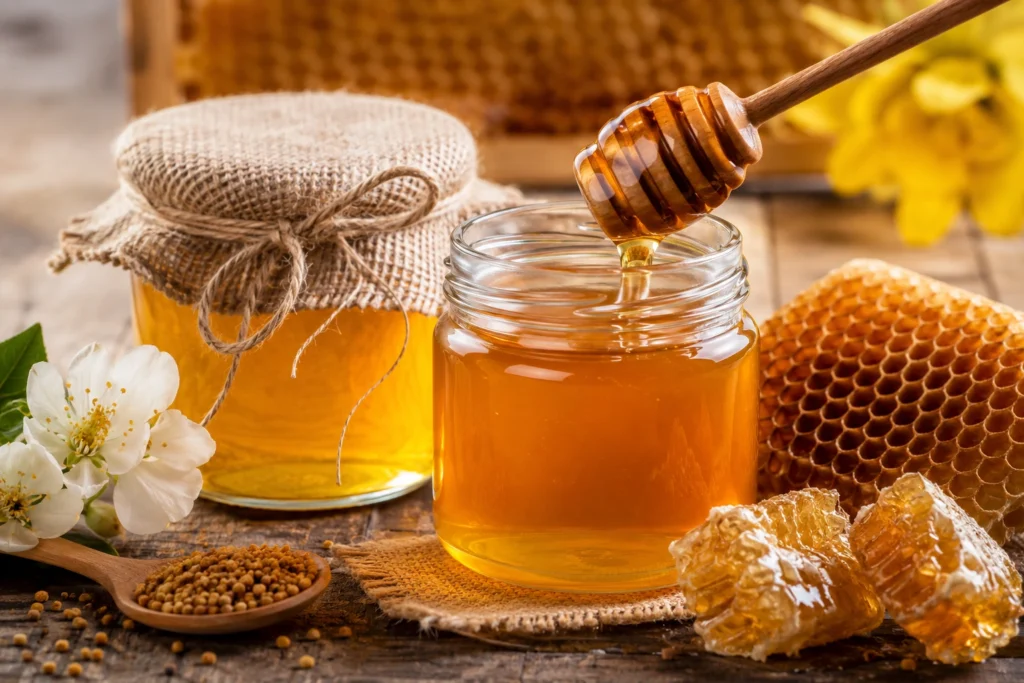
White Sugar vs Pure Honey is a common comparison for people looking for a different way to sweeten their everyday foods. White sugar is one of the most common sweeteners in everyday foods. It is added to tea, coffee, desserts, breakfast cereals, baked goods, and countless packaged products. Pure honey, on the other hand, is a naturally produced sweetener with a distinctive flavor, aroma, and a small amount of naturally occurring compounds.
Because honey is often described as a natural alternative to sugar, many people wonder whether replacing white sugar with honey can improve their diet. The answer requires a balanced look at both sweeteners.
Pure honey is not a sugar-free food or a miracle health product. It contains mainly glucose and fructose, contributes calories, and can raise blood glucose. However, compared with refined white sugar, honey offers a different flavor profile and contains small amounts of other compounds, including antioxidants.
In this guide, we’ll explore five potential benefits of using pure honey instead of white sugar, how to make the switch sensibly, and what to keep in mind if you are managing your blood sugar or trying to reduce added sugar.
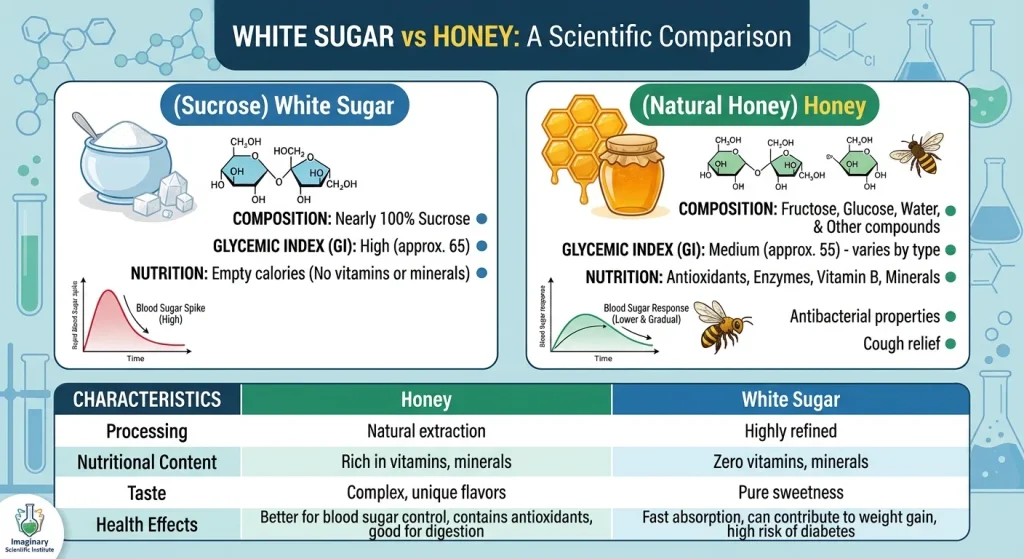
White Sugar vs Pure Honey: What Is the Difference?
White table sugar is usually made from sugar cane or sugar beets. It is primarily sucrose, a carbohydrate made from glucose and fructose.
Honey is produced by honeybees from flower nectar. Its composition varies according to floral source, region, and processing. It mainly contains glucose and fructose, along with water and small quantities of other substances, such as organic acids, minerals, enzymes, and plant-derived compounds.
Here is a simple comparison:
| Feature | White sugar | Pure honey |
|---|---|---|
| Main sugars | Sucrose | Mainly glucose and fructose |
| Flavor | Neutral sweetness | Sweetness with floral or botanical notes |
| Other compounds | Very few | Small amounts of antioxidants and other compounds |
| Calories | About 16 calories per teaspoon | About 21 calories per teaspoon |
| Effect on blood glucose | Raises blood glucose | Also raises blood glucose; response can vary |
| Added-sugar status | Added sugar | Also counts as added sugar when used as a sweetener |
Values are approximate and can vary with serving size and product composition. Honey is denser than granulated sugar, so a tablespoon of honey generally provides more calories than a tablespoon of white sugar.
The main takeaway is that honey is different from white sugar, but it should still be used in moderation.
5 Potential Benefits of Replacing White Sugar with Pure Honey
1. Honey Provides a More Complex Flavor
One of the most practical reasons to replace white sugar with honey is its distinctive taste.
White sugar adds sweetness without contributing much flavor of its own. Honey can add floral, fruity, herbal, or caramel-like notes depending on the flowers from which the nectar was collected.
This can make everyday foods more flavorful:
- Add a small amount to plain yogurt.
- Use it in oatmeal or porridge.
- Mix it into a homemade salad dressing.
- Add it to a marinade.
- Use it in selected baking recipes.
Because honey has a stronger flavor than white sugar, some people may find that a smaller amount gives their food the taste they want. This is not guaranteed, however, and it depends on personal preference and the recipe.
Practical tip: Start by using a little less honey than the amount of sugar you would normally add, then adjust the taste gradually.
2. Honey Contains Small Amounts of Antioxidant Compounds
Honey contains various plant-derived compounds, including polyphenols and flavonoids. These compounds are associated with antioxidant activity, and their levels can vary considerably depending on the honey’s floral source, color, and processing.
Antioxidants are studied for their role in helping protect cells from oxidative damage. Darker varieties of honey may contain higher levels of certain antioxidant compounds than lighter varieties.
However, there is an important distinction: the presence of antioxidants in honey does not automatically mean that eating honey produces a major health benefit.
The amounts consumed in normal servings are relatively small, and research on honey does not prove that it prevents or treats chronic diseases.
What this means: Honey may provide small amounts of antioxidant compounds that refined white sugar generally does not, but it should not be treated as a substitute for fruits, vegetables, or other nutrient-rich foods.
3. Honey Can Add Sweetness Along with Small Amounts of Other Nutrients
Unlike refined white sugar, honey contains trace amounts of substances such as minerals, organic acids, and other naturally occurring compounds.
The exact composition depends on the honey. These components contribute to its flavor and characteristics, but the quantities are usually too small for honey to be considered a meaningful source of vitamins or minerals in ordinary serving sizes.
For example, using a teaspoon of honey in tea does not provide a substantial amount of essential nutrients.
A balanced perspective: Honey is less refined and chemically more complex than table sugar, but it is still primarily a sweetener. For meaningful nutrition, focus on a varied diet that includes vegetables, fruit, whole grains, legumes, nuts, and appropriate protein sources.
4. Honey May Have a Different Blood-Glucose Response Than White Sugar
White sugar is sucrose, while honey contains varying proportions of glucose and fructose. Because these sugars are digested and metabolized differently, honey may produce a different blood-glucose response from table sugar in some circumstances.
However, the response depends on several factors:
- The type and composition of honey
- The amount consumed
- The food eaten alongside it
- A person’s individual metabolism and health status
Some studies have reported differences in glucose or other metabolic measurements when honey is compared with certain sugars. These findings do not mean honey is safe to eat freely or that it reliably lowers blood sugar.
Important for people with diabetes: Honey still contains carbohydrates and can raise blood glucose. If you have diabetes or prediabetes, count honey as a source of carbohydrate and follow your healthcare professional’s advice. Do not replace prescribed treatment with honey.
5. Honey Can Help You Make a More Flavorful, Measured Sweetener Swap
Replacing white sugar with honey can be a useful step if it helps you become more mindful about how much sweetness you add to food.
Honey has a strong flavor, so a small amount may be enough in certain foods and drinks. The most useful change is not simply switching sweeteners—it is gradually reducing the total amount of added sweetness in your diet.
For example:
- If you normally add two teaspoons of sugar to tea, try one teaspoon of honey.
- If you sweeten oatmeal heavily, start with a smaller amount of honey and add fruit for flavor.
- If a recipe calls for a large amount of sugar, consider whether the overall sweetness can be reduced.
This approach can help you develop a preference for less-sweet foods over time.
The benefit comes from using less added sweetener overall—not from assuming that honey is calorie-free or harmless.
Is Pure Honey Better Than White Sugar for Weight Management?
Not automatically.
Honey contains calories, and a teaspoon of honey generally provides more calories than a teaspoon of granulated white sugar because honey is denser.
Replacing sugar with honey without changing the amount may not reduce calorie intake. If you add honey on top of your usual diet, it can increase your total energy intake.
For weight management, the most useful approach is to:
- Reduce the total amount of added sweeteners.
- Pay attention to portion sizes.
- Choose whole fruit when you want sweetness and fiber.
- Build meals around satisfying, nutrient-rich foods.
- Avoid treating honey as a weight-loss remedy.
Honey can fit into a balanced diet, but it does not independently cause weight loss.
How to Replace White Sugar with Honey in Everyday Foods
Honey can be used in many foods and drinks, but it behaves differently from granulated sugar. It adds moisture, has its own flavor, and can brown more quickly during baking.
In tea or coffee
Start with a small amount—such as half a teaspoon—and taste before adding more. Honey dissolves more easily in warm drinks, but you do not need to add it to boiling liquid.
In oatmeal or yogurt
Stir in a small drizzle and combine it with fruit, cinnamon, or nuts. These ingredients can add flavor and texture without relying entirely on sweetener.
In homemade dressings
Honey can balance the sharpness of lemon juice or vinegar. Begin with a small amount and adjust to taste.
In baking
Honey can affect moisture, browning, and texture. It is not always a one-to-one replacement for sugar in baking recipes. Use a recipe designed for honey or make small test batches before changing a favorite recipe.
In sauces and marinades
Honey can add sweetness and help create a glossy finish, but it may burn if exposed to high heat for too long. Monitor cooking carefully.
How Much Honey Should You Eat?
There is no single ideal amount for everyone. Honey should be treated as a sweetener and used according to your overall dietary needs.
A sensible approach is to:
- Use small portions rather than pouring freely.
- Consider honey part of your total added-sugar intake.
- Avoid adding honey to foods that are already sweetened.
- Choose unsweetened foods and drinks more often.
- Remember that “natural” does not mean “unlimited.”
The World Health Organization recommends keeping free sugars below 10% of total daily energy intake, with a further reduction to below 5% suggested for additional health benefits. Honey is included among free sugars. These recommendations apply to the overall diet, not just to white sugar. WHO
Who Should Be Careful with Honey?
People with diabetes or prediabetes
Honey can raise blood glucose. If you use it, account for its carbohydrate content and follow your individual medical guidance.
People trying to reduce added sugar
Honey is still a sweetener. Replacing every teaspoon of sugar with an equal or larger amount of honey may not reduce your total added-sugar intake.
Babies younger than 12 months
Never give honey to babies under 12 months of age. Honey can contain Clostridium botulinum spores, which may cause infant botulism. This warning applies to raw, pasteurized, cooked, and baked honey-containing foods. CDC
People with honey or bee-product allergies
If you have a known allergy to honey or related bee products, consult a healthcare professional before consuming it.
Frequently Asked Questions
Is pure honey healthier than white sugar?
Honey contains small amounts of compounds that are generally absent from refined white sugar, including certain antioxidants. However, both are concentrated sources of sugar, and honey is not automatically a healthier choice in every situation. Portion size and total added-sugar intake matter.
Can I replace white sugar with honey every day?
Honey can be used in moderation as part of a balanced diet. It is best to focus on reducing the total amount of added sweeteners rather than simply replacing all sugar with honey.
Does honey have a lower glycemic index than white sugar?
Honey’s glycemic response varies by type and composition. Some honeys may have a lower response than sucrose, but this is not consistent enough to treat honey as a blood-sugar-lowering food. Honey can still raise blood glucose.
Is raw honey better than regular honey?
Raw honey may retain more of certain naturally occurring compounds because it undergoes less processing. However, “raw” does not mean sugar-free, risk-free, or proven to provide superior health outcomes. Honey should never be given to babies under 12 months.
Can honey help me lose weight?
Honey is not a weight-loss treatment. It contains calories, and using it in place of sugar does not guarantee a calorie reduction. Weight management depends on overall dietary patterns, activity, and other individual factors.
Final Thoughts
Replacing white sugar with pure honey can be a reasonable choice if you enjoy its flavor and use it thoughtfully. Honey offers a more complex taste and contains small amounts of naturally occurring compounds, including antioxidants. It may also produce a different blood-glucose response from sucrose in some circumstances.
But honey is still a concentrated sweetener. It contains calories, can raise blood glucose, and counts toward free or added sugar intake.
The most valuable approach is to use honey sparingly, avoid adding it on top of your usual sweeteners, and gradually become comfortable with less-sweet foods.
Remember: The goal is not simply to replace white sugar with more honey. The goal is to enjoy sweetness in moderation and build a balanced, sustainable diet.
This article is for general educational purposes and is not a substitute for individualized medical or nutrition advice.
Explore More About Pure Honey
Continue exploring our collection of helpful honey guides to learn more about choosing, using, storing, and enjoying pure natural honey.
-
10 Signs You’re Buying Fake Honey
Learn how to identify common warning signs before purchasing honey. -
How to Test if Your Honey is 100% Pure and Raw at Home
Discover simple ways to better understand the characteristics of genuine honey. -
Raw Honey vs Processed Honey: Which One Is Better?
Compare the differences between raw and processed honey. -
How to Use Honey Every Day: 15 Healthy Ideas
Learn about proper storage, shelf life, and crystallization. -
The Sunnah of Raw Honey: Healing and Health Benefits in Islamic Tradition
Explore the significance of honey in Islamic teachings and tradition.
🍯 Learn More About White Sugar, Honey and Added Sugars
World Health Organization
Free SugarsLearn why free sugar intake should be limited and why sugars naturally present in honey are included in free-sugar recommendations.
American Heart Association
Added SugarUnderstand added sugars in everyday foods and why honey, like other caloric sweeteners, should be counted when monitoring sugar intake.
National Library of Medicine
Clinical ResearchExplore a systematic review of controlled trials examining honey and cardiometabolic health outcomes. Findings should be interpreted cautiously because evidence certainty varies.
NHS – National Health Service
Sugar AwarenessRead about free sugars, including those found in honey and syrups, and how excess sugar intake can affect weight and dental health.