Introduction
For centuries, honey and dry fruits have been valued as nourishing foods across different cultures, including traditional Muslim households. Honey-soaked dry fruits are a popular combination of natural ingredients such as almonds, walnuts, dates, figs, raisins, and pistachios, providing a mix of healthy fats, carbohydrates, fiber, vitamins, minerals, and antioxidants.
When dry fruits are soaked in honey, they create a delicious and convenient food combination that can be enjoyed as part of a balanced diet. Many people appreciate this traditional mixture for its natural sweetness, satisfying taste, and nutritional value.
But what makes honey-soaked dry fruits special? Can they genuinely support natural energy, brain health, heart health, and overall vitality?
In this guide, we will explore the nutritional benefits of honey-soaked dry fruits, their connection with Islamic food traditions, the science behind their ingredients, and practical ways to prepare and enjoy them.
1. Why Are Honey-Soaked Dry Fruits Considered a Nutritional Powerhouse?
Honey and dry fruits offer different but complementary nutrients.
Honey mainly provides natural sugars, which the body can use as an energy source. Dry fruits and nuts contribute fiber, healthy fats, plant protein, vitamins, minerals, and beneficial plant compounds.
Combining these ingredients creates a nutrient-dense food that can be included in breakfast, snacks, or other meals.
Some important nutritional contributions include:
- Natural carbohydrates: Honey, dates, raisins, and figs provide carbohydrates that supply energy.
- Healthy fats: Almonds and walnuts contain predominantly unsaturated fats.
- Dietary fiber: Nuts and dried fruits contribute fiber that supports digestive health.
- Essential minerals: Different nuts and fruits provide magnesium, potassium, copper, iron, and other minerals.
- Antioxidant compounds: Honey, nuts, and dried fruits contain various plant compounds that help protect cells from oxidative damage.
However, honey-soaked dry fruits are also calorie-dense and contain considerable natural sugars. They are best enjoyed in moderate portions rather than treated as unlimited health foods.
2. The Islamic Perspective: Honey, Dates, and Natural Foods
Honey and dates hold a special place in Islamic dietary and cultural traditions.
Honey in the Quran
Honey is mentioned in Surah An-Nahl (16:69), where Allah describes the drink produced by bees and mentions its healing benefit for people.
This verse highlights the importance of honey as a natural food. However, it should not be interpreted as a guarantee that honey cures every illness or replaces medical treatment.
Dates in Islamic Tradition
Dates are also closely associated with Islamic traditions. They are commonly eaten when breaking the fast during Ramadan, and authentic narrations describe the Prophet Muhammad (peace be upon him) eating dates.
Dates provide carbohydrates, fiber, potassium, and other nutrients, making them a practical food for everyday nourishment.
Is Honey-Soaked Dry Fruit an Islamic Superfood?
There is no specific Quranic verse or authentic Hadith prescribing the exact mixture of honey-soaked almonds, walnuts, raisins, and other dry fruits as a special medicinal formula.
Nevertheless, enjoying wholesome foods such as honey, dates, nuts, and figs is compatible with the broader Islamic emphasis on moderation and gratitude for beneficial provisions.
The expression “Islamic superfood” in this article refers to the ingredients’ traditional importance in Muslim food culture, not a specific religious classification or guaranteed healing claim.
3. Nutritional Benefits of Different Dry Fruits
Each dry fruit has its own nutritional profile. Combining different varieties can provide a wider range of nutrients.
Almonds: Support for Heart and Overall Health
Almonds are among the most popular nuts used in honey mixtures.
They provide:
- Vitamin E, an antioxidant nutrient.
- Magnesium, which supports normal muscle and nerve function.
- Plant protein.
- Dietary fiber.
- Predominantly unsaturated fats.
Regular consumption of almonds as part of a balanced diet may help support healthy cholesterol levels.
Soaking almonds overnight is a common household practice. It softens their texture and may make their skins easier to remove, but soaking is not necessary to obtain their nutritional benefits.
Walnuts: A Source of Plant-Based Omega-3
Walnuts are particularly valued for their alpha-linolenic acid (ALA), a plant-based omega-3 fatty acid.
Their nutritional contributions include:
- ALA omega-3 fatty acids.
- Polyphenols and other antioxidant compounds.
- Dietary fiber.
- Plant protein.
- Minerals such as copper and manganese.
Including walnuts in a balanced diet may support cardiovascular health. Their omega-3 content also makes them an interesting ingredient for people seeking more plant-based sources of healthy fats.
Dates: Natural Carbohydrates for Energy
Dates are widely consumed in Muslim households and are especially popular during Ramadan.
They contain:
- Natural carbohydrates.
- Dietary fiber.
- Potassium.
- Magnesium.
- Various plant antioxidants.
Dates can provide readily available energy, making them a convenient snack before physical activity or during a busy day.
Figs: Fiber for Digestive Health
Dried figs are another useful addition to honey-soaked dry fruit mixtures.
They contain:
- Dietary fiber.
- Calcium.
- Potassium.
- Magnesium.
- Natural carbohydrates.
Their fiber content can contribute to regular bowel movements and digestive health when consumed alongside adequate fluids and a balanced diet.
Raisins: Small Fruits with Valuable Nutrients
Raisins are dried grapes that provide natural sugars, fiber, and plant compounds.
They also contain potassium and small amounts of several other minerals.
Because raisins are concentrated in natural sugars, moderate portions are recommended, particularly for people monitoring blood glucose levels.
Pistachios: Protein, Fiber, and Healthy Fats
Pistachios offer a combination of plant protein, dietary fiber, unsaturated fats, potassium, and vitamin B6.
They add a pleasant flavor and texture to homemade honey mixtures while increasing their nutritional variety.
4. How Honey Complements Dry Fruits
Honey is more than a sweet ingredient. It contains a mixture of glucose, fructose, water, and small amounts of other compounds, including polyphenols and organic acids.
Here are some of its nutritional characteristics:
A Source of Quick Energy
Honey contains naturally occurring sugars that provide carbohydrates. These sugars can be used by the body as an energy source.
When combined with nuts and dry fruits, honey adds sweetness and carbohydrates to a snack that also contains fiber, fats, and protein.
Contains Antioxidant Compounds
Honey contains different phenolic compounds and other antioxidants. Their quantities vary depending on floral source, processing, and storage.
These compounds contribute to honey’s nutritional characteristics, although eating honey should not be considered a treatment for oxidative stress or disease.
Makes Dry Fruits Easier to Enjoy
Honey provides a natural sweet coating and helps hold different ingredients together.
It also makes the mixture convenient to prepare and serve in small portions.
One important point: Honey does not turn ordinary dry fruits into a medicine. Its main nutritional contribution is carbohydrate energy and its naturally occurring minor compounds.
5. Potential Health Benefits of Honey-Soaked Dry Fruits
When consumed in appropriate portions as part of a balanced diet, this combination can contribute several useful nutrients.
1. Supports Everyday Energy
Honey, dates, raisins, and figs provide carbohydrates, while nuts contribute fats and some protein.
This combination can make a satisfying snack between meals or before a physically demanding part of the day.
However, it does not guarantee increased stamina or athletic performance. Overall energy levels also depend on sleep, hydration, total food intake, and physical activity.
2. Contributes to Heart Health
Almonds, walnuts, and pistachios contain unsaturated fats, fiber, and plant compounds.
Research on nuts generally suggests that regular nut consumption, when replacing less nutritious foods, can support healthy blood lipid levels and cardiovascular health.
The benefits are associated mainly with the nuts themselves and the overall dietary pattern, not with soaking them in honey.
3. Provides Nutrients for Brain Function
The brain requires a steady supply of energy and several essential nutrients to function normally.
Walnuts provide ALA omega-3 fatty acids, while almonds and other nuts contribute vitamin E, magnesium, and other nutrients.
These nutrients support normal body functions, including those involved in nervous system health.
However, there is not enough evidence to claim that eating honey-soaked nuts directly improves intelligence, memory, or concentration.
4. Supports Digestive Health
Almonds, figs, dates, raisins, and other dried fruits contain dietary fiber.
Fiber supports bowel regularity and contributes to a healthy digestive system.
For best results, include enough water and a variety of fiber-rich foods in your daily diet.
5. Contributes to Healthy Aging
Nuts and dried fruits contain nutrients and plant compounds involved in normal cellular functions.
Vitamin E, for example, helps protect cells from oxidative damage.
A balanced diet that includes a variety of nuts, fruits, vegetables, and whole grains can contribute to long-term health. No single food mixture can prevent aging or guarantee protection from disease.
6. How to Make Honey-Soaked Dry Fruits at Home
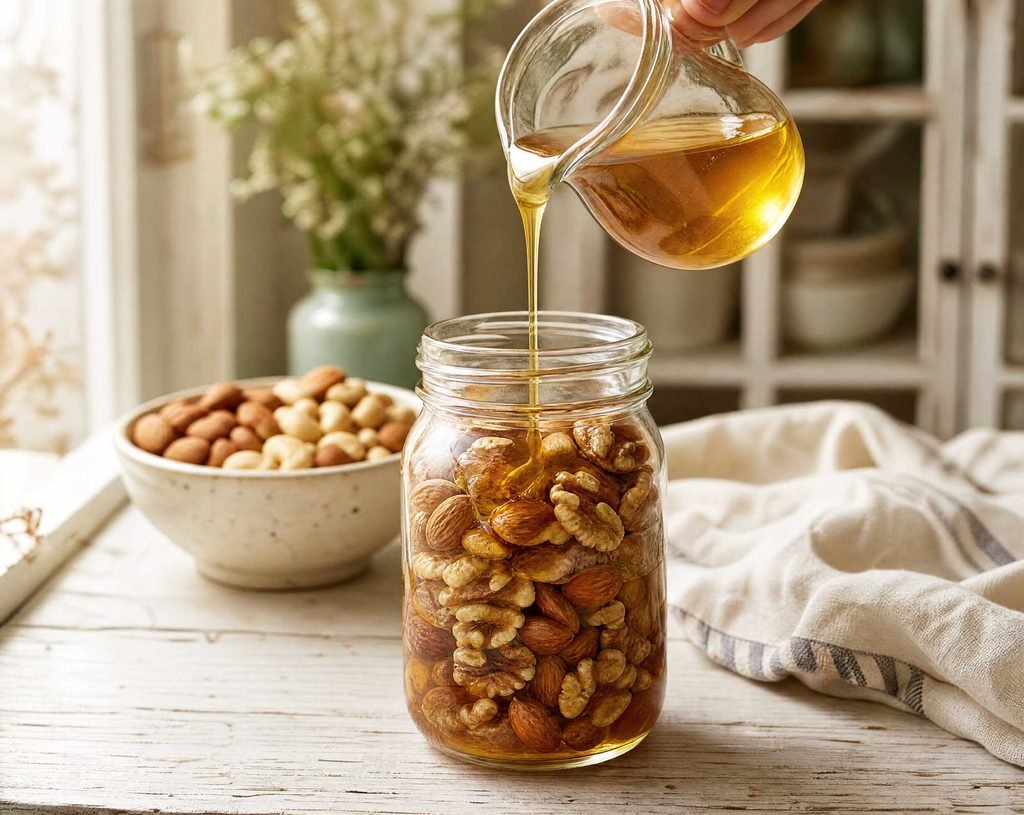
Preparing honey-soaked dry fruits is simple. You only need a few ingredients and a clean, dry glass jar.
Ingredients
- ½ cup almonds.
- ½ cup walnuts.
- ¼ cup pistachios.
- ¼ cup raisins.
- 4–5 chopped dried figs.
- 4–5 chopped dates.
- 1 cup pure honey, or enough to cover the ingredients.
Preparation Method
Step 1: Select Good-Quality Ingredients
Choose fresh, good-quality nuts and dried fruits. Avoid ingredients that smell rancid, appear moldy, or show signs of spoilage.
Step 2: Prepare the Dry Fruits
Remove date pits and chop larger dried fruits into small pieces.
If you want to soak almonds separately, place them in drinking water overnight, then drain them thoroughly and dry them completely before adding them to the honey mixture.
For longer storage, it is generally more practical to use completely dry ingredients.
Step 3: Prepare the Glass Jar
Wash the jar and lid properly, then allow them to dry completely. Moisture introduced into the mixture can increase spoilage risk.
Step 4: Add the Ingredients
Place the almonds, walnuts, pistachios, raisins, figs, and dates into the jar.
Step 5: Pour in the Honey
Add honey gradually until the ingredients are covered. Use a clean, dry spoon to distribute the honey.
Step 6: Close and Store
Seal the jar and store it according to safe food-handling practices. Because homemade mixtures vary in moisture content, avoid assuming that honey alone makes the mixture shelf-stable.
For a simple home preparation, make small batches, refrigerate them, use clean utensils, and follow conservative storage practices. Discard the mixture if you notice mold, fermentation, unusual odors, or other signs of spoilage.
7. Best Time to Eat Honey-Soaked Dry Fruits
There is no scientifically established perfect time to eat this mixture. The best time depends on your routine, nutritional needs, and personal preference.
In the Morning
A small serving can be included with breakfast.
For example, enjoy a few nuts and dried fruits with plain yogurt, oatmeal, or a glass of milk.
This provides a combination of carbohydrates, fats, protein, and fiber.
Before Exercise
A small portion may be useful as a snack before exercise, especially if you need additional carbohydrates.
However, nuts contain fat and fiber, which may feel heavy immediately before intense exercise. Allow enough time for digestion and adjust the portion to your comfort.
As an Afternoon Snack
Honey-soaked dry fruits can be an alternative to highly processed sweet snacks.
Pairing a small portion with unsweetened yogurt can provide additional protein.
At Night
You can enjoy a small portion in the evening if it suits your dietary routine.
However, honey-soaked dry fruits are not a proven sleep treatment. People who experience reflux or digestive discomfort at night may prefer to avoid eating them close to bedtime.
8. How Much Honey-Soaked Dry Fruits Should You Eat Daily?
Although these ingredients are nutritious, they are also energy-dense.
A practical starting portion for many healthy adults is approximately:
- 5–6 almonds.
- 2 walnut halves.
- 2–3 pistachios.
- 1 small date or a few raisins.
- 1 teaspoon of honey.
This is an illustrative serving, not a medically prescribed dose. Your ideal portion depends on your overall diet, energy requirements, and health conditions.
Remember that adding more honey does not automatically make the mixture healthier.
9. Important Precautions Before Eating Honey-Soaked Dry Fruits
Natural foods can be nutritious, but they are not suitable for everyone in unlimited quantities.
People with Diabetes
Honey, dates, raisins, and dried figs contain carbohydrates and sugars that can affect blood glucose levels.
People with diabetes should consider the total carbohydrate content, keep portions controlled, and follow their healthcare professional’s dietary advice.
People with Nut Allergies
Anyone allergic to almonds, walnuts, pistachios, or other nuts should avoid the relevant ingredients. Severe nut allergies can cause life-threatening reactions.
People Managing Their Weight
Nuts and honey are calorie-dense. Large servings can add substantial calories to the daily diet.
Choose a measured portion instead of eating directly from a large jar.
Babies Under 12 Months
Honey must never be given to infants younger than 12 months because of the risk of infant botulism.
People with Digestive Sensitivities
Large amounts of dried fruits can cause bloating or digestive discomfort in some individuals. Start with a small serving and adjust according to tolerance.
10. Frequently Asked Questions (FAQs)
Q1. Are honey-soaked dry fruits good for daily consumption?
They can be included in a balanced diet in moderate portions. Their nutritional value comes from the combination of nuts, dried fruits, and honey, but excessive consumption can add too much sugar and energy.
Q2. Do honey-soaked almonds and walnuts improve memory?
Almonds and walnuts contain nutrients that support normal brain and nervous system functions. However, there is insufficient evidence that soaking them in honey directly improves memory or intelligence.
Q3. Can honey-soaked dry fruits increase stamina?
They provide carbohydrates, fats, and other nutrients that contribute to energy intake. They may be a convenient snack, but they are not a guaranteed stamina booster.
Q4. Can I eat honey-soaked dry fruits on an empty stomach?
Yes, if you tolerate them well. However, there is no strong scientific evidence that eating them on an empty stomach provides special health benefits.
Q5. Should I soak almonds in water before adding honey?
You can, but it is not necessary. If you soak almonds, drain and dry them thoroughly before adding them to honey. Introducing moisture can affect storage and spoilage risk.
Q6. Can people with diabetes eat honey-soaked dry fruits?
They may need to limit or avoid this mixture depending on their blood glucose management plan. Honey and dried fruits contain concentrated carbohydrates, so portion control and professional dietary guidance are important.
Q7. Is honey-soaked dry fruit mentioned in the Quran or Hadith?
The Quran mentions honey in Surah An-Nahl (16:69), and dates are well established in Islamic dietary traditions. However, the exact combination of honey-soaked mixed dry fruits is not prescribed as a specific Quranic or Prophetic remedy.
Q8. How long can homemade honey-soaked dry fruits be stored?
Storage time depends on ingredient moisture, preparation hygiene, and storage conditions. Use a clean, dry, airtight jar, refrigerate homemade mixtures, prepare small batches, and discard them if there are signs of spoilage. Do not assume that honey guarantees indefinite preservation.
Conclusion
Honey-soaked dry fruits bring together several nutritious ingredients that have been enjoyed in traditional diets for generations. Honey provides carbohydrates, while almonds, walnuts, pistachios, dates, figs, and raisins contribute healthy fats, fiber, minerals, and other beneficial nutrients.
This combination can be a convenient addition to breakfast or a balanced snack, especially when prepared with good-quality ingredients and eaten in sensible portions.
Its connection with Islamic food culture makes it especially meaningful for many Muslim households. At the same time, it is important to distinguish traditional food practices from religious prescriptions and scientifically established health benefits.
Rather than treating honey-soaked dry fruits as a miracle cure, enjoy them as one part of a varied, balanced lifestyle that includes nutritious meals, regular physical activity, adequate hydration, and good sleep.
Explore More About Pure Honey
Continue exploring our collection of helpful honey guides to learn more about choosing, using, storing, and enjoying pure natural honey.
-
10 Signs You’re Buying Fake Honey
Learn how to identify common warning signs before purchasing honey. -
How to Test if Your Honey is 100% Pure and Raw at Home
Discover simple ways to better understand the characteristics of genuine honey. -
Raw Honey vs Processed Honey: Which One Is Better?
Compare the differences between raw and processed honey. -
How to Use Honey Every Day: 15 Healthy Ideas
Learn about proper storage, shelf life, and crystallization. -
The Sunnah of Raw Honey: Healing and Health Benefits in Islamic Tradition
Explore the significance of honey in Islamic teachings and tradition.
🍯 Learn More About Honey, Nuts and Dry Fruits
Harvard Health Publishing
Heart HealthExplore how nuts can contribute to heart health and provide beneficial unsaturated fats, fiber, vitamins, and minerals.
National Library of Medicine
Nutrition ResearchRead scientific research discussing the nutritional composition of nuts and their potential contributions to human health.
NHS – National Health Service
Fruit PortionsLearn about fruit portion sizes and how dried fruits can fit into a balanced diet while keeping serving sizes in mind.
The Holy Quran – Surah An-Nahl
Islamic ReferenceRead Quran, Surah An-Nahl (16:69), which mentions honey and its significance as a beneficial provision from Allah.