Introduction
Many athletes and gym enthusiasts look for ways to improve their energy, hydration, and workout performance before exercising. Natural pre-workout drinks are becoming a popular choice for people who want a simple alternative to commercial supplements containing caffeine, artificial sweeteners, or multiple added ingredients. These homemade drinks can provide fluids and natural carbohydrates to help support your workout routine.
A simple alternative is to use everyday foods and drinks that provide carbohydrates and fluids. Honey, watermelon, lemon, and water are affordable ingredients that can be combined to prepare refreshing homemade pre-workout drinks.
Honey provides naturally occurring carbohydrates, watermelon contains a high proportion of water, and a small amount of sodium may be useful for people who lose considerable salt through sweating during prolonged exercise.
However, natural ingredients are not automatically more effective than commercial products. Their usefulness depends on the type of workout, exercise duration, individual nutritional needs, and overall diet.
In this guide, we will explore the potential benefits of honey and watermelon before exercise, explain when sodium may be useful, and share five easy homemade pre-workout recipes.
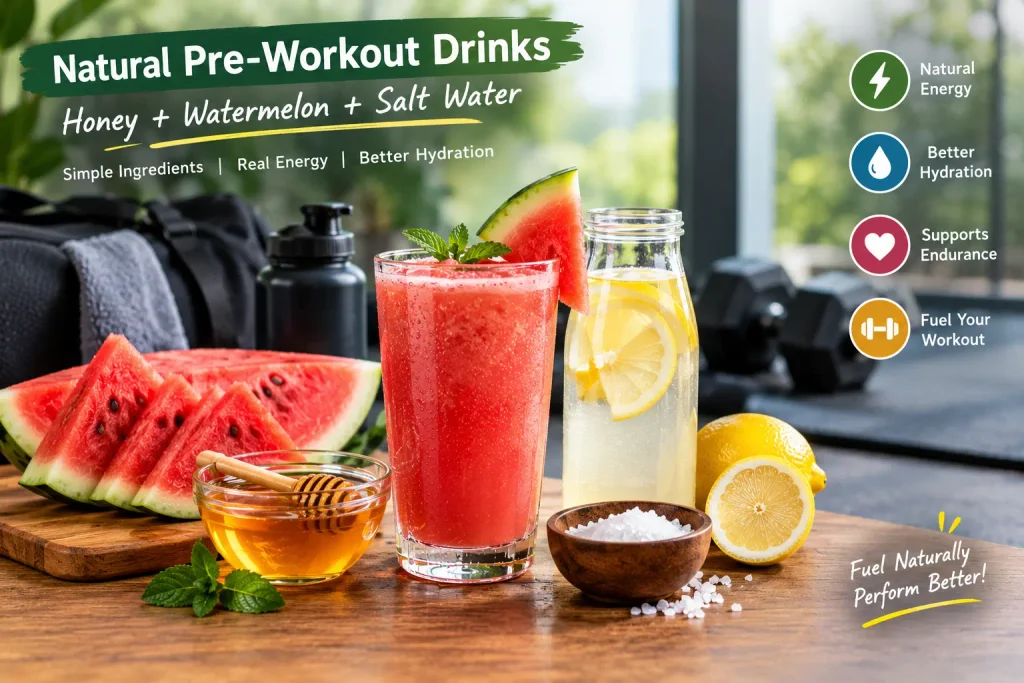
1. What Is a Natural Pre-Workout Drink?
A pre-workout drink is a beverage consumed before exercise to help support hydration and, when needed, provide energy.
A natural pre-workout drink uses ordinary food ingredients rather than relying on a manufactured supplement. Common ingredients include:
- Honey for carbohydrates.
- Watermelon for fluid and natural sugars.
- Lemon or lime for flavour.
- Water for hydration.
- A small amount of salt when additional sodium is appropriate.
These drinks can be useful for recreational gym users, runners, cyclists, and athletes who want a simple food-based option.
It is important to understand that a homemade drink does not automatically provide everything an athlete needs. For example, it may not contain enough protein to support muscle recovery or enough sodium and carbohydrates for a long endurance event.
2. Why Is Energy Important Before a Workout?
Your muscles use energy to perform physical activities. During exercise, the body relies on different energy systems and uses stored carbohydrates, fats, and other fuel sources according to the intensity and duration of the activity.
Carbohydrates are particularly important during moderate-to-high-intensity exercise because they help supply energy for working muscles.
If someone begins a demanding workout after several hours without eating, they may feel hungry, tired, or less prepared to exercise. A carbohydrate-containing snack or drink may help provide additional fuel.
Honey and watermelon are two food options that contain carbohydrates.
However, a pre-workout drink cannot replace a balanced diet, sufficient sleep, or an appropriate training programme.
3. Benefits of Honey Before a Workout
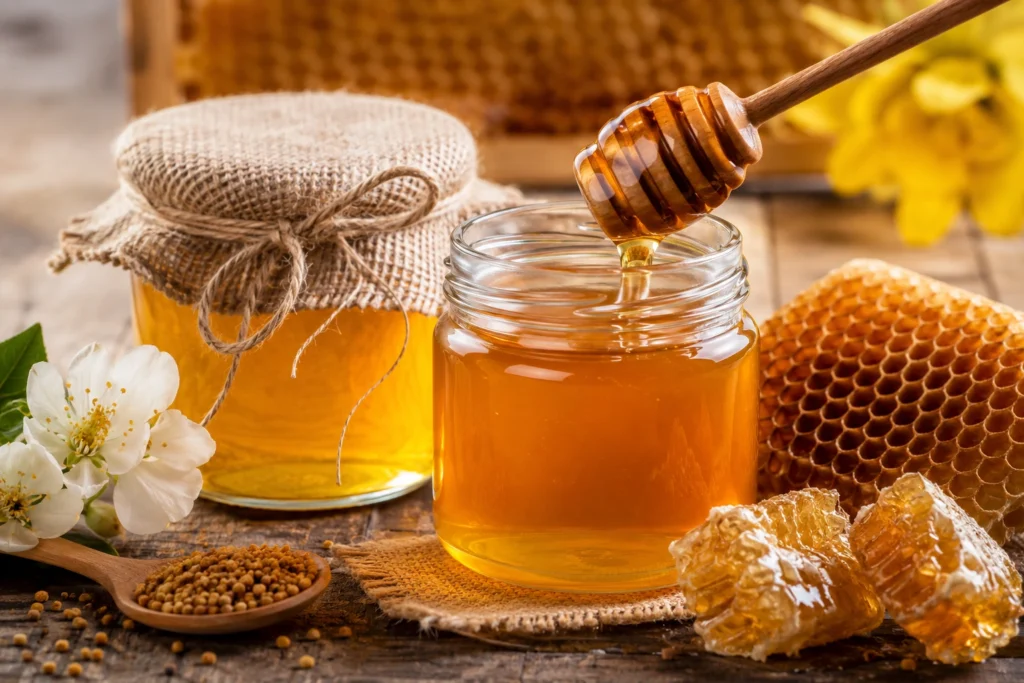
Honey is a natural sweetener produced by honeybees. It contains mainly carbohydrates, particularly glucose and fructose, along with small quantities of other compounds.
Because carbohydrates are an important source of energy during exercise, honey can be used as a convenient carbohydrate-containing food before physical activity.
A. Provides Carbohydrates
Honey contains approximately 80% carbohydrates, although its exact composition varies.
One tablespoon of honey, approximately 21 grams, provides around 64 calories and 17 grams of carbohydrates. These values are approximate and vary according to the product.
These carbohydrates can contribute to the energy available for exercise.
B. Easy to Add to Homemade Drinks
Honey dissolves easily in water and can be combined with watermelon juice, lemon, or other ingredients.
This makes it a convenient option for people who prefer homemade drinks.
C. A Food-Based Alternative to Some Commercial Carbohydrate Products
Honey has been studied as a carbohydrate source for athletes.
A systematic review of research on honey and exercise found that honey can produce responses broadly similar to other carbohydrate sources in some exercise settings. However, the studies were limited and varied considerably, so there is not enough evidence to claim that honey consistently improves athletic performance.
A 2025 study involving trained male cyclists also compared honey with a traditional carbohydrate sports nutrition product during prolonged cycling. The researchers found similar carbohydrate oxidation and exercise-capacity outcomes between the conditions. This is promising but does not prove that honey is superior to sports nutrition products or that every athlete will benefit.
Research: Honey Supplementation and Exercise — Systematic Review and 2025 Honey and Exercise Study.
How Much Honey Should You Use?
For a simple homemade drink, one teaspoon to one tablespoon of honey is a reasonable starting amount for many healthy adults.
The appropriate amount depends on your carbohydrate requirements, meal timing, body size, exercise duration, and personal tolerance.
People with diabetes or blood glucose management concerns should consider honey’s sugar content and seek individual dietary advice.
4. Why Watermelon Can Be a Useful Pre-Workout Food
Watermelon is a refreshing fruit that contains a high percentage of water. It also supplies carbohydrates and small amounts of vitamins and minerals.
Its water content makes it a convenient ingredient for homemade drinks, particularly in warm weather.
A. Supports Fluid Intake
Watermelon contains approximately 90% water. Eating it or blending it into a drink can contribute to daily fluid intake.
Starting exercise adequately hydrated is important because substantial fluid loss through sweating can affect comfort and exercise performance.
B. Provides Some Natural Carbohydrates
Watermelon contains naturally occurring sugars that provide carbohydrates.
It can therefore contribute some energy before exercise, especially when consumed as part of a snack or blended drink.
C. Contains L-Citrulline
Watermelon naturally contains an amino acid called L-citrulline.
Citrulline is involved in the body’s production of arginine, which is used in the production of nitric oxide. Nitric oxide plays a role in regulating blood vessel function.
This has led researchers to investigate watermelon and citrulline supplements in relation to exercise performance.
However, eating ordinary watermelon should not be confused with taking a standardized citrulline supplement. The amount of citrulline in a typical serving of watermelon is not necessarily sufficient to produce the effects investigated in supplement studies.
A study examining watermelon juice as a pre-exercise supplement did not find significant improvements in several measured exercise-performance outcomes.
Research: The Effect of L-Citrulline and Watermelon Juice on Exercise Performance.
D. A Refreshing Option Before Exercise
Some people find watermelon easier to consume than heavier foods before a workout. It can be eaten fresh or blended with water.
However, large servings immediately before exercise may cause stomach discomfort in some individuals. Start with a comfortable portion and see how your body responds.
5. Why Add Salt to a Pre-Workout Drink?
Salt contains sodium and chloride. Sodium is an important electrolyte involved in fluid balance, nerve signalling, and normal muscle function.
During sweating, the body loses both water and sodium. The amount lost varies considerably between individuals and depends on exercise intensity, duration, temperature, clothing, and personal sweat rate.
When Can Additional Sodium Be Useful?
An electrolyte-containing drink may be useful in situations such as:
- Long-duration endurance exercise.
- Training in hot and humid weather.
- Heavy sweating during prolonged workouts.
- Multiple training sessions with limited recovery time.
For an ordinary short gym session, many people can maintain adequate hydration with regular meals and plain water.
Does Everyone Need Salt Water Before Exercise?
No.
Adding salt to every pre-workout drink is unnecessary for many people. Excess sodium can be harmful, particularly for individuals who need to limit salt because of high blood pressure, kidney disease, heart conditions, or medical advice.
Do not assume that more salt means better hydration or better performance.
The amount of sodium required depends on individual sweat losses and exercise conditions. For long endurance events, a sports dietitian can help determine an appropriate hydration and electrolyte strategy.
6. Five Homemade Natural Pre-Workout Drink Recipes
The following recipes use common ingredients and are intended as practical food-based options. They are not medical treatments or guaranteed performance-enhancing supplements.
Recipe 1: Honey and Water Pre-Workout Drink
Ingredients:
- 250–300 ml drinking water.
- 1 tablespoon honey.
- A small squeeze of fresh lemon (optional).
Preparation:
- Pour drinking water into a clean glass or bottle.
- Add one tablespoon of honey.
- Stir until the honey dissolves.
- Add lemon juice if desired.
- Drink at a comfortable pace before exercise.
Why Try It?
This is a simple way to consume fluid and carbohydrates before a workout. It is particularly convenient when you want a light drink rather than a heavy snack.
Recipe 2: Fresh Watermelon Pre-Workout Drink
Ingredients:
- 1–2 cups fresh watermelon cubes.
- 100–150 ml water.
- A few ice cubes (optional).
Preparation:
- Remove the watermelon rind.
- Cut the fruit into small pieces.
- Place the pieces in a blender.
- Add water and blend until smooth.
- Strain if you prefer a thinner drink.
- Serve fresh.
Why Try It?
Watermelon supplies fluid and carbohydrates. This drink can be a refreshing option before exercise, particularly in warm weather.
You do not need to add extra sugar because watermelon already contains natural sugars.
Recipe 3: Watermelon, Honey and Lemon Drink
Ingredients:
- 1 cup fresh watermelon.
- 1 teaspoon honey.
- 150 ml water.
- 1 teaspoon fresh lemon juice.
Preparation:
- Add watermelon to a blender.
- Pour in the water.
- Add honey and lemon juice.
- Blend until smooth.
- Serve immediately.
Why Try It?
This combination provides fluid and carbohydrates from watermelon and honey. Lemon adds flavour without requiring artificial flavouring.
It is a convenient homemade drink for people who enjoy fruit-based beverages.
Recipe 4: Watermelon, Honey and Salt Drink
Ingredients:
- 1 cup fresh watermelon.
- 250 ml water.
- 1 teaspoon honey (optional).
- A very small pinch of salt, only if appropriate for your needs.
Preparation:
- Blend the watermelon with water.
- Add honey if you want additional sweetness.
- If an electrolyte drink is appropriate for your exercise conditions, add a small pinch of salt.
- Mix thoroughly.
- Serve fresh.
Why Try It?
This recipe combines fluid and carbohydrates. The optional salt contributes sodium, which may be useful for some people during prolonged exercise or heavy sweating.
Important: This is not a standardized electrolyte replacement formula. A pinch of salt does not guarantee that your sodium needs will be met. People who need to restrict sodium should leave the salt out.
Recipe 5: Watermelon and Banana Smoothie
Ingredients:
- 1 cup watermelon cubes.
- ½ ripe banana.
- 100–150 ml water or milk.
- A few ice cubes (optional).
Preparation:
- Add the watermelon and banana to a blender.
- Pour in water or milk.
- Blend until smooth.
- Adjust the consistency by adding more liquid if needed.
- Serve fresh.
Why Try It?
This smoothie provides carbohydrates from fruit and can be more filling than a light fruit drink.
If you use milk, the smoothie will also provide some protein. However, a half banana and a little milk do not necessarily make it a complete post-workout recovery meal.
People who experience stomach discomfort from dairy or large fruit portions before exercise should adjust the ingredients or choose another option.
7. When Should You Drink a Natural Pre-Workout?
Timing depends on what you consume, how much you eat, and how your stomach responds.
A practical starting guide is:
| Time before exercise | Suitable approach |
|---|---|
| 2–3 hours | Eat a balanced meal containing carbohydrates and some protein |
| Around 60 minutes | Try a small, easily digested carbohydrate-containing snack or drink |
| 15–30 minutes | If needed, take a small amount of fluid or an easily tolerated carbohydrate source |
These are general guidelines rather than strict rules. Individual digestion and exercise tolerance vary.
For example, someone who eats a balanced meal two hours before training may not need an additional honey drink.
Someone training early in the morning after an overnight fast may prefer a small carbohydrate-containing drink or snack.
The best approach is to test your chosen food or drink during ordinary training sessions rather than trying something new immediately before an important competition.
8. Natural Pre-Workout Drinks vs Commercial Pre-Workout Supplements
Commercial pre-workout products often contain ingredients such as caffeine, beta-alanine, creatine, artificial sweeteners, and other compounds.
Homemade drinks generally contain fewer ingredients and can be prepared using familiar foods.
| Feature | Homemade natural drinks | Commercial pre-workout |
|---|---|---|
| Main ingredients | Honey, fruit, water | Varies by product |
| Carbohydrates | Available from honey and fruit | Depends on formulation |
| Caffeine | Usually caffeine-free | May contain caffeine |
| Electrolytes | Only if added | Depends on formulation |
| Protein | Usually low | Depends on formulation |
| Ingredient control | Easy to adjust | Depends on product label |
| Preparation | Requires blending or mixing | Usually ready to mix |
Neither option is automatically better for everyone.
A homemade honey drink may be useful for someone who wants a simple source of carbohydrates. A commercial product may provide a measured amount of caffeine or another ingredient, but the safety and usefulness depend on its formulation and the individual using it.
People who are sensitive to caffeine, have certain medical conditions, or take medications should be particularly careful with stimulant-containing supplements.
9. Are Natural Pre-Workout Drinks Good for Muscle Growth?
Natural pre-workout drinks can contribute carbohydrates and fluid, but they do not directly build muscle.
Muscle growth depends on several important factors:
- Progressive resistance training.
- Sufficient daily protein.
- Adequate total calorie intake.
- Appropriate recovery between sessions.
- Consistent sleep.
- A well-planned training programme.
Honey and watermelon can be included in a balanced diet, but they do not replace protein-rich foods such as eggs, milk, yogurt, fish, meat, beans, or other suitable protein sources.
If your goal is muscle growth, pay attention to your total daily protein intake and overall diet rather than relying on one pre-workout drink.
10. Are Honey and Watermelon Drinks Good for Weight Loss?
Honey and watermelon can fit into a weight-management diet, but neither ingredient automatically causes fat loss.
Weight loss generally requires a sustained calorie deficit, meaning that average energy intake is lower than energy expenditure over time.
Honey contains calories and carbohydrates. Adding large quantities to drinks can increase total calorie intake.
Watermelon is relatively low in calories per typical serving because it contains a high proportion of water. However, portion sizes still matter.
For someone trying to manage body weight:
- Use a modest amount of honey.
- Avoid unnecessary added sugar.
- Choose water as the main fluid.
- Monitor overall food portions.
- Combine regular exercise with a balanced diet.
A simple watermelon drink without added honey may be a suitable refreshing option when extra carbohydrates are not required.
11. Important Safety Tips Before Using Homemade Pre-Workout Drinks
Natural ingredients can still affect people differently. Consider the following precautions.
People With Diabetes
Honey contains sugars and can raise blood glucose. People with diabetes should account for it within their carbohydrate plan and follow their healthcare professional’s advice.
People With High Blood Pressure
Do not add salt to drinks automatically. People advised to restrict sodium should follow their medical guidance.
People With Kidney or Heart Conditions
Fluid and sodium requirements may differ in people with certain kidney or heart conditions. A homemade electrolyte drink may not be appropriate for everyone.
People With Sensitive Stomachs
Large quantities of fruit, honey, or acidic lemon juice may cause digestive discomfort in some individuals. Begin with smaller portions and avoid unfamiliar drinks before demanding exercise.
Avoid Excessive Fluid Intake
Drinking excessive amounts of plain water or other fluids can be dangerous because it may contribute to exercise-associated hyponatremia, a condition involving abnormally low blood sodium.
Drink according to thirst and your exercise conditions. During long endurance events, use an individualized hydration strategy rather than forcing large amounts of fluid.
Use Fresh and Clean Ingredients
Wash watermelon before cutting it, use clean equipment, and prepare drinks with safe drinking water. Refrigerate cut watermelon and do not leave homemade drinks sitting at room temperature for extended periods.
12. Frequently Asked Questions
Is honey good before a gym workout?
Honey provides carbohydrates that can contribute to energy availability before exercise. It can be a convenient option for people who tolerate it well, but it does not guarantee improved performance.
Can I drink honey water every day before exercise?
Many healthy adults can include moderate amounts of honey in their diet. However, daily use is not necessary, and people should consider their total sugar and calorie intake.
Is watermelon juice a good pre-workout drink?
Watermelon juice provides fluid and carbohydrates, making it a refreshing option before exercise. Research has not established that an ordinary serving of watermelon juice reliably improves athletic performance.
Should I add salt to watermelon juice?
Not necessarily. Salt may be useful in some prolonged or high-sweat exercise situations, but many ordinary gym sessions do not require extra sodium.
Can I drink honey and watermelon together?
Yes. Honey and watermelon can be combined in a homemade drink. Both provide carbohydrates, so consider the portion size and your energy needs.
How long before the gym should I drink honey water?
A small honey drink can be tried approximately 30–60 minutes before exercise, depending on personal comfort. Larger meals generally require more digestion time.
Can natural pre-workout drinks replace protein supplements?
No. Honey and watermelon mainly provide carbohydrates and fluid. They are not meaningful replacements for a protein-rich meal or an appropriate protein supplement when one is needed.
Are natural pre-workout drinks suitable for beginners?
Yes, healthy beginners can generally enjoy simple fruit-based drinks if they tolerate the ingredients. However, plain water and a balanced diet are sufficient for many short, ordinary gym sessions.
Conclusion
Natural pre-workout drinks can be a practical way to include carbohydrates and fluids before exercise. Honey offers a convenient carbohydrate source, watermelon provides fluid and natural sugars, and salt can contribute sodium when additional electrolyte replacement is appropriate.
The best choice depends on your workout, personal nutrition needs, exercise environment, and digestive comfort.
You do not need an expensive supplement for every gym session. For many people, a balanced diet, adequate hydration, sufficient sleep, and consistent training are more important than any individual pre-workout drink.
Try simple recipes, adjust the ingredients to your needs, and remember that natural nutrition works best as part of an overall healthy lifestyle.
Disclaimer: This article provides general nutrition information and is not individual medical or sports-nutrition advice. People with diabetes, kidney disease, heart conditions, high blood pressure, or other relevant medical concerns should consult a qualified healthcare professional before making significant changes to their diet, fluid, or sodium intake.
Explore More About Pure Honey
Continue exploring our collection of helpful honey guides to learn more about choosing, using, storing, and enjoying pure natural honey.
-
10 Signs You’re Buying Fake Honey
Learn how to identify common warning signs before purchasing honey. -
How to Test if Your Honey is 100% Pure and Raw at Home
Discover simple ways to better understand the characteristics of genuine honey. -
Raw Honey vs Processed Honey: Which One Is Better?
Compare the differences between raw and processed honey. -
How to Use Honey Every Day: 15 Healthy Ideas
Learn about proper storage, shelf life, and crystallization. -
The Sunnah of Raw Honey: Healing and Health Benefits in Islamic Tradition
Explore the significance of honey in Islamic teachings and tradition.
🍉 Learn More About Natural Pre-Workout Drinks
National Library of Medicine
Honey & ExerciseExplore scientific research examining honey as a natural carbohydrate source and its potential role in exercise performance.
Journal of Sports Sciences
Watermelon & CitrullineRead research on watermelon juice, its natural citrulline content, and its possible effects on exercise performance and recovery.
American College of Sports Medicine
Fluid ReplacementLearn about exercise hydration, fluid replacement, and practical considerations for maintaining hydration during physical activity.
Academy of Nutrition and Dietetics
Sports NutritionExplore evidence-based sports nutrition recommendations covering carbohydrates, hydration, and nutrition strategies for physically active people.