Honey has a special place in Islamic tradition, making honey for children in Islam an important topic for Muslim parents who want to understand its religious significance and safety. The Qur’an mentions bees and the drink that comes from them, describing it as something in which there is “healing for people.” The Prophet Muhammad ﷺ also mentioned honey in an authentic hadith concerning healing. But what does Islam actually say about giving honey to children, and what should parents know about its benefits and safety?
For Muslim parents, this naturally raises important questions: Can children eat honey? Is honey recommended for children in Islam? Can babies have honey? What does the Qur’an actually say about honey? And does Islamic teaching mean that honey should be used to treat every illness?
The answer requires both Islamic knowledge and responsible child-safety information.
The Qur’an praises honey as one of Allah’s signs in creation, while authentic Sunnah gives honey an important place among beneficial remedies. At the same time, parents should follow established medical safety guidance—especially for infants.
This article explains what the Qur’an and Sunnah say about honey and what parents should know before giving it to children.
What Does the Quran Say About Honey?
The most important Qur’anic passage about honey is Surah An-Nahl (16:68–69).
Allah says:
Qur’an 16:68 — Arabic
وَأَوْحَىٰ رَبُّكَ إِلَى النَّحْلِ أَنِ اتَّخِذِي مِنَ الْجِبَالِ بُيُوتًا وَمِنَ الشَّجَرِ وَمِمَّا يَعْرِشُونَ
English meaning
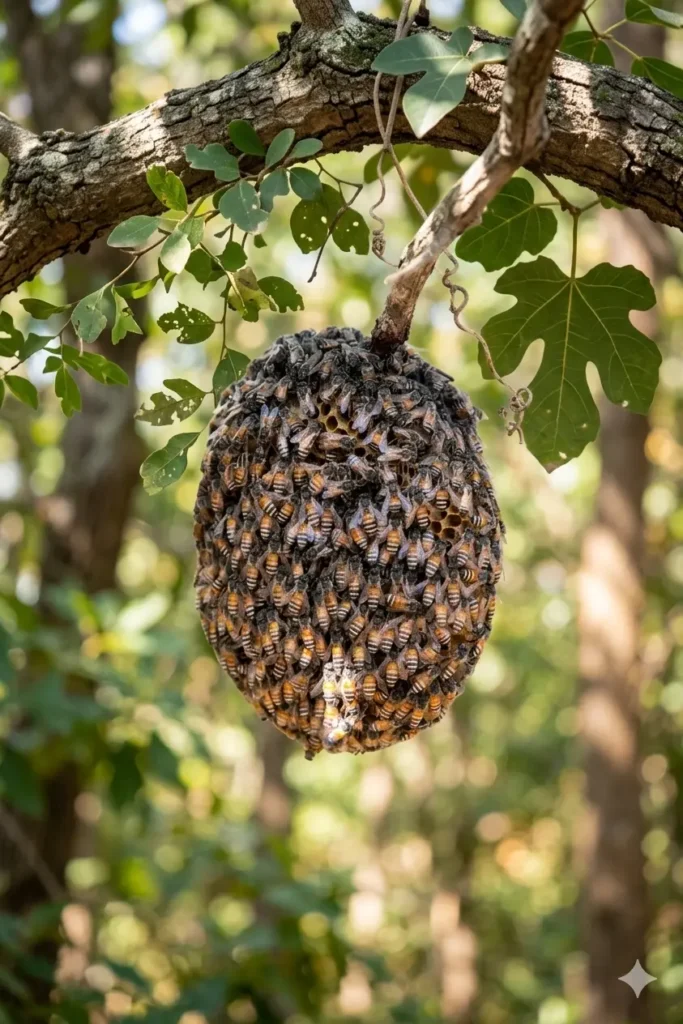
“And your Lord inspired the bees: ‘Make your homes in the mountains, in the trees, and in what people construct.’”
Urdu meaning
“اور آپ کے رب نے شہد کی مکھی کو وحی کی کہ پہاڑوں میں، درختوں میں اور ان جگہوں میں گھر بنا جو لوگ بناتے ہیں۔”
Qur’an 16:68 describes the remarkable way Allah guides the bees to their habitats. The following verse then describes the drink that comes from them.
Qur’an 16:69 — Arabic
ثُمَّ كُلِي مِن كُلِّ الثَّمَرَاتِ فَاسْلُكِي سُبُلَ رَبِّكِ ذُلُلًا ۚ يَخْرُجُ مِن بُطُونِهَا شَرَابٌ مُّخْتَلِفٌ أَلْوَانُهُ فِيهِ شِفَاءٌ لِّلنَّاسِ ۗ إِنَّ فِي ذَٰلِكَ لَآيَةً لِّقَوْمٍ يَتَفَكَّرُونَ
English meaning
“Then eat from all the fruits and follow the ways of your Lord made easy for you. From their bellies comes a drink of different colors in which there is healing for people. Surely in this is a sign for people who reflect.”
Urdu meaning
“پھر ہر قسم کے پھلوں سے کھاؤ اور اپنے رب کی آسان کی ہوئی راہوں پر چلو۔ ان کے پیٹوں سے مختلف رنگوں کا ایک مشروب نکلتا ہے، جس میں لوگوں کے لیے شفا ہے۔ بے شک اس میں ان لوگوں کے لیے نشانی ہے جو غور و فکر کرتے ہیں۔”
The Arabic text and major English translations of these verses confirm that the Qur’an describes honey as a drink in which there is shifa (healing) for people.
Does the Quran Specifically Say to Give Honey to Children?
No.
This is an important distinction.
The Qur’an mentions honey and describes healing in it, but Surah An-Nahl 16:68–69 does not specifically instruct parents to give honey to children.
Therefore, we should not say:
“The Qur’an commands parents to give honey to their children.”
That would go beyond what the verse actually says.
A more accurate statement is:
The Qur’an identifies honey as a beneficial creation of Allah and says that there is healing in it for people. Parents can appreciate this Qur’anic guidance while also considering the age, health, and safety of their child.
This distinction makes Islamic content more accurate and trustworthy.
What Does Islam Say About Honey as a Remedy?
Honey is also mentioned in authentic Prophetic tradition.
In Sahih al-Bukhari 5680, Ibn Abbas رضي الله عنهما narrated that the Prophet ﷺ said:
“Healing is in three things: a gulp of honey, cupping, and cauterization…”
The same narration also records that the Prophet ﷺ prohibited cauterization for his followers.
This hadith shows that honey had a recognized place in Prophetic medicine.
However, parents should understand what this means correctly.
It does not mean that honey should replace medical treatment whenever a child becomes sick. Islam encourages beneficial treatment, and parents should seek appropriate medical care when a child has a serious or persistent illness.
Can Babies Have Honey in Islam?
This is one of the most important questions for parents.
From a modern child-safety perspective:
Babies younger than 12 months should not be given honey.
The CDC states that honey can cause infant botulism in children younger than 12 months and specifically advises parents not to give honey to babies before their first birthday. This includes adding honey to food, water, infant formula, or a pacifier.
The NHS gives the same guidance and recommends avoiding honey completely until a baby is 12 months old.
This is not a contradiction with the Qur’an.
The Qur’an’s statement about healing in honey is general. It does not specifically say that honey is safe for newborns or young infants.
Therefore:
Qur’anic mention of honey ≠ permission to give honey to babies under one year.
Parents should follow appropriate medical safety guidance.
Why Is Honey Dangerous for Babies Under One Year?
Honey can sometimes contain spores of bacteria that can cause infant botulism.
Babies have immature digestive systems, and these spores can grow in an infant’s intestines and produce a toxin that causes serious illness. The CDC therefore advises against giving honey to children younger than 12 months.
This is why parents should avoid giving honey to a baby:
- Directly from a spoon
- Mixed into water
- Mixed into formula
- Added to baby food
- Put on a pacifier
- Used as a home remedy for cough
The safest rule is simple:
No honey before 12 months.
What About Children Older Than One Year?
Once a child reaches 12 months, honey is generally considered safe from the specific infant-botulism concern that applies to younger infants. The American Academy of Pediatrics also provides guidance for using honey in children over one year, particularly for cough.
However, “safe after one year” does not mean “unlimited.”
Honey is still a concentrated sweetener. Parents should consider the child’s overall diet and dental health rather than treating honey as a food that children should consume freely.
The CDC also emphasizes limiting added sugars in young children’s diets.
Can Honey Help a Child With a Cough?
This is one area where Islamic tradition and modern research can be discussed together carefully.
The Prophet ﷺ mentioned honey among things associated with healing, and modern pediatric guidance recognizes that honey may help relieve cough in children over one year old.
The American Academy of Pediatrics’ HealthyChildren guidance says honey can be considered for children aged one year and older and reports that research has found honey can reduce coughing and nighttime symptoms.
A recent systematic review also found that honey may improve acute cough symptoms in children, although the researchers described the overall evidence quality as low to very low and noted that better studies are needed.
Therefore, a responsible conclusion is:
Honey may soothe cough symptoms in children over one year old, but it should not be presented as a guaranteed cure for the underlying illness.
How Much Honey Can a Child Have for a Cough?
For children older than one year, pediatric guidance commonly suggests a small amount rather than large quantities.
The American Academy of Pediatrics’ HealthyChildren guidance gives the following practical amounts for cough:
- Ages 1–5: about ½ teaspoon
- Ages 6–11: about 1 teaspoon
- Age 12 and older: about 2 teaspoons
These are cough-relief suggestions, not a recommendation for daily honey consumption.
Parents should also consider the child’s individual health needs and seek professional advice when symptoms are severe, unusual, or persistent.
Does “Healing” in the Quran Mean Honey Cures Every Disease?
No.
This is one of the most important points in a responsible article about honey for children in Islam.
Allah says in Qur’an 16:69 that in the drink produced by bees there is shifa (healing) for people.
But this verse should not be turned into the claim:
“Honey cures every disease in every person.”
The Qur’an does not make that specific statement.
Honey can be beneficial, but different illnesses have different causes and treatments. A child with pneumonia, severe dehydration, an allergic reaction, diabetes, or another serious condition may need professional medical care.
Using honey as a beneficial food or traditional remedy should not delay necessary treatment.
Is Raw Honey Better for Children?
Parents sometimes assume that “raw,” “wild,” or “organic” honey is automatically safer or more beneficial for children.
That conclusion should be avoided.
For infants under 12 months, raw, processed, organic, wild, and expensive honey should all be avoided because the safety concern applies to honey generally.
For children over one year, parents should focus on:
- Product quality
- Clean storage
- Reasonable portions
- Overall diet
- Dental hygiene
- The child’s individual health needs
The label “raw” does not make honey appropriate for babies under one year.
Should Honey Replace Medicine for Children?
No.
There is an important difference between:
“Honey may have beneficial or soothing properties.”
and:
“Honey can replace medical treatment.”
The first can be supported by Islamic tradition and some modern evidence. The second is an overly broad medical claim.
If a child has difficulty breathing, severe dehydration, unusual sleepiness, persistent high fever, severe pain, signs of an allergic reaction, or symptoms that concern the parent, medical advice should be sought promptly.
Parents should also be particularly cautious with infants and young children because they can become seriously ill more quickly than older children.
Honey, Sunnah, and Responsible Parenting
For Muslim parents, following the Sunnah means more than simply using a particular food.
It also means avoiding harm and acting responsibly.
Honey is mentioned positively in Islamic sources, but responsible parenting requires parents to consider the child’s age and circumstances.
This gives us a balanced approach:
Qur’an: Honey is mentioned as a creation of Allah in which there is healing for people.
Sunnah: The Prophet ﷺ mentioned honey among things associated with healing.
Child safety: Honey should not be given to infants younger than 12 months.
Medical responsibility: Honey should not automatically replace appropriate diagnosis or treatment.
This approach allows parents to appreciate Islamic teachings without making claims that the Qur’an or Hadith do not actually make.
7 Practical Lessons for Muslim Parents
1. Learn the Quranic context
Do not quote Qur’an 16:69 as if it were specifically a command about children. The verse speaks about honey and healing generally.
2. Never give honey to a baby under 12 months
This is the most important safety rule. Honey can cause infant botulism.
3. Use moderation with older children
Honey is sweet and should be treated as part of the child’s overall diet, not as something to consume without limits.
4. Honey may help with cough after age one
Some pediatric guidance supports using a small amount of honey for cough in children over one year.
5. Do not claim that honey cures every illness
The Qur’an mentions healing, but that does not justify making unlimited medical claims.
6. Maintain dental hygiene
Honey contains sugars. Frequent exposure to sugary foods can contribute to tooth decay, so children should maintain good oral hygiene.
7. Seek medical care when necessary
Islamic use of beneficial foods should complement—not prevent—responsible medical care.
Frequently Asked Questions
Is honey allowed for children in Islam?
Yes, there is nothing in Islamic sources that generally prohibits honey for children. The Qur’an mentions honey positively, and the Prophet ﷺ mentioned it among things associated with healing. However, babies younger than 12 months should not be given honey because of the risk of infant botulism.
Can a baby under one year have honey according to Islam?
Parents should not give honey to babies under 12 months. This is an important modern food-safety recommendation because honey can cause infant botulism. The Qur’an does not specifically command parents to give honey to infants.
What does the Quran say about honey?
Qur’an 16:68–69 describes Allah’s inspiration to the bees and says that a drink of different colors comes from them, “in which there is healing for people.”
Did Prophet Muhammad ﷺ mention honey?
Yes. Sahih al-Bukhari 5680 records a narration from Ibn Abbas رضي الله عنهما in which the Prophet ﷺ mentioned a gulp of honey among things associated with healing.
Can honey cure a child’s cough?
Honey may help relieve cough symptoms in children over one year old, but it should not be described as a guaranteed cure for every cause of cough. Pediatric sources support its possible symptomatic benefit, while research quality varies.
Is wild honey safe for babies?
No. “Wild” or “raw” does not remove the safety concern for infants. Children under 12 months should not be given honey.
Is honey Sunnah for children?
Honey is mentioned in the Qur’an and in authentic Prophetic tradition as a beneficial substance, but it is more accurate to say that honey has a place in Islamic teachings rather than claiming that every child must consume honey as a specific Sunnah practice.
Final Thoughts
Honey for children in Islam is a topic where faith, tradition, and responsible parenting can come together.
The Qur’an draws attention to bees and the remarkable substance they produce. In Surah An-Nahl 16:68–69, Allah describes the bees and says that from them comes a drink of different colors in which there is healing for people.
The Prophet Muhammad ﷺ also mentioned honey in an authentic hadith recorded in Sahih al-Bukhari 5680.
At the same time, parents should never overlook an important safety fact: honey should not be given to children younger than 12 months because of the risk of infant botulism.
For children over one year, honey can be enjoyed in moderation and may provide some relief from cough symptoms. But it should not be presented as a universal cure or a replacement for medical care.
The most balanced Islamic approach is therefore simple:
Appreciate the blessing mentioned in the Qur’an, follow authentic Sunnah, protect children from known harm, use moderation, and seek appropriate medical care when needed.
That approach respects both the guidance of Islam and the responsibility parents have toward the health and wellbeing of their children.
Explore More About Pure Honey
Continue exploring our collection of helpful honey guides to learn more about choosing, using, storing, and enjoying pure natural honey.
-
10 Signs You’re Buying Fake Honey
Learn how to identify common warning signs before purchasing honey. -
How to Test if Your Honey is 100% Pure and Raw at Home
Discover simple ways to better understand the characteristics of genuine honey. -
Raw Honey vs Processed Honey: Which One Is Better?
Compare the differences between raw and processed honey. -
How to Use Honey Every Day: 15 Healthy Ideas
Learn about proper storage, shelf life, and crystallization. -
The Sunnah of Raw Honey: Healing and Health Benefits in Islamic Tradition
Explore the significance of honey in Islamic teachings and tradition.
🐝 Learn More About Honey for Children
CDC
Child SafetyLearn why honey should not be given to children younger than 12 months and understand the risk of infant botulism.
HealthyChildren.org
Pediatric GuidanceExplore pediatric guidance on using honey for cough in children over 1 year and important precautions for younger children.
Sahih al-Bukhari
HadithRead the authentic hadith in which the Prophet Muhammad ﷺ mentioned a gulp of honey among things associated with healing.
Quran — Surah An-Nahl
Quran 16:68–69Read the Quranic passage about bees and honey, including the statement that in the drink produced by bees there is healing for people.