Introduction
Islam and other religions is an important topic for understanding how Muslims are taught to interact with people of different faiths. Islam addresses not only how Muslims worship Allah, but also how they should interact with other human beings. The Qur’an repeatedly emphasizes justice, kindness, human dignity, good manners, and respectful communication. At the same time, the Qur’an clearly presents Islamic beliefs about faith and does not teach that all religions are theologically identical.
So, how should Muslims understand Islam and other religions? The Qur’an provides a balanced answer: Muslims are instructed to maintain their Islamic beliefs while treating people of different faiths with justice, kindness, dignity, and respectful conduct.
1. Islam and Other Religions: The Diversity of Humanity
One of the clearest verses about human diversity is found in Surah Al-Hujurat 49:13.
Quran 49:13
Arabic:
يَا أَيُّهَا النَّاسُ إِنَّا خَلَقْنَاكُم مِّن ذَكَرٍ وَأُنثَىٰ وَجَعَلْنَاكُمْ شُعُوبًا وَقَبَائِلَ لِتَعَارَفُوا ۚ إِنَّ أَكْرَمَكُمْ عِندَ اللَّهِ أَتْقَاكُمْ ۚ إِنَّ اللَّهَ عَلِيمٌ خَبِيرٌ
English meaning:
“O humanity! Indeed, We created you from a male and a female, and made you into peoples and tribes so that you may get to know one another. Surely the most noble of you in the sight of Allah is the most righteous among you. Allah is truly All-Knowing, All-Aware.”
Urdu meaning:
“اے لوگو! بے شک ہم نے تمہیں ایک مرد اور ایک عورت سے پیدا کیا اور تمہیں قوموں اور قبیلوں میں اس لیے بنایا کہ تم ایک دوسرے کو پہچانو۔ بے شک اللہ کے نزدیک تم میں سب سے زیادہ عزت والا وہ ہے جو تم میں سب سے زیادہ پرہیزگار ہے۔ بے شک اللہ سب کچھ جاننے والا، باخبر ہے۔”
This verse establishes an important principle for understanding Islam and other religions: humanity contains different peoples and communities, and Muslims are instructed to recognize this diversity.
2. Human Dignity in Islam and Other Religions
The Qur’an also speaks about the honor given to the children of Adam.
Quran 17:70
Arabic:
وَلَقَدْ كَرَّمْنَا بَنِي آدَمَ وَحَمَلْنَاهُمْ فِي الْبَرِّ وَالْبَحْرِ وَرَزَقْنَاهُم مِّنَ الطَّيِّبَاتِ وَفَضَّلْنَاهُمْ عَلَىٰ كَثِيرٍ مِّمَّنْ خَلَقْنَا تَفْضِيلًا
English meaning:
“And We have certainly honored the children of Adam and carried them on the land and sea and provided them with good things and preferred them over much of what We have created.”
Urdu meaning:
“اور بے شک ہم نے اولادِ آدم کو عزت دی اور انہیں خشکی اور تری میں سوار کیا اور انہیں پاکیزہ چیزوں سے رزق دیا اور اپنی بہت سی مخلوق پر انہیں فضیلت دی۔”
This verse is an important foundation when discussing human dignity in the context of Islam and other religions.
3. Islam and Other Religions: Justice Toward Peaceful Non-Muslims
One of the most directly relevant verses is Surah Al-Mumtahanah 60:8.
Quran 60:8
Arabic:
لَا يَنْهَاكُمُ اللَّهُ عَنِ الَّذِينَ لَمْ يُقَاتِلُوكُمْ فِي الدِّينِ وَلَمْ يُخْرِجُوكُم مِّن دِيَارِكُمْ أَن تَبَرُّوهُمْ وَتُقْسِطُوا إِلَيْهِمْ ۚ إِنَّ اللَّهَ يُحِبُّ الْمُقْسِطِينَ
English meaning:
“Allah does not forbid you from those who do not fight you because of religion and do not expel you from your homes—from being righteous toward them and acting justly toward them. Indeed, Allah loves those who act justly.”
Urdu meaning:
“اللہ تمہیں ان لوگوں کے ساتھ نیکی اور انصاف کرنے سے منع نہیں کرتا جنہوں نے دین کے معاملے میں تم سے جنگ نہیں کی اور نہ تمہیں تمہارے گھروں سے نکالا۔ بے شک اللہ انصاف کرنے والوں کو پسند کرتا ہے۔”
This verse is especially important for understanding Islam and other religions, because it explicitly mentions righteousness and justice toward peaceful people of other faiths.
4. Religious Differences Do Not Permit Injustice
Islamic principles concerning Islam and other religions do not make justice dependent on whether Muslims agree with another person’s beliefs.
Quran 5:8
Arabic:
يَا أَيُّهَا الَّذِينَ آمَنُوا كُونُوا قَوَّامِينَ لِلَّهِ شُهَدَاءَ بِالْقِسْطِ ۖ وَلَا يَجْرِمَنَّكُمْ شَنَآنُ قَوْمٍ عَلَىٰ أَلَّا تَعْدِلُوا ۚ اعْدِلُوا هُوَ أَقْرَبُ لِلتَّقْوَىٰ
English meaning:
“O believers! Stand firm for Allah and bear true testimony. Do not let the hatred of a people lead you to injustice. Be just! That is closer to righteousness.”
Urdu meaning:
“اے ایمان والو! اللہ کے لیے مضبوطی سے قائم رہنے والے اور انصاف کی گواہی دینے والے بنو۔ کسی قوم کی دشمنی تمہیں اس بات پر آمادہ نہ کرے کہ تم انصاف نہ کرو۔ انصاف کرو، یہی تقویٰ کے زیادہ قریب ہے۔”
This gives Muslims an important ethical principle: religious disagreement does not justify injustice.
5. Islam and Other Religions: Respectful Religious Dialogue
The Qur’an also gives guidance about discussing religion with people who hold different beliefs.
Quran 16:125
English meaning:
“Invite to the way of your Lord with wisdom and good instruction, and argue with them in a way that is best.”
Urdu meaning:
“اپنے رب کے راستے کی طرف حکمت اور اچھی نصیحت کے ساتھ بلاؤ، اور ان سے ایسے انداز میں گفتگو کرو جو سب سے بہتر ہو۔”
This emphasizes wisdom, good instruction, and respectful discussion.
6. Islam and Other Religions: Guidance for the People of the Book
The Qur’an gives specific guidance regarding Ahl al-Kitab, particularly Jews and Christians.
Quran 29:46
English meaning:
“Do not argue with the People of the Book unless gracefully, except with those of them who act wrongfully. And say, ‘We believe in what has been revealed to us and what was revealed to you. Our God and your God is One, and to Him we submit.’”
Urdu meaning:
“اور اہلِ کتاب سے بحث نہ کرو مگر ایسے طریقے سے جو بہترین ہو، سوائے ان لوگوں کے جنہوں نے ان میں سے ظلم کیا ہو، اور کہو: ہم اس پر ایمان لائے جو ہماری طرف نازل کیا گیا اور جو تمہاری طرف نازل کیا گیا، اور ہمارا معبود اور تمہارا معبود ایک ہی ہے، اور ہم اسی کے فرمانبردار ہیں۔”
This demonstrates that Muslims can maintain their own beliefs while discussing religious matters respectfully.
7. The Qur’an Forbids Insulting the Religious Objects of Others
Quran 6:108
English meaning:
“And do not insult those they invoke besides Allah, lest they insult Allah in hostility without knowledge.”
Urdu meaning:
“اور جنہیں وہ اللہ کے سوا پکارتے ہیں انہیں برا نہ کہو، ورنہ وہ جہالت کی بنا پر حد سے بڑھ کر دشمنی میں اللہ کو برا کہیں گے۔”
This is an especially important principle when discussing Islam and other religions.
The Qur’an does not tell Muslims to accept every religious belief as true. Instead, it instructs Muslims to avoid insulting the objects of worship of others.
8. No Compulsion in Religion
Quran 2:256
Arabic:
لَا إِكْرَاهَ فِي الدِّينِ ۖ قَد تَّبَيَّنَ الرُّشْدُ مِنَ الْغَيِّ
English meaning:
“There shall be no compulsion in religion. The right course has become clear from the wrong.”
Urdu meaning:
“دین میں کوئی جبر نہیں؛ ہدایت گمراہی سے واضح ہو چکی ہے۔”
This verse is frequently discussed in relation to freedom of religious belief. Its detailed interpretation and legal application have been discussed by Muslim scholars, so it is best presented with its context.
9. Does Islam Respect Other Religions Without Considering Them Equally True?
This is an important distinction in understanding Islam and other religions.
The Qur’an does not teach that all religions are theologically identical or equally true. Islam maintains its own clear theological beliefs.
At the same time, Muslims are commanded to:
- act justly;
- treat peaceful people with kindness;
- avoid insulting others’ objects of worship;
- communicate respectfully;
- maintain family relationships;
- recognize human dignity.
Therefore:
Respecting a person is not the same as agreeing with every belief that person holds.
A Muslim can firmly believe in Islam while treating a person of another faith with fairness, dignity, and kindness.
10. Prophet Muhammad ﷺ and People of Other Religions
The Sunnah provides practical examples of how Islam and other religions can be understood through the Prophet’s ﷺ conduct.
A Jewish funeral passed in front of the Prophet ﷺ, and he stood up. When he was told that it was the funeral of a Jewish person, he said:
أَلَيْسَتْ نَفْسًا
English meaning:
“Is it not a soul?”
Urdu meaning:
“کیا وہ ایک جان نہیں تھی؟”
This narration is recorded in Sahih al-Bukhari 1312–1313 and Sahih Muslim 961a.
It provides an important example of recognizing human dignity regardless of religious identity.
11. Kindness Toward a Non-Muslim Mother
Another important example concerns Asma’ bint Abi Bakr رضي الله عنها.
Her mother was a polytheist, and Asma’ asked the Prophet ﷺ whether she should maintain a good relationship with her.
The Prophet ﷺ replied:
نَعَمْ صِلِي أُمَّكِ
English meaning:
“Yes, maintain good relations with your mother.”
Urdu meaning:
“ہاں، اپنی ماں کے ساتھ اچھا سلوک کرو اور اس سے تعلق قائم رکھو۔”
This narration is recorded in Sahih Muslim 1003b.
It demonstrates that religious difference does not automatically eliminate family responsibilities or kindness.
What Does Islam Teach About Other Religions?
When the Qur’an and Sunnah are considered together, several principles become clear.
Islam teaches Muslims to:
Treat people with dignity
The Qur’an speaks about the honor given to the children of Adam.
Be just
Even disagreement or dislike must not lead to injustice.
Be kind to peaceful people
Qur’an 60:8 explicitly mentions righteousness and justice toward peaceful non-Muslims.
Avoid religious insults
Qur’an 6:108 prohibits insulting the objects of worship of others.
Discuss religion respectfully
Qur’an 16:125 and 29:46 emphasize wisdom and the best manner of discussion.
Maintain family relationships
The Prophet ﷺ instructed Asma’ to treat her non-Muslim mother kindly.
Remain committed to Islamic beliefs
Respecting other people does not require Muslims to abandon their own religious convictions.
Islam and Other Religions: A Balanced Understanding
The Islamic position should not be reduced to either extreme.
It would be inaccurate to claim that Islam teaches Muslims to hate everyone who follows another religion. The Qur’an explicitly commands justice and permits righteous treatment of peaceful non-Muslims.
It would also be inaccurate to claim that Islam teaches all religions are equally true. The Qur’an maintains distinct Islamic theological beliefs.
A more accurate summary is:
Islam teaches Muslims to remain committed to their faith while treating people of different religions with justice, kindness, dignity, and respectful conduct.
Frequently Asked Questions
What does Islam say about other religions?
The Qur’an maintains Islamic theological beliefs while instructing Muslims to act justly, behave kindly toward peaceful people, avoid religious insults, and communicate respectfully.
Does Islam allow Muslims to treat non-Muslims kindly?
Yes. Qur’an 60:8 explicitly mentions righteousness and justice toward people who do not fight Muslims because of religion or expel them from their homes.
Does Islam permit insulting other religions?
Qur’an 6:108 specifically prohibits Muslims from insulting those whom others invoke besides Allah.
Can Muslims discuss Islam with people of other religions?
Yes. Qur’an 16:125 instructs Muslims to use wisdom and good instruction, while Qur’an 29:46 teaches respectful discussion with the People of the Book.
Does respecting another religion mean Muslims believe it is true?
No. Respectful treatment and theological agreement are different matters. Islam maintains its own religious beliefs while requiring justice and good conduct toward others.
Final Thoughts
The Qur’an and Sunnah present a framework in which faith and good character work together.
A Muslim’s commitment to Islam does not give permission to behave unjustly toward people of other religions. The Qur’an teaches justice, kindness toward peaceful people, respectful religious dialogue, and avoidance of insults. The Prophet Muhammad ﷺ also demonstrated respect for human dignity in his interactions with people of other faiths.
The central lesson is:
A Muslim can firmly hold Islamic beliefs while treating people of other religions with dignity, justice, kindness, and respect.
This is one of the most important principles for understanding Islam and other religions in the light of the Qur’an and authentic Sunnah.
Explore More About the Quran
Continue your journey of learning by exploring our helpful articles about the Holy Quran, its meanings, understanding, and guidance for everyday life.
-
The Quran: A Light for Every Heart
Discover why the Holy Quran is a timeless source of guidance, hope, and spiritual peace for every believer. -
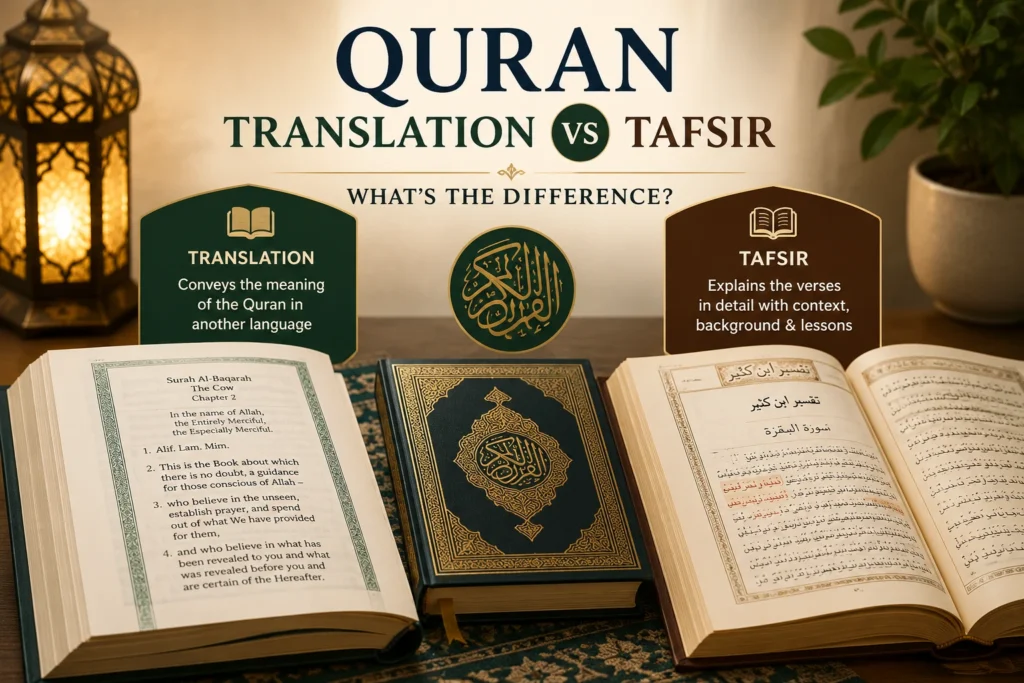
Quran Translation vs Tafsir
Understand the difference between reading a translation of the Quran and studying its detailed explanation through Tafsir. -
10 Foods Mentioned in the Quran and Their Benefits
Learn about the blessed foods mentioned in the Quran and explore their significance in Islamic tradition and everyday life.
📚 Recommended Quran & Hadith Reference Sources
Explore reliable Quranic verses and authentic Hadith references about human dignity, justice, kindness, and respectful relations with people of different religions:
-
Quran 49:13 — Human Diversity & Dignity:
Read Surah Al-Hujurat 49:13 about humanity, different peoples and tribes, knowing one another, and true nobility in the sight of Allah.
Read Quran 49:13 → -
Quran 60:8 — Kindness & Justice:
Explore the Quranic guidance on dealing kindly and justly with people who do not fight Muslims because of religion or drive them from their homes.
Read Quran 60:8 → -
Sahih al-Bukhari 1312–1313 — Human Dignity:
Read the authentic Hadith about the Prophet Muhammad ﷺ standing for a Jewish funeral and saying, “Is it not a soul?”
Read the Authentic Hadith → -
Sahih Muslim 1003b — Kindness to a Non-Muslim Mother:
Read the Hadith in which Asma’ bint Abu Bakr رضي الله عنها asked about maintaining kindness toward her polytheist mother, and the Prophet ﷺ told her to treat her kindly.
Read the Authentic Hadith →