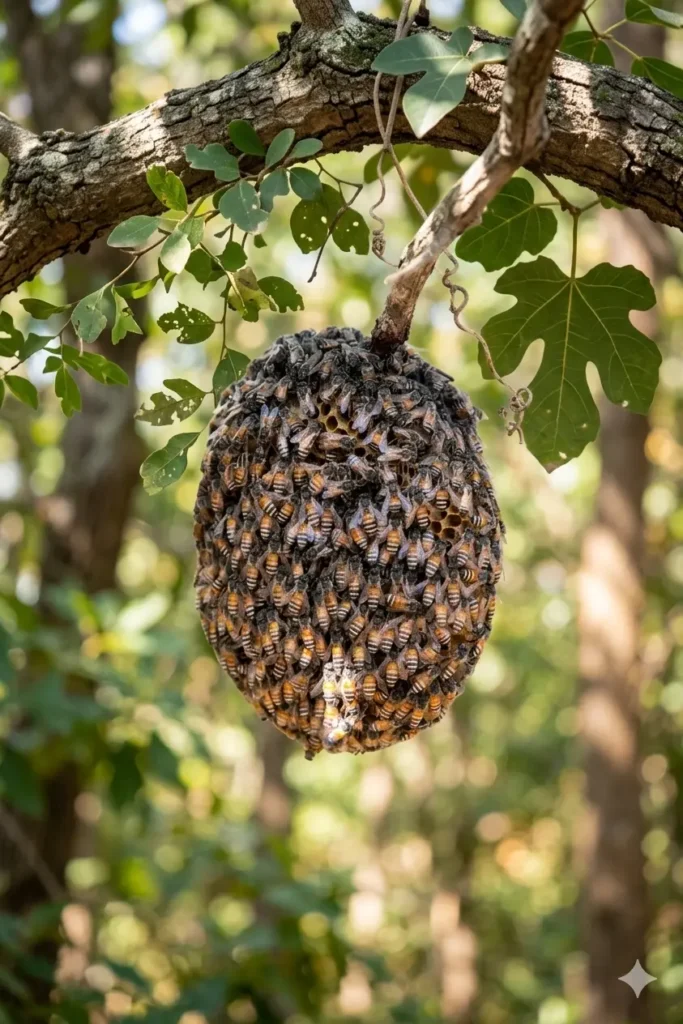
When people think about a honey bee colony, one bee often gets the most attention: the queen bee. She is larger and longer than worker bees, and her presence is essential to the colony’s ability to produce new generations of bees.
But is the queen really the “leader” or “ruler” of the hive? Not exactly.
The queen bee’s primary biological role is reproduction. She lays the eggs that produce the next generation of workers, queens, and drones, while worker bees perform most of the tasks involved in feeding the colony, building comb, collecting food, caring for young, and maintaining the nest.
In this guide, we will explore what a queen bee is, how she develops, what she does inside the colony, how she mates, how long she can live, and what happens when a colony loses its queen.
What Is a Queen Bee?
A queen bee is a fertile female honey bee whose primary role is to reproduce within the colony.
Unlike worker bees, the queen has fully developed reproductive organs and can lay large numbers of eggs. A healthy, fertile queen can lay eggs almost continuously during periods of strong colony activity. During peak season, a quality queen may lay more than 2,000 eggs per day.
A honey bee colony normally has one reproductive queen for most of its life. However, colonies can temporarily have more than one queen during certain periods, such as when a new queen is being established or during the transition associated with swarming.
The queen is not responsible for directing every activity in the hive. Worker bees collectively carry out most colony tasks.
How Is a Queen Bee Different From Worker Bees?
Queen bees and worker bees are both female and develop from fertilized eggs. The major difference is how they are raised and developed.
Young female larvae have the potential to develop into queens or workers. Nutrition plays an important role in this process. Queen-destined larvae receive royal jelly throughout their development, while worker-destined larvae transition to a different diet after the early larval period.
As a result, the adult queen develops a reproductive system that allows her to lay eggs, while worker bees are generally sterile females that perform the colony’s other essential tasks.
Queen Bee vs. Worker Bee
| Feature | Queen Bee | Worker Bee |
|---|---|---|
| Sex | Female | Female |
| Main role | Reproduction | Colony maintenance |
| Reproductive ability | Fertile | Normally sterile |
| Egg laying | Yes | Normally no |
| Body shape | Long abdomen | Smaller body |
| Royal jelly during development | Yes | Yes during early development |
| Main colony duties | Egg production and reproductive role | Foraging, nursing, comb building, cleaning and defense |
Both are essential to the colony, but their responsibilities are very different.
What Does a Queen Bee Do?
The most important job of a queen bee is laying eggs.
Her ability to produce new generations allows the colony to replace aging workers and maintain its population.
However, the queen also plays an important role in the social organization of the colony through chemical signals called pheromones. Queen pheromones help communicate her presence and reproductive status to the workers.
This is one reason the queen’s condition matters so much to the colony.
If the queen becomes weak, is lost, or her reproductive performance declines, the colony may respond by raising or accepting a replacement queen.
Does the Queen Bee Actually Lead the Colony?
This is one of the most common misconceptions about queen bees.
A queen bee does not rule the colony like a human queen ruling a kingdom.
She does not give orders to worker bees or decide where they should forage.
Instead, honey bee colonies function as highly organized social systems in which workers perform different tasks according to their age, condition, and the needs of the colony.
The queen’s presence and pheromones influence colony organization, but she is not a commander.
In fact, during a swarm, the queen follows the collective movement of the colony rather than leading it. Extension experts note that scouts help locate potential nesting sites, while the queen accompanies the swarm.
So calling her the “queen” describes her biological position in the colony, not a human-style leadership role.
How Does a Queen Bee Develop?
Queen development begins with a fertilized egg.
Young female larvae can potentially develop into queens or workers. When a colony needs a new queen, worker bees select suitable young larvae and raise them in specially constructed queen cells.
These larvae receive abundant royal jelly from nurse bees.
Royal jelly is a nutrient-rich secretion produced by worker bees. Nurse bees produce it from glands associated with their heads and provide it to developing larvae.
The developing queen eventually emerges from her enlarged queen cell as a virgin queen.
The Basic Queen Development Process
Egg → Larva → Pupa → Virgin Queen → Mated Queen
After emerging, the young queen must mature and complete her mating flights before she becomes a fully functioning reproductive queen.
What Is Royal Jelly?
Royal jelly is a secretion produced by worker bees and used to feed developing larvae.
It is particularly important in queen development because queen-destined larvae receive royal jelly throughout their development.
Interestingly, queen development demonstrates how nutrition can influence the development of female honey bees. Female larvae can follow different developmental pathways depending on how the colony provisions them.
This is one of the fascinating examples of biological specialization in honey bee colonies.
How Does a Queen Bee Mate?
After emerging as a virgin queen, the young queen leaves the colony for mating flights.
During these flights, she mates with drones. The sperm she receives is stored inside her body in a specialized organ called the spermatheca.
She can then use the stored sperm to fertilize eggs over an extended period.
When the queen returns to the colony and begins laying, she can produce both female and male offspring.
A fertilized egg can develop into a female bee, while an unfertilized egg develops into a male drone.
This reproductive system allows one successfully mated queen to produce the large population required by a honey bee colony.
How Many Eggs Can a Queen Bee Lay?
A healthy queen can produce an astonishing number of eggs.
During peak season, a high-quality queen may lay more than 2,000 eggs in a single day.
The actual number depends on factors such as:
- Queen health
- Colony population
- Food availability
- Season
- Weather
- Brood-rearing conditions
- Overall colony condition
A queen therefore does not lay the same number of eggs every day throughout her life.
How Does the Queen Control the Colony?
It is more accurate to say that the queen influences colony organization rather than controls it.
Queen pheromones help workers recognize that a functional queen is present. These chemical signals are part of the communication system that helps maintain the colony’s social structure.
Queen and brood pheromones can also influence worker reproductive development. When a colony lacks these signals, some workers may eventually develop active ovaries and begin laying unfertilized eggs.
This demonstrates how closely connected the queen, worker bees, and developing brood are.
What Happens When the Queen Bee Dies?
When a colony loses its queen, it can face a serious problem because there may no longer be a fertile female capable of producing the worker population needed for the colony’s future.
If suitable young larvae are available, workers can raise a new queen.
They modify suitable cells or construct queen cells and provide the developing queen larva with the nutrition required for queen development.
The new queen then emerges, matures, mates, and eventually begins laying eggs.
If a colony cannot successfully replace its queen, its population can gradually decline as older workers die without enough new workers being produced.
Why Do Bees Replace Their Queen?
Honey bee colonies may produce replacement queens for several reasons.
1. The Queen Becomes Less Productive
A queen’s productivity can decline as she ages. Penn State Extension notes that although queens can live for many years, their productivity commonly declines after the first year or two.
2. The Queen Is Lost
If the queen suddenly dies, workers may attempt to raise a replacement from suitable young larvae.
3. Swarming
When a colony becomes crowded and prepares to reproduce by swarming, it may produce new queens. The old queen may leave with part of the colony while a new queen continues the original colony’s reproductive cycle.
Can a Honey Bee Colony Have Two Queen Bees?
Normally, a mature colony operates with one primary reproductive queen.
However, there can be temporary periods when more than one queen is present, particularly during queen replacement or around swarming.
This situation should not be interpreted as the normal long-term arrangement of a honey bee colony.
The colony’s social structure generally settles around one functioning queen.
How Long Does a Queen Bee Live?
Queen bees can live considerably longer than worker bees.
Penn State Extension reports that queens can live seven or more years, although their productivity often declines much earlier.
In managed beekeeping, queens may therefore be replaced before reaching their maximum possible lifespan if their performance declines or the beekeeper wants to maintain strong colony productivity.
Queen Bee and Honey Production
Does the queen make honey?
No.
The queen’s primary role is reproduction. Worker bees are responsible for collecting nectar and pollen, processing nectar into honey, feeding developing bees, producing wax, maintaining the nest, and performing many other colony tasks.
However, the queen has an indirect connection to honey production.
A healthy queen can maintain strong brood production, which helps maintain a large workforce of worker bees. Those workers perform the activities that ultimately allow the colony to collect and store honey.
So the relationship can be summarized simply:
Healthy Queen → Strong Brood Production → Strong Worker Population → Greater Colony Capacity
This does not mean a queen alone determines how much honey a colony produces. Weather, forage availability, colony health, management, pests, diseases, and many other factors also matter.
What Do Worker Bees Do for the Queen?
The queen is constantly surrounded by worker bees, often called her retinue.
Workers feed and care for her and interact with her through physical contact and chemical signals.
The workers also maintain the colony’s environment and provide the food required for brood production.
This relationship shows that the queen does not operate independently. Her reproductive role depends on the larger social organization of the colony.
Queen Bee, Worker Bee and Drone
A honey bee colony contains three primary types of adult bees:
Queen
The fertile female whose primary role is reproduction.
Worker
A female bee that normally does not reproduce and performs most colony tasks.
Drone
A male bee whose primary reproductive role is mating with queens.
Together, these three types form a highly organized social system.
Common Myths About Queen Bees
Myth 1: The Queen Commands Every Bee
False.
The queen does not give orders like a human ruler. Colony activities emerge from interactions among the bees and environmental conditions.
Myth 2: The Queen Makes All the Honey
False.
Worker bees collect nectar and process it into honey.
Myth 3: There Can Never Be More Than One Queen
Not always.
Although colonies normally have one primary queen, temporary situations involving multiple queens can occur during colony transitions.
Myth 4: Every Female Bee Could Become a Queen at Any Time
Not exactly.
Young female larvae have the potential to develop into queens or workers, but queen development depends on the colony’s developmental decisions and nutrition.
Myth 5: A Queen Is the Strongest Bee in the Colony
The queen is specialized for reproduction rather than physical dominance. Worker bees are responsible for most of the colony’s daily activities.
Why Is the Queen Bee Important?
A honey bee colony cannot maintain its population without successful reproduction.
The queen provides the eggs from which new generations develop, while worker bees care for the brood and maintain the colony.
Her pheromones also form an important part of the colony’s communication system.
In this way, the queen is essential not because she “rules” the hive, but because she is a central part of the colony’s reproductive and social system.
Queen Bee and the Amazing Organization of Honey Bees
One of the most remarkable things about honey bees is that no single bee appears to manage the entire colony.
Instead, thousands of individuals perform specialized tasks and respond to the needs of the colony.
The queen specializes in reproduction.
Worker bees specialize in tasks such as:
- Caring for brood
- Cleaning cells
- Producing wax
- Building comb
- Guarding the entrance
- Collecting nectar
- Collecting pollen
- Processing and storing food
Drones have a specialized reproductive role.
Together, these different roles allow the colony to function as a highly coordinated social organism.
Frequently Asked Questions About Queen Bees
What is the main job of a queen bee?
The primary job of a queen bee is reproduction. She lays the eggs that produce future generations of the colony.
Does a queen bee rule the hive?
No. The queen does not command the colony. She plays a central reproductive and chemical-signaling role, while worker bees carry out most colony activities.
How many eggs can a queen bee lay in one day?
During peak season, a quality queen can lay more than 2,000 eggs per day.
What do queen bees eat?
Queen bees are fed by worker bees and receive royal jelly as part of their specialized development and ongoing care.
How does a bee become a queen?
A female honey bee larva can be selected by workers for queen development. Queen-destined larvae receive royal jelly throughout their development and grow in specialized queen cells.
What happens if a queen bee dies?
If conditions allow, worker bees can raise a replacement queen from suitable young female larvae. If replacement fails, the colony may eventually decline.
How long can a queen bee live?
Queen bees can live seven or more years, although their productivity often declines earlier.
Does the queen bee make honey?
No. Worker bees collect nectar and process it into honey. The queen’s primary role is reproduction.
Can a colony have two queen bees?
Normally there is one primary reproductive queen, but temporary situations with more than one queen can occur during colony transitions such as queen replacement or swarming.
Final Thoughts
The queen bee is one of the most fascinating members of a honey bee colony, but her role is often misunderstood.
She is not a ruler giving orders to thousands of bees. Instead, she is a highly specialized reproductive female whose ability to lay eggs helps sustain the colony. Her pheromones also contribute to the colony’s social organization and communication.
At the same time, the queen cannot function alone. Worker bees feed and care for her, raise the young, collect food, build comb, defend the colony, and maintain the nest.
The real wonder of a honey bee colony is therefore not simply the queen—it is how thousands of bees work together, each performing different roles that help the entire colony survive.
For anyone interested in honey, beekeeping, or the natural world, understanding the queen bee is an important step toward understanding the remarkable social life of honey bees.
Explore More About Pure Honey
Continue exploring our collection of helpful honey guides to learn more about choosing, using, storing, and enjoying pure natural honey.
-
10 Signs You’re Buying Fake Honey
Learn how to identify common warning signs before purchasing honey. -
How to Test if Your Honey is 100% Pure and Raw at Home
Discover simple ways to better understand the characteristics of genuine honey. -
Raw Honey vs Processed Honey: Which One Is Better?
Compare the differences between raw and processed honey. -
How to Use Honey Every Day: 15 Healthy Ideas
Learn about proper storage, shelf life, and crystallization. -
The Sunnah of Raw Honey: Healing and Health Benefits in Islamic Tradition
Explore the significance of honey in Islamic teachings and tradition.
🐝 Learn More About Queen Bees
Penn State Extension
Bee ScienceExplore detailed information about queen honey bee development, reproduction, queen cells, and the biological differences between queens and worker bees.
University of Minnesota Extension
BeekeepingLearn more about honey bee colonies, queen bees, worker bees, drones, colony organization, and the fascinating social life of honey bees.