Introduction
Why Do Bees Make Honey? Bees spend countless hours flying from flower to flower collecting nectar and transforming it into honey.
Many people think bees make honey simply because humans enjoy eating it. In reality, honey is produced for a much more important reason—it is the primary food source that allows a bee colony to survive throughout the year, especially during seasons when flowers are scarce.
Every drop of honey represents an incredible amount of teamwork, precision, and natural engineering. Thousands of worker bees cooperate, travel great distances, collect nectar from millions of flowers, and carefully transform it into one of nature’s most remarkable foods.
In this guide, we’ll explore the fascinating science behind honey production, discover why bees make honey, learn how nectar becomes honey, and uncover amazing facts about one of the hardest-working insects on Earth.
What Is Honey?
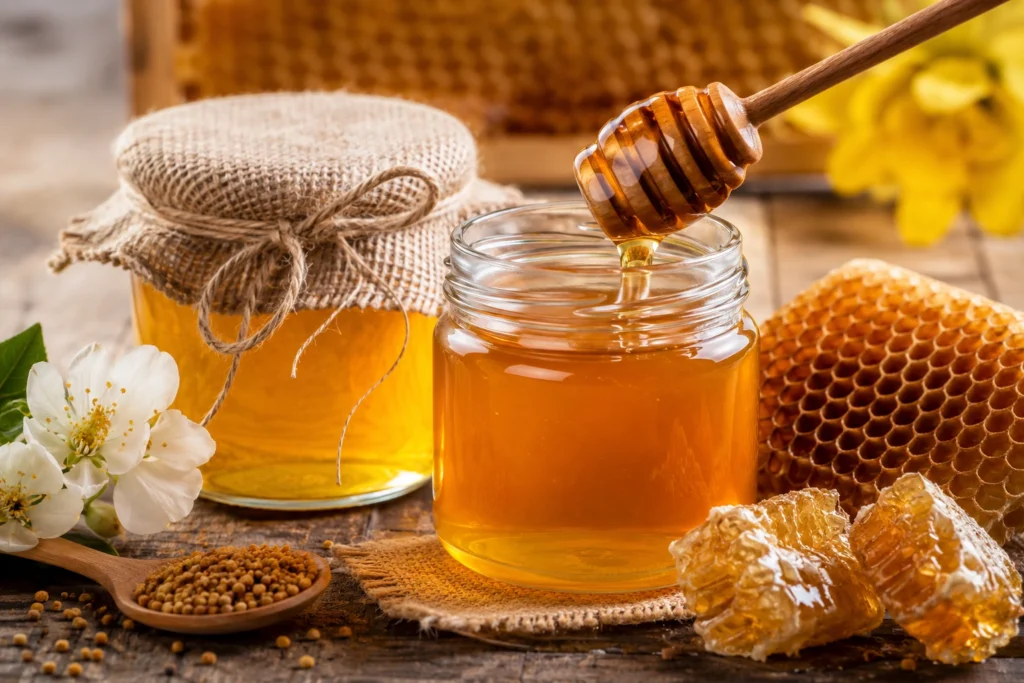
Honey is a naturally sweet substance produced by honey bees from the nectar of flowering plants.
Although it looks simple, honey is actually a complex natural food containing different sugars, enzymes, organic acids, minerals, antioxidants, and small amounts of vitamins.
Fresh flower nectar contains a large amount of water and is too thin to be stored for long periods. Bees transform this watery nectar into thick, concentrated honey that can be stored safely inside the hive for months.
This remarkable process allows the colony to build food reserves for times when fresh flowers are unavailable.
Where Do Bees Get Nectar?
Honey begins with flowers.
Flowering plants produce a sweet liquid called nectar, which attracts insects such as bees, butterflies, and other pollinators.
Worker bees visit flowers because nectar provides the raw material needed to produce honey.
Some popular nectar sources include:
- Wildflowers
- Clover
- Acacia
- Orange blossoms
- Sunflowers
- Mustard flowers
- Eucalyptus
- Sidr (Jujube)
- Lavender
Each type of flower produces nectar with its own unique characteristics, which is why honey can vary greatly in color, aroma, and taste.
For example:
- Acacia honey is usually light in color.
- Wildflower honey can have a rich and complex flavor.
- Sidr honey is known for its distinctive taste and darker appearance.
The flowers visited by bees directly influence the final honey produced.
How Do Bees Collect Nectar?
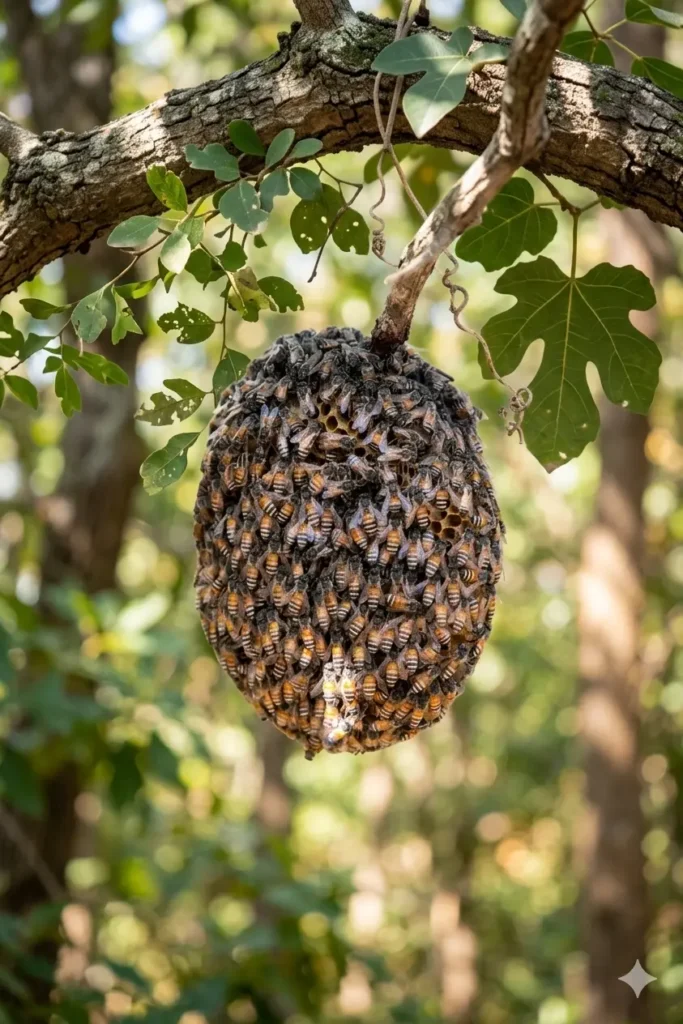
Inside every bee colony, different bees have different jobs.
The bees responsible for collecting nectar are called worker bees.
Every day, these hardworking insects leave the hive in search of flowering plants.
Using their long, tube-like tongue (called a proboscis), worker bees carefully sip nectar from flowers.
However, the nectar does not go directly into the bee’s stomach for digestion.
Instead, it is stored in a special organ called the honey stomach (or honey crop), which is designed specifically for carrying nectar back to the hive.
A single worker bee may visit dozens—or even hundreds—of flowers during one foraging trip.
Once the honey stomach is full, the bee returns to the hive to deliver its precious cargo.
The Amazing Science Inside a Bee
One of the most fascinating parts of honey production happens inside the bee itself.
As nectar travels through the honey stomach, it mixes with special natural enzymes produced by the bee.
One important enzyme is called invertase.
This enzyme begins breaking down the nectar’s complex sugar (sucrose) into two simpler sugars:
- Glucose
- Fructose
These natural sugars are easier to store and help give honey its familiar sweetness.
This process begins before the nectar even reaches the hive.
Nature has equipped honey bees with an incredibly efficient biological system that starts transforming nectar into honey almost immediately after collection.
Returning to the Hive
After returning home, the foraging bee passes the partially processed nectar to another worker bee.
This transfer takes place mouth-to-mouth through a process called trophallaxis.
Although this may sound unusual, it plays an important role in honey production.
Each transfer allows additional enzymes to mix with the nectar, continuing its transformation.
Several worker bees may handle the same nectar before it is finally placed into a honeycomb cell.
This remarkable teamwork ensures that every drop of honey is carefully processed before long-term storage.
Why Do Bees Make Honey?
Contrary to popular belief, bees do not make honey for humans.
They make honey for themselves.
Honey is the colony’s primary food reserve.
Flowers are abundant during spring and summer, but they may disappear during winter, droughts, or rainy seasons.
Without stored food, an entire colony could starve.
Honey provides bees with:
- A reliable source of energy.
- Food during winter.
- Nutrition when flowers are unavailable.
- Fuel for raising young bees (larvae).
- Energy to maintain hive activities.
In many regions, bees may spend several months relying almost entirely on the honey they stored during warmer seasons.
Without this remarkable food storage system, honey bee colonies would struggle to survive.
Teamwork Makes Everything Possible
One honey bee alone cannot produce enough honey to support a colony.
Instead, thousands of bees work together as one highly organized community.
Each bee has a specific role:
Queen Bee
The queen lays eggs and ensures the colony continues to grow.
Worker Bees
Worker bees perform almost every task inside and outside the hive.
They:
- Collect nectar
- Gather pollen
- Build honeycomb
- Feed young bees
- Clean the hive
- Protect the colony
- Produce honey
- Store food
Drone Bees
Drone bees have one primary role—mating with a queen from another colony to help ensure healthy future generations.
This division of labor is one of nature’s greatest examples of teamwork and organization.
How Nectar Becomes Honey Inside the Honeycomb
Once a worker bee returns to the hive with nectar stored in its honey stomach, the transformation process continues.
The nectar is passed from one worker bee to another through a process called trophallaxis. During each transfer, natural enzymes continue breaking down complex sugars into simpler ones.
Eventually, the processed nectar is placed into tiny wax cells called honeycomb cells.
At this stage, the liquid still contains a high amount of water—often around 70–80%. If stored like this, it could ferment and spoil. Bees must remove most of this moisture before the nectar becomes stable honey.
This is where another amazing process begins.
Why Do Bees Fan Their Wings?
Many people are surprised to learn that bees use their wings for more than flying.
Inside the hive, worker bees gather around the honeycomb and rapidly fan their wings. This creates airflow throughout the hive, helping water evaporate from the nectar.
As moisture slowly leaves the nectar:
- It becomes thicker.
- The sugar concentration increases.
- The risk of fermentation decreases.
When the water content falls to around 17–20%, the nectar has officially become honey.
Once the honey reaches the proper consistency, bees seal each honeycomb cell with a thin layer of beeswax. This natural “lid” keeps the honey clean and protected until it is needed.
Why Doesn’t Honey Spoil Easily?
Honey is one of the few natural foods that can remain edible for an incredibly long time when stored properly.
Several natural factors contribute to its long shelf life:
Low Moisture Content
Most bacteria and fungi need water to grow. Since ripe honey contains very little water, harmful microorganisms struggle to survive.
High Natural Sugar
Honey contains a high concentration of natural sugars. This creates an environment that draws water away from microbes, making it difficult for them to multiply.
Natural Acidity
Honey is naturally acidic, which also discourages the growth of many microorganisms.
Natural Enzymes
During honey production, bees add enzymes that contribute to honey’s unique properties.
These factors work together to help preserve honey naturally.
Although honey can crystallize over time, crystallization is a natural process and does not necessarily mean the honey has gone bad.
Do All Bees Make Honey?
A common misconception is that every bee species produces honey.
In reality, there are more than 20,000 known bee species worldwide, but only a small number produce honey in quantities suitable for storage.
Honey Bees
Honey bees (genus Apis) are the best-known honey producers. They live in large colonies and store enough honey to survive through periods when flowers are scarce.
Bumble Bees
Bumble bees also produce small amounts of honey, but only enough for their own colony. They do not produce surplus honey that is typically harvested.
Stingless Bees
Some stingless bee species produce honey as well. Their honey often has a thinner consistency and a distinctive flavor.
Solitary Bees
Most bee species are solitary. They do not build large colonies or store honey in the way honey bees do.
How Much Honey Does One Bee Produce?
One of the most amazing facts about honey production is how much effort goes into every jar.
A single worker bee produces only about one-twelfth of a teaspoon of honey during its entire lifetime.
To produce just one pound (about 454 grams) of honey, a colony may collectively:
- Visit millions of flowers.
- Fly thousands of miles in total.
- Make countless nectar-collecting trips.
Every spoonful of honey represents extraordinary teamwork and persistence.
Amazing Bee Facts You Probably Didn’t Know
Bees are full of surprises. Here are some fascinating facts:
- A healthy honey bee colony may contain 20,000 to 60,000 bees.
- Worker bees can visit hundreds of flowers in a single day.
- There is usually one queen bee in a healthy colony.
- Honeycomb is made from natural beeswax produced by worker bees.
- The hexagonal shape of honeycomb cells is one of nature’s most efficient designs, allowing maximum storage with minimal wax.
- Bees communicate the location of flowers through the famous “waggle dance.”
- Honey bees can fly at speeds of around 20–24 km/h (12–15 mph) under favorable conditions.
- Bees rely on their sense of smell and vision to locate flowers rich in nectar and pollen.
Why Bees Are Essential for Our Environment
Bees do much more than produce honey.
As they travel from flower to flower collecting nectar and pollen, they help transfer pollen between plants—a process known as pollination.
Pollination is essential for the reproduction of many flowering plants and contributes to the production of numerous fruits, vegetables, nuts, and seeds.
Healthy bee populations support:
- Agriculture.
- Biodiversity.
- Wild plant reproduction.
- Food production.
Without pollinators such as bees, many ecosystems would be significantly affected.
Bees and Honey in the Quran
The importance of bees is also reflected in the Holy Quran.
Surah An-Nahl (Chapter 16) is named after the bee and mentions how Allah inspired the bees to build their homes and produce a drink of varying colors in which there is healing for people.
Allah says:
“There emerges from their bellies a drink of varying colors, in which there is healing for people. Indeed in that is a sign for people who give thought.”
(Surah An-Nahl 16:69)
This verse encourages reflection on the remarkable design of creation and the signs of Allah found in the natural world.
What Can We Learn from Bees?
Honey bees teach lessons that go beyond science.
Their organized communities demonstrate:
- Teamwork.
- Hard work.
- Patience.
- Cooperation.
- Responsibility.
- Dedication.
Each bee performs its role for the benefit of the entire colony, showing how even small efforts can contribute to something much greater.
Conclusion
Honey is far more than a sweet natural food. It is the result of one of the most remarkable processes in nature.
From collecting nectar in blooming flowers to transforming it through natural enzymes, reducing moisture inside the hive, and carefully storing it in wax honeycombs, bees display extraordinary organization and efficiency.
Their work supports not only their own survival but also countless plants, crops, and ecosystems through pollination.
The next time you enjoy a spoonful of honey, remember that it represents the combined effort of thousands of bees, millions of flowers, and one of nature’s most fascinating examples of cooperation.
Whether viewed through the lens of science or appreciated as one of the signs of Allah’s creation, honey continues to inspire curiosity, gratitude, and admiration around the world.
Explore More About Pure Honey
Continue exploring our collection of helpful honey guides to learn more about choosing, using, storing, and enjoying pure natural honey.
-
10 Signs You’re Buying Fake Honey
Learn how to identify common warning signs before purchasing honey. -
How to Test if Your Honey is 100% Pure and Raw at Home
Discover simple ways to better understand the characteristics of genuine honey. -
Raw Honey vs Processed Honey: Which One Is Better?
Compare the differences between raw and processed honey. -
How to Use Honey Every Day: 15 Healthy Ideas
Learn about proper storage, shelf life, and crystallization. -
The Sunnah of Raw Honey: Healing and Health Benefits in Islamic Tradition
Explore the significance of honey in Islamic teachings and tradition.
🐝 Learn More About Bees & Pollination
Bees are important pollinators and play a vital role in natural ecosystems and food production. Learn more from the Food and Agriculture Organization (FAO).
🌿 FAO Pollination Knowledge Resources →