The Quran gives women a position of dignity, responsibility, spiritual value, and legal rights. Women’s Rights in Quran are presented through principles of justice, kindness, mercy, and responsibility. When discussing women’s respect according to the Quran, it is important to look at the Quran as a whole rather than relying on a single verse. The Quran speaks about women as believers, wives, mothers, daughters, heirs, and independent moral individuals, while emphasizing their dignity, rights, and responsibilities.
The Quran does not present respect for women as merely a matter of social etiquette. It connects human dignity with accountability before Allah and establishes principles governing family relationships, inheritance, marriage, financial rights, and spiritual responsibility.
1. The Quran Begins With the Common Human Origin of Men and Women
The Quran describes humanity as originating from a single soul and its mate. Surah An-Nisa 4:1 reminds humanity of its common origin and calls people to remain mindful of Allah and maintain family relationships.
This provides an important foundation for understanding the Quranic view of women: women are not described as a separate or inferior creation. Men and women are part of the same human family and are accountable to the same Creator.
2. Allah Has Given Human Beings Dignity
Surah Al-Isra 17:70 states that Allah has honored the children of Adam. The verse speaks about humanity generally and establishes the principle of human dignity.
This dignity is relevant when discussing women because women are part of Bani Adam. Respect for a woman therefore begins with recognizing her inherent human dignity rather than judging her value solely by social status, wealth, appearance, or family background.
3. Women and Men Are Both Spiritually Accountable
One of the clearest Quranic passages concerning men and women is Surah Al-Ahzab 33:35. The verse repeatedly mentions believing men and believing women, obedient men and obedient women, truthful men and truthful women, patient men and patient women, charitable men and charitable women, and those who remember Allah.
The verse concludes that Allah has prepared forgiveness and a great reward for them.
This demonstrates that spiritual worth in the Quran is not presented simply in terms of gender. Faith, obedience, truthfulness, patience, charity, chastity, and remembrance of Allah are qualities for which both men and women are accountable.
4. Righteous Deeds Are Rewarded for Both Men and Women
Surah An-Nahl 16:97 explicitly speaks about a believer who does righteous deeds, whether male or female. Allah promises such a person a good life and a reward according to their deeds.
This is an important part of women’s respect according to the Quran because a woman’s spiritual relationship with Allah is not dependent on her being valued only through another person. Her own faith and righteous actions have significance before Allah.
5. The Quran Commands Men to Treat Their Wives With Kindness
Surah An-Nisa 4:19 gives a direct instruction concerning the treatment of women in marriage. It prohibits treating women as property or placing them under unfair pressure and commands believers to live with them in kindness.
The principle of ma’ruf in this context points toward honorable, appropriate, and fair treatment.
This means that marriage in the Quran is not a justification for humiliation, cruelty, exploitation, or deliberate mistreatment.
A husband should therefore understand that being responsible for a family does not give him permission to disregard his wife’s dignity.
6. Marriage Is Described Through Affection and Mercy
The Quran presents marriage as one of Allah’s signs. Surah Ar-Rum 30:21 describes spouses as a source of tranquility and says Allah placed affection and mercy between them.
This gives an important picture of the marital relationship.
A healthy Muslim marriage should involve:
- Affection
- Mercy
- Emotional support
- Mutual respect
- Responsibility
- Kind treatment
- Peace and companionship
The Quranic description of marriage therefore goes beyond a purely legal relationship.
7. Women Have Rights Within Marriage
Surah Al-Baqarah 2:228 states that women have rights corresponding to their obligations according to what is recognized as fair and proper. The verse occurs in the context of divorce and marital rights, so it should be understood within that legal context.
The broader principle is that marriage involves responsibilities and rights on both sides.
Respect therefore includes recognizing that a wife has legitimate rights and that those rights cannot simply be ignored.
8. The Quran Recognizes Women’s Property and Inheritance Rights
The Quran specifically establishes inheritance rights for women.
Surah An-Nisa 4:7 states that women have an obligatory share of what parents and close relatives leave behind, whether the inheritance is small or large.
The Quran later provides detailed inheritance rules in Surah An-Nisa.
This is significant because respect is not only about speaking politely. It also includes respecting a person’s legally established rights and property.
9. Women Have a Share in What They Earn
Surah An-Nisa 4:32 states that men have a share of what they earn and women have a share of what they earn.
The verse does not mean that every financial rule is identical for men and women. Rather, it establishes that women are recognized as individuals whose own deeds and earnings have significance.
This is an important distinction when discussing women’s financial dignity in Islam.
10. Believing Men and Women Support One Another in Good
Surah At-Tawbah 9:71 describes believing men and believing women as allies or guardians of one another. The verse says they encourage what is right, discourage what is wrong, establish prayer, give zakah, and obey Allah and His Messenger.
This presents Muslim women as active participants in the religious community rather than merely passive observers.
Women have moral responsibility and are part of the community that encourages righteousness.
11. Respect for Women Includes Justice During Divorce
The Quran does not treat divorce as a situation where a woman loses all rights.
Surah Al-Baqarah 2:229 instructs that marriage should either be maintained appropriately or ended with good treatment. The surrounding verses establish rules intended to prevent injustice and improper financial treatment.
Similarly, Surah An-Nisa 4:19 prohibits using pressure against women to take back part of what was given to them as part of the marriage arrangement, subject to the conditions mentioned in the verse.
This demonstrates that dignity and fairness remain important even when a marriage ends.
12. The Quran Protects Women’s Inheritance
Before discussing specific inheritance shares, it is important to understand the principle established by the Quran: women can be rightful heirs.
Surah An-Nisa 4:7 explicitly mentions an obligatory share for women in inheritance.
The detailed shares differ according to the family circumstances described in the Quran. Therefore, claims such as “women always receive half of men” are an oversimplification. Islamic inheritance depends on the specific heirs and circumstances.
13. Respect Does Not Mean Ignoring Family Responsibilities
The Quran also describes responsibilities within family life. These responsibilities should be studied together with the rights and duties assigned to both spouses.
For example, Surah Al-Baqarah 2:228 discusses reciprocal rights and responsibilities, while Surah Ar-Rum 30:21 emphasizes affection and mercy between spouses.
Therefore, a Quranic discussion of women’s respect should not reduce Islam to either “men and women have exactly the same roles” or “women have no rights.” The Quran establishes both shared spiritual accountability and specific responsibilities within family and social life.
14. Respect for Women Begins With Good Character
The Quran repeatedly connects righteousness with justice, kindness, mercy, honesty, and responsibility.
A Muslim man’s treatment of his wife, mother, daughter, sister, or other women should therefore reflect good character.
Respect can be demonstrated through:
- Speaking without humiliation
- Avoiding injustice
- Protecting legitimate rights
- Keeping promises
- Treating family members with kindness
- Avoiding exploitation
- Respecting property and inheritance rights
- Showing mercy within marriage
- Recognizing women’s spiritual responsibility before Allah
15. What Does the Quran Say About a Woman’s Value?
The Quran does not teach that a woman’s value is determined by her wealth, beauty, marriage status, or social position.
The Quran emphasizes faith and righteous action. Surah Al-Ahzab 33:35 lists numerous spiritual qualities shared by believing men and women, while Surah An-Nahl 16:97 promises reward for righteous believers whether male or female.
This gives a powerful principle: a woman’s ultimate worth before Allah is connected to faith, righteousness, and accountability rather than worldly status.
Women Respect According to Quran: Key Lessons
When the relevant Quranic verses are considered together, several important principles emerge.
1. Women possess human dignity
Allah honored the children of Adam, which includes both men and women.
2. Women have spiritual responsibility
The Quran repeatedly addresses believing men and women and promises reward for righteous actions.
3. Women have rights in marriage
The Quran establishes principles of fairness, reciprocal rights, and appropriate treatment between spouses.
4. Women have inheritance rights
The Quran explicitly gives women obligatory inheritance shares.
5. Women should be treated with kindness
Surah An-Nisa 4:19 directly instructs believers to live with women in kindness.
6. Marriage should include mercy
Surah Ar-Rum 30:21 describes affection and mercy between spouses as among Allah’s signs.
What Does Respect for Women Mean in Islam?
Respect for women according to the Quran is broader than simply using polite words.
It includes recognizing a woman’s dignity, fulfilling her rights, avoiding injustice, treating her with kindness, respecting her property, honoring legitimate inheritance rights, and understanding that she is independently accountable to Allah.
At the same time, Quranic family ethics are based on responsibilities as well as rights. Men and women have shared spiritual responsibilities while certain family and legal responsibilities are assigned differently.
The most accurate way to understand the Quranic position is therefore through the complete framework of dignity, justice, mercy, responsibility, rights, and accountability before Allah.
Conclusion
The Quran presents women as honored human beings, believers, moral agents, family members, spouses, heirs, and members of the Muslim community. It establishes principles that protect dignity and requires kindness and justice in relationships.
Surah An-Nisa 4:19 commands kind treatment, Surah Ar-Rum 30:21 describes marriage through affection and mercy, Surah An-Nisa 4:7 recognizes women’s inheritance rights, and Surah Al-Ahzab 33:35 emphasizes the spiritual accountability and reward of both men and women.
For Muslims, respecting women is therefore not simply a modern social idea. It is part of living according to principles of justice, mercy, dignity, and responsibility taught in the Quran.
Frequently Referenced Quran Verses
- Surah An-Nisa 4:1 — Common human origin
- Surah An-Nisa 4:7 — Women’s inheritance rights
- Surah An-Nisa 4:19 — Kind treatment of women
- Surah An-Nisa 4:32 — Men’s and women’s earnings
- Surah Al-Baqarah 2:228 — Reciprocal marital rights
- Surah At-Tawbah 9:71 — Believing men and women supporting one another
- Surah An-Nahl 16:97 — Reward for righteous men and women
- Surah Al-Isra 17:70 — Human dignity
- Surah Al-Ahzab 33:35 — Spiritual equality in accountability and reward
- Surah Ar-Rum 30:21 — Affection and mercy between spouses
Explore More About the Quran
Continue your journey of learning by exploring our helpful articles about the Holy Quran, its meanings, understanding, and guidance for everyday life.
-
The Quran: A Light for Every Heart
Discover why the Holy Quran is a timeless source of guidance, hope, and spiritual peace for every believer. -
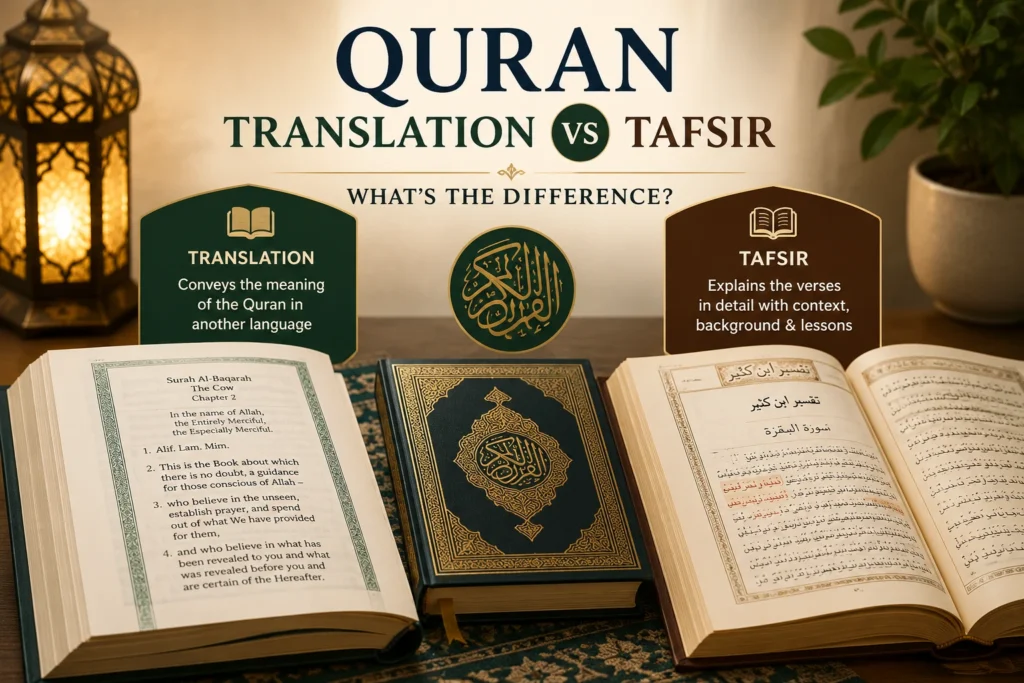
Quran Translation vs Tafsir
Understand the difference between reading a translation of the Quran and studying its detailed explanation through Tafsir. -
10 Foods Mentioned in the Quran and Their Benefits
Learn about the blessed foods mentioned in the Quran and explore their significance in Islamic tradition and everyday life.
Frequently Asked Questions (FAQ)
📜 Academic & Scriptural References on Women’s Rights
Quran.com (Surah An-Nisa 4:1-35)
Primary ScriptureDirect verses from Surah The Women detailing inheritance laws, marital protection, financial independence, and legal rights.
Yaqeen Institute (Islamic Gender Studies)
Academic PapersScholarly articles addressing common misconceptions, spiritual equality between genders, and historical Islamic legal precedents.
Sunnah.com (Prophetic Wisdom on Family & Women)
Hadith DatabaseAuthentic traditions emphasizing kind treatment, education of daughters, and mutual respect within the marital home.