
What is Natural Big Bee Honey?
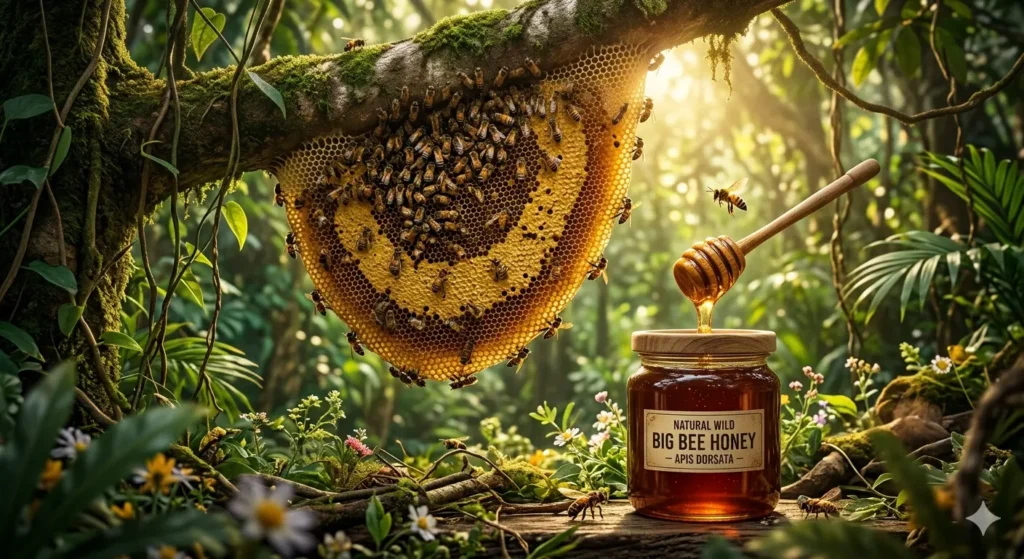
Big Bee Honey, traditionally known in South Asia as Bari Makhi Ka Shahad, is produced by the Apis dorsata species, commonly referred to as the giant honeybee. These remarkable bees are famous for their large size and extraordinary work ethic.
Unlike farm-reared bees kept in artificial environments, wild giant honeybees are nomadic and fierce builders. They construct massive, single-comb hives that can measure up to several feet across, typically hanging from high tree branches, old cliffs, and tall structures in open forest regions. Because of the scale of these hives and the huge numbers of worker bees involved, this variety represents nature’s most abundant, classic source of pure, raw energy.
Structural & Botanical Attributes
The lifestyle and strength of the giant honeybee give this honey its own unique, time-tested qualities:
- High-Volume Foraging: Big bees travel vast distances across diverse natural forests and agricultural valleys. They collect nectar from prominent blossoms, tall trees, and widespread seasonal crops, creating a very well-rounded, balanced nutrient profile.
- Classic Clean Viscosity: Because of their massive hive structures and high water turnover, Big Bee Honey has a classic, beautifully smooth flow. It offers the traditional fluid density that people universally recognize as premium raw honey.
- Rich Floral Spectrum: The complex combination of nectar from major wild trees gives this variety a naturally vibrant, golden-bright to deep amber clarity.
Seasonal Relevance: When is it Best to Consume?
Natural Big Bee honey is an incredible everyday staple, but its effects can be optimally leveraged depending on the time of year:
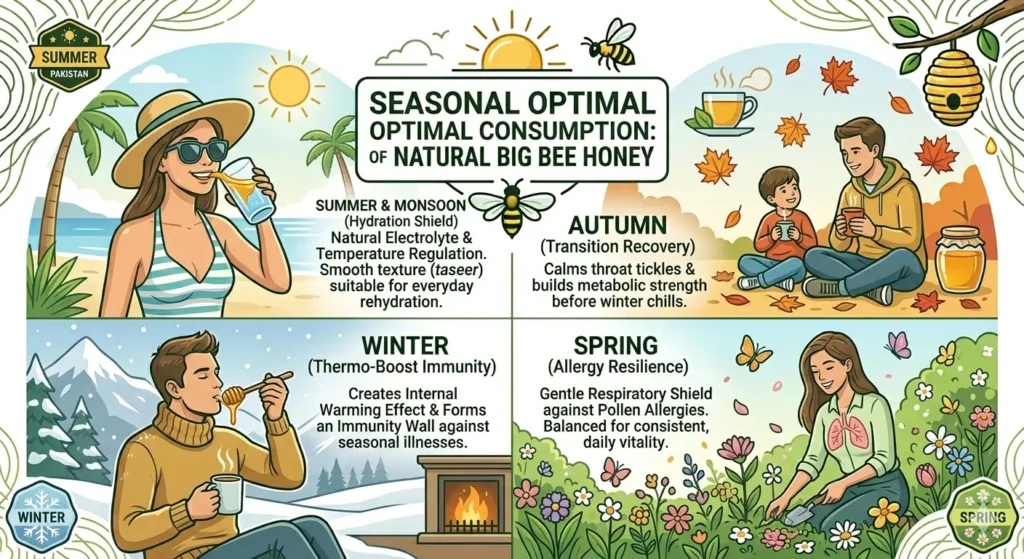
Summer & Monsoon (The Hydration & Vitality Shield)
Natural Electrolyte: In hot summer months, the human body loses vital minerals and sugars through sweat, leading to dehydration and fatigue. Big Bee honey is highly rich in easily absorbable glucose and fructose, making it an excellent natural rehydration fuel during high-heat seasons.
Balanced Temperature Profile: Compared to small bee variants, regular big bee honey is structurally milder in its immediate thermogenic effect (taseer). This makes it highly suitable for consistent, daily use even during warmer months without overwhelming the body’s internal heat.
Winter & Spring (The Respiratory Comfort)
Soothing Demulcent: During seasonal changes when dry air triggers throat irritation, a spoonful of raw Big Bee honey creates a thick, soothing coating over sensitive throat tissues, easing dry tickles and coughing reflexes.
Spring Allergies: Consuming authentic wild big bee honey just before the spring season introduces the body to local wild pollens, acting as a gentle, natural way to build respiratory resilience.
Optimal Daily Timing: When to Take It for Maximum Benefit
To unlock the full biochemical power of raw Big Bee honey, aligning its consumption with your body’s daily biological rhythms is key:
- The Instant Morning Ignition: Consuming a tablespoon of Big Bee honey mixed with lukewarm water or a glass of milk first thing in the morning provides a clean source of glycogen directly to the liver. It wakes up the brain, fires up metabolism, and prevents early morning sluggishness.
- Pre-Workout Fuel (30 Minutes Before Exercise): For athletes or anyone engaging in physical labor, this honey acts as a perfect, clean pre-workout carbohydrate. It breaks down rapidly into immediate muscle fuel, sustaining physical stamina without causing the digestive heaviness associated with processed energy drinks.
- Post-Meal Digestive Aid: Taking a small teaspoon of raw honey about 30 minutes after a heavy lunch or dinner helps stimulate natural digestive fluids, aiding the stomach in processing food comfortably.
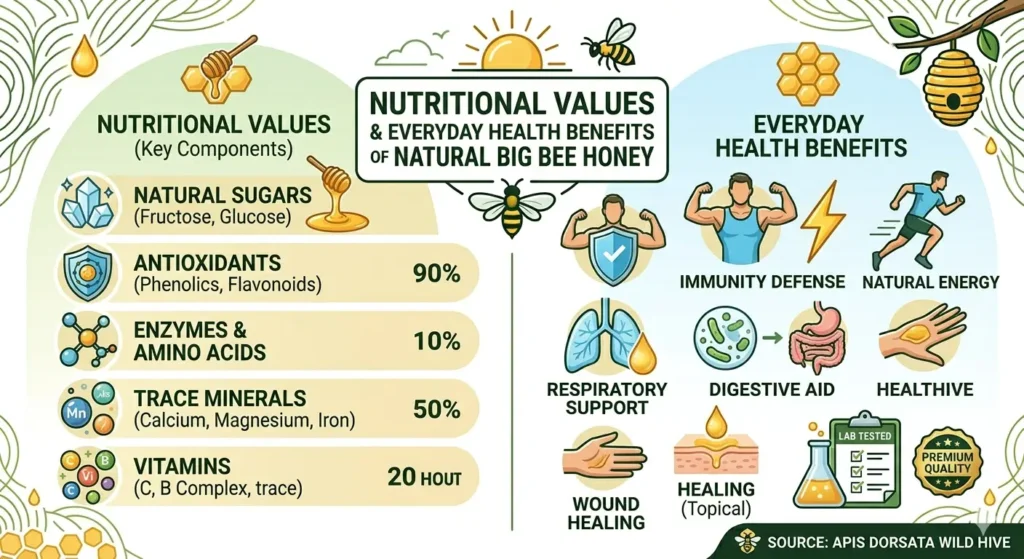
Nutritional Values and Everyday Health Benefits
Big Bee honey is highly valued globally as an excellent, nutrient-dense replacement for refined white sugars and industrial corn syrups:
- Clean Cellular Energy: Because its natural monosaccharides require no complex breakdown by the digestive system, it provides an instantaneous, non-toxic energy spike that keeps the body active.
- Digestive Tract Support: Raw, unpasteurized big bee honey contains natural hydrogen peroxide properties and active enzymes that maintain clean gut flora and inhibit unwanted bacteria in the digestive tract.
- Antioxidant Maintenance: It delivers a steady dose of organic acids and flavonoids that protect blood vessels and support overall cardiovascular wellness when consumed as part of a balanced diet.
Physical Identification: Recognizing Genuine Big Bee Honey
| Physical Property | Typical Characteristics of Small Bee Honey |
| Color (Rang) | Bright golden-yellow to a warm light amber. |
| Viscosity (Ghaara-pan) | Elegantly fluid, smooth, and easily pourable texture. |
| Aroma | Comforting and sweet; mild fragrance of open meadows and large blossoms. |
| Taste Profile | Classically sweet, rich, and clean; entirely free from any medicinal bitterness. |
| Crystallization | Crystallizes very slowly and into larger, coarser grains due to its smooth texture. |
Global Hotspots: Where Big Bee Honey is Found in Majority
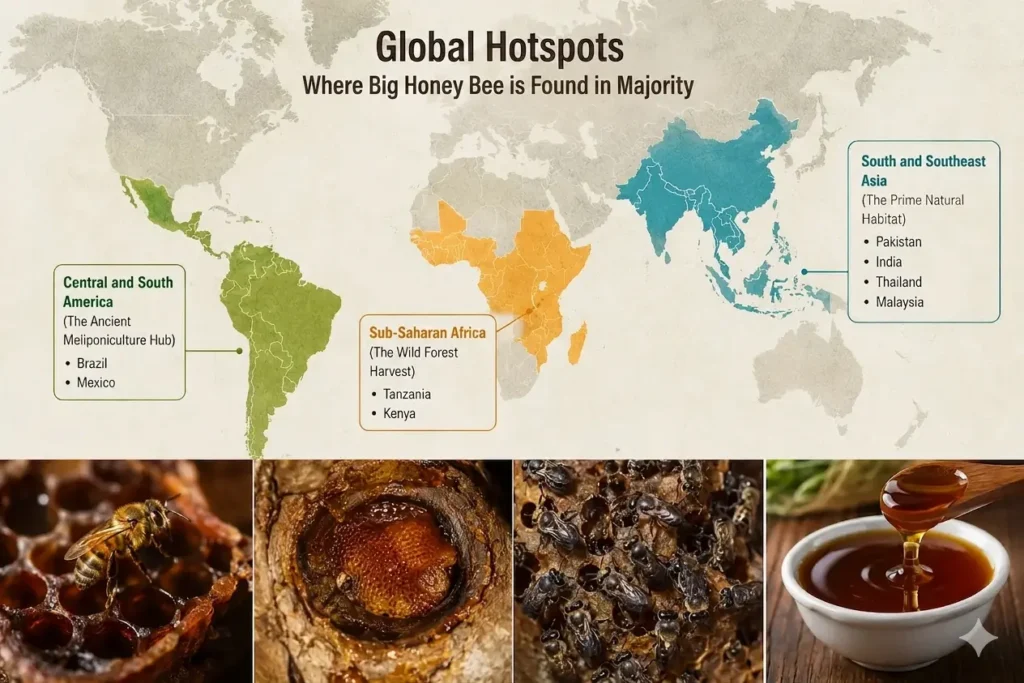
Big bee honey—primarily harvested from the giant Asian honey bee (Apis dorsata) and the Himalayan cliff bee (Apis laboriosa)—is world-renowned for its high potency, robust flavor profiles, and rich history of wild hunting. Because these massive, aggressive bees thrive in high-altitude cliffs, towering forest canopies, and dense wild jungles, its harvesting hubs and majority usage are heavily concentrated in specific regions of the world.
1. South and Southeast Asia (The Prime Wild Frontiers)
This region is the undisputed global stronghold for wild giant honey bee colonies, which build massive, single-comb hives out in the open hanging from high tree branches and rock faces.
- Pakistan: Found extensively in the deep sub-Himalayan forest tracks, northern mountain valleys like Swat, and forested plains. Local collectors risk high climbs to harvest this potent, multi-floral wild honey, which is a staple in traditional winter remedies.
- Nepal and the Indian Himalayas: The world capital for true “Cliff Honey.” Indigenous teams (like the Gurung tribe of Nepal) perform perilous cliff-hanging harvests to collect honey from Apis laboriosa. This specific big bee honey is famous globally for its spring-harvested, bioactive properties.
- Indonesia and India (Sundarbans): The massive mangrove forests of the Sundarbans and the dense rainforests of Sumatra host massive Apis dorsata colonies. The honey is intensively collected by traditional forest foragers and used across regional wellness markets.
2. Sub-Saharan Africa (The High-Canopy Wild Harvest)
- Ethiopia and Tanzania: While Africa is home to various wild honey bee sub-species, the dense woodland canopies and mountain cliffs host large, aggressive wild bee strains. Local traditional hunters use smoke and handmade bark hives placed high in baobab and highland trees to secure deep, smoky-flavored wild honey heavily utilized in local trading and cultural ceremonies.
3. Central and Eastern Europe (The Traditional Forest Honey Hubs)
- Germany (Black Forest) and Poland: While these regions utilize managed hives rather than wild cliff bees, they are global hotspots for “Honeydew” or forest honey produced by large European honey bee strains foraging deep in pine and oak woodlands. This dense, dark honey is highly prized across Europe as a premium health tonic.
Why Consumption is Concentrated in These Regions
Unlike small, docile stingless bees or standard farm-raised bees, giant honey bees cannot be easily domesticated or kept in standard wooden boxes. Consequently, the distribution of this authentic honey relies heavily on regional wild-harvesting networks:
- High Risk, High Reward: Because harvesting from giant bees requires specialized local knowledge, rope ladders, and immense bravery against aggressive swarms, a massive portion of the pure harvest is traded and consumed within local markets immediately after the seasonal hunts.
- The Power of Deep Forest Foraging: Giant bees have a massive flight range compared to small bees. They forage from the highest canopies of mature forest trees and remote mountain flora, imbuing the honey with exceptionally strong enzyme levels, antioxidants, and intense, distinct flavor profiles unique to these untouched landscapes.
I know this web site provides quality based articles and other data, is there any other website which offers such things in quality?
Thanks for the comment and keep visiting this site .
We have almost completed the development work and soon we will upload the proper and correct content for this site