Introduction
Honey is a natural sweetener that has been used for centuries in traditional diets and home remedies. Many people prefer honey over refined white sugar because it contains naturally occurring sugars and small amounts of other compounds. However, people living with diabetes often have an important question: Can diabetics eat honey, or should they avoid it completely?
Diabetes is a condition in which the body cannot properly regulate blood glucose levels. Food choices, portion sizes, physical activity, medications, and other health factors can all influence blood sugar management. Since honey contains carbohydrates in the form of natural sugars, it can increase blood glucose levels after consumption.
Although honey is often considered a healthier alternative to refined sugar, it is not sugar-free and should not be treated as a diabetes medicine. Understanding its nutritional properties, possible advantages, and potential risks can help people with diabetes make informed decisions.
In this article, we will explore whether honey is suitable for people with diabetes, how it affects blood sugar, whether raw honey is a better choice, how much honey may fit into a diabetes meal plan, and which precautions are important for maintaining healthy glucose levels.
Can People with Diabetes Eat Honey?
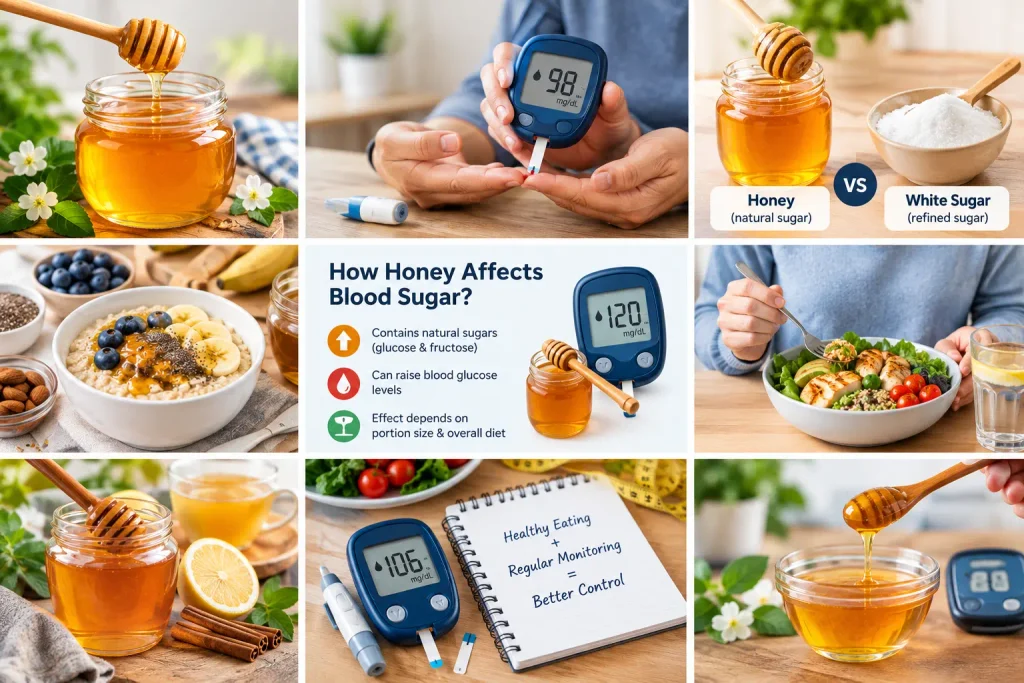
Yes, some people with diabetes may be able to consume a small amount of honey occasionally, provided it fits into their individual meal plan and blood sugar management goals. However, honey is not a risk-free sweetener, and it can raise blood glucose levels.
Honey contains glucose, fructose, and other carbohydrates. After consumption, these sugars are absorbed and processed by the body, potentially increasing the amount of glucose circulating in the bloodstream.
According to the Mayo Clinic, replacing table sugar with honey generally offers no meaningful advantage for diabetes management because both sweeteners affect blood glucose. Honey also contains slightly more carbohydrates and calories per teaspoon than granulated sugar.
This means that people with diabetes should not assume that honey is safe simply because it is natural.
Whether honey is appropriate depends on several factors, including:
- Current blood glucose levels.
- The type of diabetes a person has.
- The amount of carbohydrates consumed throughout the day.
- Physical activity and overall dietary habits.
- The medications or insulin used to manage diabetes.
- Individual advice from a qualified healthcare professional.
For someone whose blood glucose is frequently above their target range, limiting honey and other concentrated sources of sugar may be a sensible choice. Someone whose diabetes is well managed may be able to include a small amount occasionally, depending on their treatment plan.
The most important principle is moderation, not the belief that natural sweeteners cannot affect blood sugar.
What Happens to Blood Sugar After Eating Honey?
To understand honey’s effects, it helps to know how the body processes carbohydrates.
When a person eats honey, the digestive system absorbs its sugars. Glucose enters the bloodstream directly, while fructose is processed primarily by the liver. The overall response varies according to the amount consumed, the person’s metabolic health, what else they eat, and other individual factors.
For people without diabetes, insulin generally helps move glucose from the bloodstream into cells. In people with diabetes, insulin production, insulin sensitivity, or both may be impaired. As a result, blood glucose can rise higher or remain elevated for longer than desired.
Does honey cause a blood sugar spike?
Honey can raise blood glucose, particularly when consumed in large quantities or alongside other carbohydrate-rich foods.
For example, consider someone who drinks sweetened tea, eats white bread with honey, and then has a sweet dessert. Each food may contribute carbohydrates to the same meal or eating period. The combined carbohydrate intake can make glucose management more difficult.
However, the response is not identical for everyone. A person’s starting glucose level, medication, insulin sensitivity, portion size, and meal composition all influence the result.
Is Honey Healthier Than White Sugar for Diabetics?
People who monitor their glucose at home may discuss with their diabetes care team how to interpret readings before and after meals. This can help them understand their individual responses to different foods.
Honey and white sugar differ in taste, composition, and some nutritional characteristics. However, these differences do not make honey a diabetes-friendly food by default.
Honey contains small quantities of certain plant-derived compounds, including antioxidants, depending on its floral source and processing. White sugar is primarily sucrose and provides little nutritional value beyond energy.
Nevertheless, both are concentrated sources of sugars, and both can contribute to higher blood glucose levels.
Here is a simple comparison:
| Feature | Honey | White sugar |
|---|---|---|
| Main carbohydrate components | Glucose and fructose, with other sugars | Primarily sucrose |
| Can raise blood glucose? | Yes | Yes |
| Contains small amounts of other compounds? | Yes, depending on the honey | Generally very few |
| Suitable for unlimited consumption with diabetes? | No | No |
| Can replace prescribed diabetes treatment? | No | No |
Honey may offer a different flavor and can be sweeter than table sugar, so a recipe may sometimes use less of it. However, any reduction in carbohydrate intake depends on the actual quantity used.
The bottom line: Honey should be counted as a source of carbohydrates, just like other sugars. Its natural origin does not eliminate its effect on blood glucose.
Potential Benefits of Honey: What Should Diabetics Know?
Honey has several characteristics that make it popular in everyday diets. However, it is important to distinguish between general nutritional properties and proven benefits for people with diabetes.
1. Honey Contains Antioxidant Compounds
Some varieties of honey contain phenolic compounds and other substances with antioxidant activity. Their amounts vary according to the flowers visited by bees, geographical location, and processing methods.
Antioxidants are studied for their possible role in protecting cells from oxidative damage. However, the presence of antioxidants in honey does not prove that eating honey improves diabetes control or prevents diabetic complications.
People with diabetes should obtain most of their nutrients from a varied diet containing vegetables, whole fruits, legumes, whole grains, nuts, and other nutrient-rich foods.
2. Honey Provides Energy
Honey contains carbohydrates that the body can use for energy. However, the same characteristic can be a disadvantage for people trying to prevent unwanted increases in blood glucose.
For everyday energy needs, balanced meals with appropriate portions of whole grains, vegetables, protein-rich foods, and healthy fats are generally more useful than relying on concentrated sweeteners.
3. Honey Has a Distinctive Taste
Some people enjoy honey’s flavor and prefer using a small amount instead of another sweetener. If honey is important to someone’s food preferences, an individualized meal plan may allow an occasional portion.
The key is to consider the amount consumed and its contribution to total carbohydrate intake.
4. Honey Is Traditionally Used for Cough Relief
Honey is commonly used as a home remedy for soothing coughs, and there is evidence that it may provide some relief for certain acute cough symptoms.
However, this is separate from diabetes treatment. Honey should not be used to lower blood sugar, improve insulin sensitivity, or replace medication prescribed for diabetes.
Important: Potential benefits do not cancel out honey’s sugar content. People with diabetes should evaluate it as a sweetener rather than as a treatment.
How Much Honey Can a Person With Diabetes Eat?
There is no single daily amount of honey that is safe for every person with diabetes. The appropriate amount depends on the person’s glucose targets, overall carbohydrate intake, treatment, and individual response.
One teaspoon may fit into some people’s meal plans, while others may need to avoid honey or other concentrated sugars because of their current glucose control or specific medical circumstances.
A useful way to understand portion size is to look at the approximate carbohydrate content:
| Amount of honey | Approximate carbohydrates |
|---|---|
| 1 teaspoon (about 7 g) | 5–6 g |
| 2 teaspoons (about 14 g) | 11–12 g |
| 1 tablespoon (about 21 g) | 17 g |
These are estimates. Actual values can vary depending on the product and the weight of the serving.
A tablespoon of honey can contribute a meaningful amount of carbohydrates to a meal. If someone adds honey to tea, oatmeal, yogurt, or bread, the carbohydrates from the other foods must also be considered.
Practical tips for portion control
- Measure honey with a teaspoon instead of pouring it directly from the jar.
- Avoid adding honey automatically to every drink or meal.
- Check the nutrition label when available.
- Consider the total carbohydrate content of the entire meal.
- Monitor blood glucose according to your healthcare professional’s advice.
- Ask a registered dietitian or diabetes care professional to help determine a suitable portion.
These measures can help people make realistic food choices without assuming that every person with diabetes needs exactly the same diet.
Is Raw Honey Better Than Processed Honey for Diabetes?
Raw honey is often marketed as a more natural alternative to commercially processed honey. Depending on the product, raw honey may retain more of certain naturally occurring compounds than some heavily processed varieties.
However, there is not enough reliable evidence to conclude that raw honey is a safe or superior sweetener for managing diabetes.
Both raw and processed honey contain sugars that can raise blood glucose. Choosing raw honey does not remove the need for portion control or carbohydrate counting.
Similarly, organic honey, forest honey, acacia honey, and other specialty varieties should not be assumed to have a clinically meaningful advantage for diabetes management simply because of their source or marketing claims.
If you prefer a particular variety, consider it a food preference rather than a diabetes treatment.
Can People With Type 1 Diabetes Eat Honey?
Type 1 diabetes occurs when the body produces little or no insulin because the insulin-producing cells in the pancreas have been damaged by an autoimmune process. People with type 1 diabetes generally require insulin to manage their blood glucose.
Honey is not automatically forbidden, but its carbohydrates must be considered within the person’s diabetes management plan.
For individuals who count carbohydrates, honey can be included in their calculations. Any insulin adjustment should follow their established treatment instructions and the advice of their diabetes care team.
It is particularly important not to estimate insulin doses based on guesswork or change prescribed insulin independently.
People with type 1 diabetes should also understand that honey is not a routine treatment for every low blood glucose episode. They should follow their prescribed hypoglycemia plan.
Can People With Type 2 Diabetes Eat Honey?
Type 2 diabetes commonly involves insulin resistance and may also involve reduced insulin production over time. Managing carbohydrate intake, maintaining physical activity, and following an appropriate treatment plan can help improve glucose control.
Some people with type 2 diabetes may be able to include a small quantity of honey occasionally. Others may find that avoiding added sugars makes it easier to maintain their glucose targets.
The important issue is the overall eating pattern rather than whether a sweetener is described as natural.
People with type 2 diabetes may benefit from:
- Eating appropriate portions of high-fiber foods.
- Choosing vegetables, legumes, and whole fruits more often.
- Replacing sugary drinks with water or unsweetened beverages.
- Limiting sweets and heavily processed foods.
- Maintaining regular physical activity suited to their abilities.
- Taking prescribed medication as directed.
Honey should not replace these measures, and it should not be used as a substitute for prescribed diabetes medicine.
Does Honey Help Lower Blood Sugar Naturally?
No. Honey should not be considered a reliable way to lower blood glucose.
Some studies have investigated honey’s metabolic effects, but research findings are not sufficient to establish honey as a treatment for diabetes or to justify using it to improve blood sugar control.
Honey contains carbohydrates that can increase blood glucose. Even if a particular study reports potentially favorable effects on a specific metabolic marker, that does not establish that consuming honey is safe or beneficial for an individual with diabetes.
Be cautious of online claims that honey mixed with cinnamon, lemon, apple cider vinegar, or warm water can cure diabetes or reliably reduce blood sugar.
No such mixture should replace prescribed medication, glucose monitoring, a balanced eating plan, or professional medical advice.
Is Honey With Warm Water Safe for Diabetics?
Many people drink warm water with honey in the morning because they believe it supports digestion, weight loss, or general health.
For people with diabetes, warm water itself is generally a reasonable beverage choice, but adding honey introduces carbohydrates and calories.
If you enjoy this drink, consider whether the honey fits your meal plan. You can also drink plain warm water or unsweetened tea without adding a sweetener.
There is no established evidence that drinking honey water on an empty stomach treats diabetes or improves glucose control.
People whose blood glucose is already above their target range should be especially careful about adding concentrated sugars to their daily routine.
Is Honey Safe for People With Prediabetes?
Prediabetes means that blood glucose levels are higher than normal but do not meet the diagnostic criteria for diabetes. It indicates an increased risk of developing type 2 diabetes.
People with prediabetes can also experience increases in blood glucose after consuming honey. Replacing large amounts of added sugars with smaller portions, improving overall diet quality, and engaging in regular physical activity may help support better metabolic health.
Rather than relying on honey as a healthier substitute, consider reducing the overall amount of sweeteners in your diet.
Plain yogurt, whole fruit, nuts, seeds, and other nutrient-rich foods can provide flavor and variety without requiring large amounts of added sugar.
People with prediabetes should follow their clinician’s advice on glucose testing, weight management where appropriate, and preventive care.
Healthier Ways to Sweeten Food When You Have Diabetes
If you enjoy sweet flavors, you do not necessarily have to make every meal unpleasant or completely change your eating habits overnight.
The goal is to find practical options that fit your preferences and health needs.
1. Try Cinnamon for Flavor
Cinnamon adds a sweet-smelling flavor to oatmeal, yogurt, and some beverages without requiring added sugar.
However, cinnamon is not a proven replacement for diabetes medication, and it should not be relied on to control blood glucose.
2. Choose Plain Yogurt With Whole Fruit
Plain yogurt combined with a modest portion of fresh fruit can provide protein and other nutrients. Whole fruit also provides fiber, unlike many fruit juices.
Remember that fruit contains carbohydrates too, so portion size remains relevant.
3. Drink Unsweetened Tea or Coffee
Gradually reducing the amount of honey or sugar added to tea and coffee may help you adjust to less sweetness over time.
You can also try adding spices such as cinnamon or cardamom for extra flavor.
4. Consider Suitable Sugar Substitutes
Some non-nutritive sweeteners contain few or no calories and carbohydrates. Depending on the product and individual needs, they may help reduce added sugar intake.
However, not every product marketed as a sugar substitute is carbohydrate-free. Check the nutrition label and discuss your choices with a healthcare professional if you have questions.
5. Eat More Fiber-Rich Foods
Beans, lentils, vegetables, oats, and whole grains can contribute fiber and other nutrients to a balanced eating pattern.
These foods are generally more useful foundations for everyday meals than relying on sweeteners for energy or health benefits.
Common Mistakes Diabetics Should Avoid When Eating Honey
Understanding common misconceptions can help people make safer decisions.
Mistake 1: Assuming Natural Sugar Is Harmless
Honey comes from nature, but its sugars can still raise blood glucose. Natural origin does not determine whether a food is appropriate in unlimited quantities.
Mistake 2: Eating Too Much Because Honey Is Considered Healthy
Honey contains carbohydrates and calories. Large servings can contribute to excessive sugar intake and make glucose management more difficult.
Mistake 3: Replacing All Sugar With the Same Amount of Honey
Honey is not a carbohydrate-free replacement for table sugar. If you use it in recipes, consider the actual quantity and its carbohydrate contribution rather than assuming the substitution is automatically healthier.
Mistake 4: Believing Honey Can Cure Diabetes
Diabetes is a chronic medical condition that requires appropriate management. Honey cannot cure it, reverse it reliably, or replace established treatment.
Mistake 5: Ignoring Blood Glucose Readings
People respond differently to foods. If you monitor your glucose, use your results as directed by your healthcare professional to understand your response to meals and make appropriate adjustments with their guidance.
Frequently Asked Questions
1. Can diabetics eat one teaspoon of honey daily?
Some people with diabetes may be able to fit one teaspoon of honey into their meal plan, but this is not a universal recommendation. Its carbohydrates should be counted, and individual glucose control and medical advice should guide the decision.
2. Does honey increase blood sugar immediately?
Honey can raise blood glucose after consumption because it contains readily available sugars. How quickly and how much glucose rises depends on the amount consumed, the rest of the meal, and individual metabolic factors.
3. Is honey better than sugar for type 2 diabetes?
Honey is not generally a better choice for blood sugar management than table sugar. Both contain carbohydrates and can raise glucose. The amount consumed is important.
4. Can diabetics eat honey at night?
There is no universal rule that honey is safe at night but unsafe during the day. Its effect depends on the quantity, overall meal plan, glucose levels, and treatment. Adding honey before bed is not a proven way to control diabetes.
5. Is Manuka honey safe for diabetics?
Manuka honey still contains sugars and carbohydrates. Although it is marketed for certain potential health benefits, it should not be considered a diabetes treatment or a blood-sugar-friendly alternative to other honey varieties.
6. Can honey reduce HbA1c?
Honey has not been established as a reliable method for lowering HbA1c. HbA1c reflects average blood glucose over approximately the previous two to three months. Appropriate medical treatment and sustainable lifestyle habits are central to managing it.
7. Should diabetics completely avoid all sweet foods?
Not necessarily. Individual meal plans differ, and some people may be able to enjoy occasional small portions of sweet foods. However, minimizing added sugars and prioritizing nutrient-rich foods can support better overall diabetes management.
8. What is the best natural sweetener for diabetics?
There is no single natural sweetener that is universally best for people with diabetes. Honey, maple syrup, agave syrup, and other caloric sweeteners can all contribute carbohydrates. Reducing the overall amount of added sugar is often more helpful than switching from one natural sweetener to another.
9. Can honey and cinnamon cure diabetes?
No. There is no reliable evidence that honey and cinnamon cure diabetes. Honey adds carbohydrates, and cinnamon should not replace prescribed treatment.
10. What should diabetics use instead of honey?
Depending on personal preferences and medical needs, options include unsweetened tea, plain water, cinnamon for flavor, whole fruit in suitable portions, or an appropriate low- or no-calorie sweetener. The best option is one that supports the person’s overall dietary plan.
Final Verdict: Should Diabetics Eat Honey?
People with diabetes do not necessarily need to treat honey as completely forbidden, but they should understand that it is a concentrated source of sugar and can raise blood glucose.
A small amount may fit into some individual meal plans, while others may benefit from avoiding it, especially when blood glucose is not well controlled. There is no single portion size that is appropriate for everyone.
The most practical approach is to limit added sugars, consider total carbohydrate intake, prioritize nutrient-rich foods, monitor blood glucose as recommended, and follow professional medical advice.
Above all, remember that honey is a food, not a medicine for diabetes. Choosing it in moderation, when appropriate for your individual circumstances, is more sensible than relying on claims that natural sweeteners are automatically healthy.
Medical Disclaimer
This article is intended for general educational purposes and does not replace personalized medical advice, diagnosis, or treatment. People with diabetes should consult their healthcare professional or registered dietitian before making significant dietary changes, particularly if they use insulin or medications that can cause low blood glucose.
Explore More About Pure Honey
Continue exploring our collection of helpful honey guides to learn more about choosing, using, storing, and enjoying pure natural honey.
-
10 Signs You’re Buying Fake Honey
Learn how to identify common warning signs before purchasing honey. -
How to Test if Your Honey is 100% Pure and Raw at Home
Discover simple ways to better understand the characteristics of genuine honey. -
Raw Honey vs Processed Honey: Which One Is Better?
Compare the differences between raw and processed honey. -
How to Use Honey Every Day: 15 Healthy Ideas
Learn about proper storage, shelf life, and crystallization. -
The Sunnah of Raw Honey: Healing and Health Benefits in Islamic Tradition
Explore the significance of honey in Islamic teachings and tradition.
🍯 Learn More About Honey and Diabetes
Mayo Clinic
Honey vs. SugarLearn how honey compares with sugar for people with diabetes and why both can affect blood sugar levels.
American Diabetes Association
CarbohydratesUnderstand how carbohydrates affect blood glucose and why foods containing sugar, including honey, count toward your daily carbohydrate intake.
NIDDK
Diabetes ManagementExplore guidance on healthy meal planning, portion sizes, and managing blood glucose levels while living with diabetes.
Centers for Disease Control and Prevention
Blood Sugar & CarbsFind out how different types of carbohydrates, including simple carbs found in honey, can raise blood sugar and how portion control helps.