Finding a suitable registered madrasas in Pakistan for Quran and Islamic education is an important decision for parents and students in Pakistan. Families may look for institutions that offer Quran reading, Tajweed, Hifz-ul-Quran, Islamic studies and traditional religious education, while also wanting to know whether a madrasa is officially registered.
In Pakistan, the Directorate General of Religious Education (DGRE) under the Ministry of Federal Education & Professional Training is responsible for facilitating the registration of Deeni Madaris and collecting information about registered religious institutions. DGRE says one of its objectives is to register Deeni Madaris across Pakistan and support their mainstreaming into the education system.
However, there is an important distinction: government-registered does not necessarily mean government-owned or government-operated. A madrasa can be privately or religiously managed while being registered with the relevant government authority.
Also, there is no official nationwide government ranking that declares one madrasa to be the “best” madrasa in Pakistan. Therefore, the institutions mentioned below should be viewed as examples found in official registration records, rather than an official ranking based on educational quality.
What Does Government-Registered Madrasa Mean in Pakistan?
The DGRE was established under the Ministry of Federal Education & Professional Training to facilitate registration and other matters relating to Deeni Madaris. DGRE states that it has regional offices across Pakistan and aims to collect data about madaris, facilitate registered institutions, and support their integration with the broader education system.
Registration is therefore useful when parents want to verify whether an institution appears in an official government record.
However, registration alone does not tell you everything about a madrasa. Parents should separately ask about:
- Quran and Tajweed curriculum
- Hifz-ul-Quran program
- Teachers and qualifications
- Boys’ or girls’ sections
- Accommodation and boarding
- Fees and other expenses
- Class timings
- Safety arrangements
- Examination and certification system
- Whether contemporary subjects are also taught
Government-Registered Madrasas for Quran Education in Islamabad
Islamabad has several institutions appearing in DGRE’s official registered-madaris record.
Among the Quran-focused names in the official list are:
1. Aqsa Quran Academy — Islamabad
DGRE’s Islamabad registered-madaris list includes Aqsa Quran Academy, Dhok Paracha, Islamabad. The record identifies it as Ahl-e-Hadis.
2. Quba Quran Academy — Islamabad
Quba Quran Academy, I-8 Markaz, Rehman Baba Road, Islamabad also appears in the DGRE registration record. The published record identifies its maslak as Ahl-e-Hadis.
3. Madarsa Tehfeez-ul-Quran — Islamabad
Madarsa Tehfeez-ul-Quran, Ali Town, opposite Khayaban Center, Bara Kahu, Islamabad appears in the same official DGRE list. Its name indicates a Quran memorization focus, although parents should contact the institution directly to confirm its current programs, admission requirements and teaching arrangements.
4. Taleem-ul-Quran Academy — Islamabad
Taleem-ul-Quran Academy, Mohalla Sanbal, Village Phulgaran, Islamabad is also listed by DGRE. The published record identifies it as Barelvi.
These examples demonstrate why checking the actual government registration record is more reliable than relying only on online “top madrasa” lists.
Government-Registered Madrasas in Punjab
Punjab has a large number of registered religious institutions. DGRE’s published Punjab registration list includes institutions from districts such as Lahore, Sialkot, Bahawalnagar, Pakpattan and Layyah, among many others.
Examples from the official record include:
Darul Uloom Jamia Ghaforia — Lahore
The DGRE Punjab list includes Darul Uloom Jamia Ghaforia Jamia Masjid Qadousia, Islam Pura Machis Factory, Shahdara, Lahore.
Idara Shamim-ul-Hadi Education Institute for Girls — Lahore
The same official list includes Idara Shamim-ul-Hadi Education Institute for Girls, 106-B Block Model Town, Lahore.
Punjab also has institutions administered through the Punjab Auqaf & Religious Affairs Department. The department publishes a separate list of Auqaf madaris organized by zones, including Lahore, Data Darbar, Gujranwala, Rawalpindi, Faisalabad, Sargodha, Pakpattan, Multan, Dera Ghazi Khan and Bahawalpur.
This is important because DGRE registration and provincial Auqaf administration are not necessarily the same category. A reader should not assume that every institution appearing on an Auqaf list is identical in status to an institution appearing on the DGRE registration list.
Government-Registered Madrasas in Khyber Pakhtunkhwa
DGRE’s Khyber Pakhtunkhwa registration record includes institutions from districts including Bannu, Charsadda and Lakki Marwat.
Examples include:
Jamia Dar-ul-Aloom Rehmania — Bannu
The official DGRE record lists Jamia Dar-ul-Aloom Rehmania near Jamia Masjid Shaheed Baba, inside Meeryan Gate, Bannu.
Madrasa Hifsa Lil-Banat — Charsadda
Madrasa Hifsa Lil-Banat, Sheikh Abad, Sardehri, District Charsadda appears in the DGRE record and is identified as Deobandi.
Jamia Hafeez-ul-Quran — Lakki Marwat
Jamia Hafeez-ul-Quran near Telephone Exchange, Nazim Town, Kacheri Road, Lakki Marwat is another institution appearing in the official DGRE list.
The names of these institutions suggest Quran or religious education, but parents should still contact each institution directly to verify the current Hifz, Nazra and Tajweed programs.
Government-Registered Madrasas in Sindh
DGRE’s published Sindh registration record includes a large number of registered institutions, particularly in Karachi and other districts. The official list contains institutions for both male and female students and identifies the maslak recorded for each institution.
For example, the list includes:
- Madrasa Um-e-Aiman Lilbanat — Karachi
- Madrasa Um-ul-Qura Lilbanat — Karachi
- Madrasa Maaz Bin Jabal R.A. — Karachi
- Madrasa Riaz-ul-Jannah Lilbanat — Karachi
These institutions appear in the official DGRE record; however, registration should not be interpreted as an independent government endorsement of teaching quality or a ranking among institutions.
Government-Registered Madrasas in Balochistan
DGRE’s Balochistan list includes registered institutions in districts such as Quetta, Kalat, Loralai, Lasbela, Khuzdar, Barkhan and other areas. The published list includes several institutions whose names specifically reference Quran education.
Examples include:
Jamia Ahsan Al-Madaris Tehfoz-ul-Quran — Loralai
DGRE’s list includes Jamia Ahsan Al-Madaris Tehfoz-ul-Quran, Muhala Ahsan Abad, Quetta Road, Tehsil Bori, District Loralai.
Madrasa Tafheem-ul-Quran Tahiria — Lasbela
The official list also includes Madrasa Tafheem-ul-Quran Tahiria, located in the Lasbela district.
Jamia Islamia Tafheem-ul-Quran — Khuzdar
Jamia Islamia Tafheem Ul Quran, Mohallah Qadir Abad, near RCD Road, Khuzdar appears in the DGRE record.
Government-Registered Madrasas in Gilgit-Baltistan
DGRE’s Gilgit-Baltistan registration record includes several institutions with Quran-focused names.
Examples include:
Madrassa Dar-ul-Quran — Shigar
Madrassa Dar ul Quran, Mohallah Sakora, P/O Chorka, District Shigar appears in the DGRE list.
Madrassa Taleem-ul-Quran — Shigar
The official record also includes Madrassa Taleem ul Quran, Mohallah Khalti, P/O Chorka, District Shigar.
Madrassa Khadijah Lil-Binaat — Gilgit
Madrassa Khadijah Lil-binaat, Mohallah Yadgar, District Gilgit is also listed.
Government-Registered Madrasas in Azad Jammu & Kashmir
DGRE’s AJK registration record includes institutions in Bagh, Mirpur, Muzaffarabad and Sudhanoti.
Some Quran-focused examples include:
Madrassa Taleem-ul-Quran Habibia — Muzaffarabad
The official list includes Madrassa Taleem ul Quran Habibia, village Ornian Saran, Garhi Dupatta, Muzaffarabad.
Madrisa Muarif-ul-Quran — Sudhanoti
Madrisa Muarif ul Quran, Johnjal Hall, Tehsil Palandri, District Sudhanoti appears in the DGRE record.
Madrasa Tajveed-ul-Quran — Sudhanoti
The official list also contains Madrasa Tajveed ul Quran, Islampura, Tehsil Palandri.
Madrasa Tarteel-ul-Quran — Sudhanoti
Madrasa Tarteel Ul Quran, Kund Gorah, Tehsil Palandri is another institution listed by DGRE.
How to Choose the Best Madrasa for Quran Education
Instead of choosing an institution simply because it appears on a “best madrasa” list, parents should compare several practical factors.
1. Verify Registration
Ask the madrasa for its registration information and compare it with the relevant official government record.
DGRE’s stated role includes registering Deeni Madaris and maintaining information about them.
2. Check the Quran Curriculum
Ask whether the madrasa provides:
- Nazra Quran
- Tajweed
- Hifz-ul-Quran
- Tarteel
- Quran translation
- Tafsir
- Arabic
- Islamic studies
Not every registered madrasa necessarily provides all of these programs.
3. Ask About Teachers
Parents should ask about teachers’ Quranic education, Tajweed training and teaching experience.
4. Check Whether It Is for Boys or Girls
Some institutions specifically serve boys or girls. DGRE’s records include institutions with names such as Lil-Banat, indicating female students, while others are listed as boys’ institutions.
5. Visit Before Admission
A physical visit can help parents evaluate:
- Cleanliness
- Classrooms
- Accommodation
- Security
- Teacher-student interaction
- Prayer facilities
- Food arrangements for residential students
6. Ask About Fees
“Registered” does not mean that every madrasa has the same fee structure. Ask for complete information about tuition, accommodation, food, books and other expenses.
Government Registration Does Not Mean Government-Run
This is one of the most important points for parents.
A government-registered madrasa should not automatically be described as a government madrasa.
DGRE’s role is to facilitate registration and mainstreaming of Deeni Madaris. The registered institutions themselves may be operated by religious organizations, trusts, communities or other management structures.
Therefore, when researching a madrasa, it is better to use precise wording such as:
“Registered with DGRE”
rather than:
“Run by the Government of Pakistan.”
Is There an Official List of the Best Madrasas in Pakistan?
No nationwide official ranking was identified in the government sources reviewed for this article that ranks registered madrasas from first to last according to Quran education quality.
Therefore, claims such as “Pakistan’s No. 1 madrasa” or “the government’s officially selected best madrasa” should not be made without a specific authoritative source.
The more accurate approach is to identify institutions appearing in official registration records and then allow parents to compare them based on their individual needs.
How to Verify a Madrasa Before Admission
The safest approach is to use official sources rather than relying only on social media or private directories.
The Directorate General of Religious Education provides province-wise registered-madaris information on its website. Its public records include fields such as district, madrasa name and maslak.
Parents should also contact the institution directly because:
- registration information can change;
- programs can change;
- teachers can change;
- admission policies can change;
- a listed madrasa may not offer every Quran course a parent is looking for.
For Punjab, parents can additionally consult the official Punjab Auqaf & Religious Affairs Department, which publishes information about Auqaf madaris by administrative zone.
Final Thoughts
Pakistan has a large and diverse network of Deeni Madaris offering Quran and Islamic education. Government registration can provide an important starting point for verifying an institution, but it should not be treated as a guarantee that one madrasa is academically or religiously “better” than another.
For families searching for Quran education, Tajweed or Hifz-ul-Quran, the best choice will depend on the student’s age, gender, location, preferred curriculum, accommodation requirements and the teaching approach of the institution.
The most reliable method is to verify registration, visit the madrasa, speak with teachers and administration, inspect the facilities, and confirm the current Quran curriculum before admission.
Explore More About the Quran
Continue your journey of learning by exploring our helpful articles about the Holy Quran, its meanings, understanding, and guidance for everyday life.
-
The Quran: A Light for Every Heart
Discover why the Holy Quran is a timeless source of guidance, hope, and spiritual peace for every believer. -
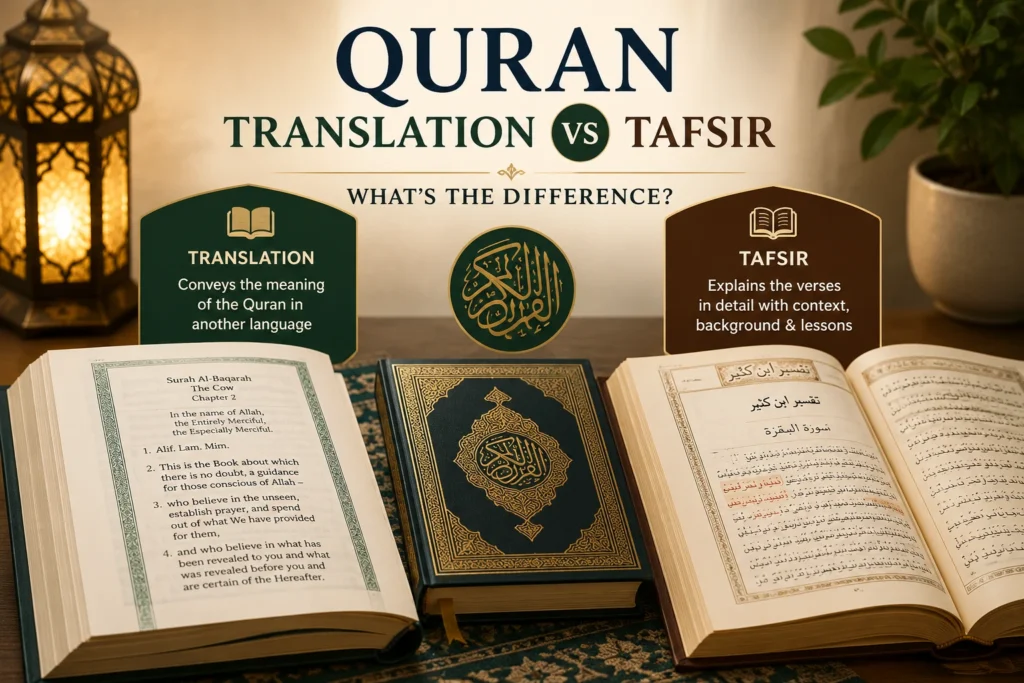
Quran Translation vs Tafsir
Understand the difference between reading a translation of the Quran and studying its detailed explanation through Tafsir. -
10 Foods Mentioned in the Quran and Their Benefits
Learn about the blessed foods mentioned in the Quran and explore their significance in Islamic tradition and everyday life.