Introduction
When comparing Raw Honey vs Processed Honey, you may notice labels such as Raw Honey, Pure Honey, Natural Honey, and Processed Honey. While these products may look similar on the shelf, they can differ in how they are handled before reaching your kitchen.
One of the most common questions people ask is:
Is raw honey better than processed honey?
The answer depends on what you are looking for. Some people prefer raw honey because it undergoes minimal processing, while others choose processed honey for its smooth appearance and longer shelf appeal.
In this complete guide, we’ll explain the differences between raw honey and processed honey, how each is produced, their characteristics, potential nutritional differences, and how to choose the best option for your family.
What Is Raw Honey?
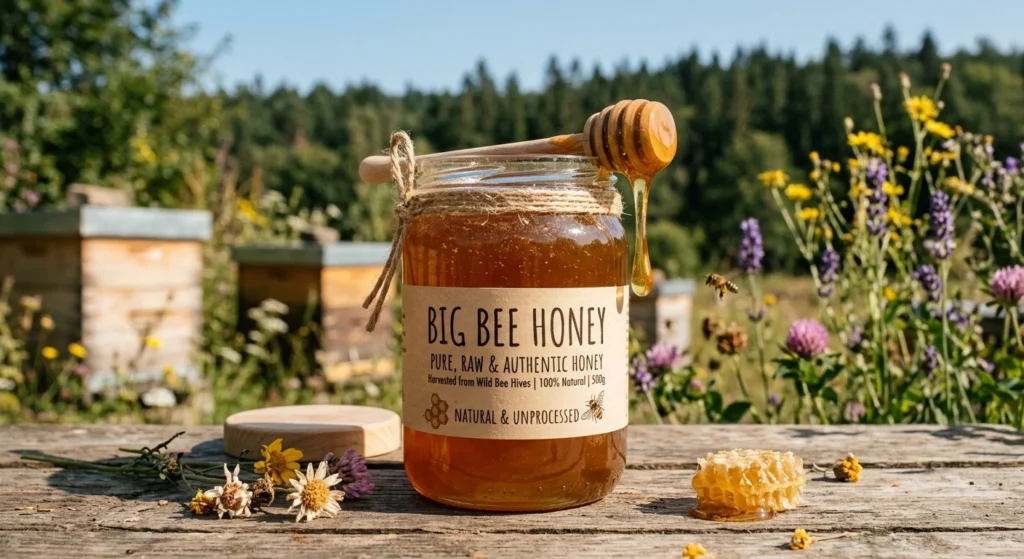
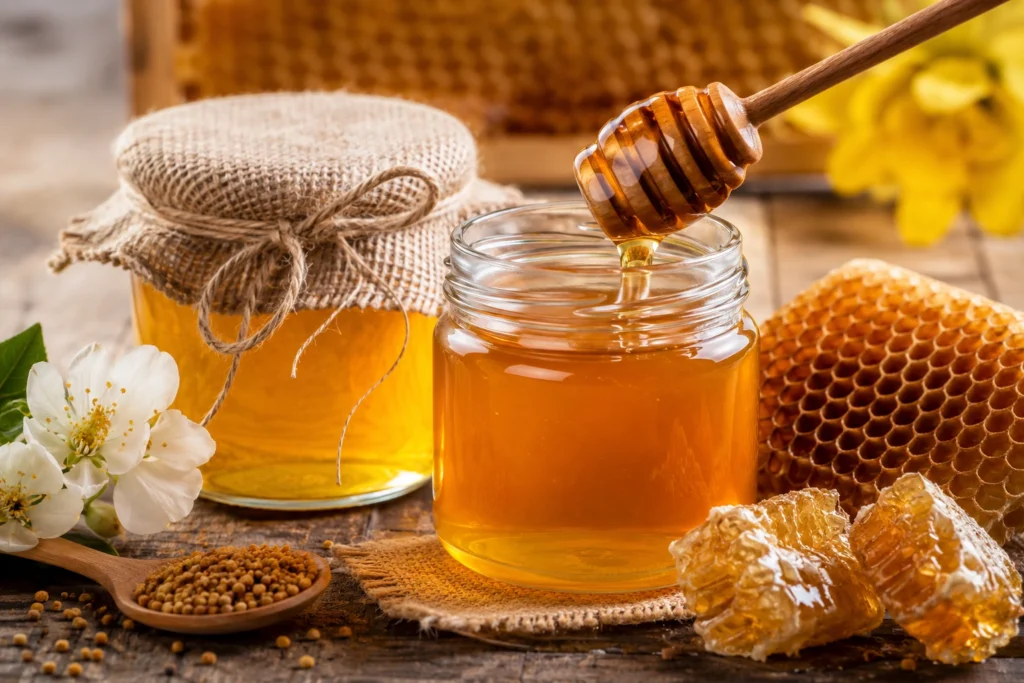
Raw honey is honey that is collected from the beehive and prepared with minimal processing.
After harvesting, beekeepers usually strain the honey to remove larger natural particles such as pieces of beeswax, while still preserving much of its natural composition.
Raw honey is generally not heavily heated or extensively filtered, allowing it to retain its natural appearance and characteristics.
Because of this minimal processing, raw honey may contain tiny amounts of:
- Natural pollen
- Bee propolis
- Beeswax particles
- Naturally occurring enzymes
- Antioxidants
These are normal components of authentic raw honey.
What Is Processed Honey?
Processed honey is honey that has undergone additional processing before packaging.
The exact processing methods vary between manufacturers, but commonly include:
- Heating
- Fine filtration
- Blending for consistency
These steps are often used to improve clarity, delay crystallization, and create a more uniform appearance.
Many processed honey products are still genuine honey. However, consumers should always read ingredient labels carefully, as some products sold in certain markets may contain added sweeteners or blends.
How Is Raw Honey Different from Processed Honey?
Although both originate from bees collecting nectar, the way they are handled after harvesting creates several differences.
1. Processing Method
Raw Honey
- Minimally processed
- Usually strained only
- Little or no heating
- Natural appearance
Processed Honey
- Heated
- More heavily filtered
- Uniform consistency
- Commercial packaging
2. Appearance
Raw honey often looks:
- Cloudy
- Slightly opaque
- Rich in natural color
- Less uniform
Processed honey usually appears:
- Crystal clear
- Smooth
- Bright golden
- Highly uniform
Neither appearance alone determines quality, but it reflects different processing methods.
3. Texture
Raw honey often has a thicker, richer texture.
Depending on the floral source, it may contain tiny natural particles that contribute to its authentic character.
Processed honey generally has a smoother consistency because of additional filtration.
4. Flavor
Many people notice that raw honey has a more complex flavor because it reflects the flowers visited by the bees.
Processed honey often has a milder, more consistent taste due to blending and processing.
Taste can also vary depending on:
- Floral source
- Region
- Season
- Bee species
5. Aroma
Raw honey usually has a stronger natural floral aroma.
Processed honey may have a lighter scent because heating and filtration can alter some naturally occurring aromatic compounds.
6. Nutritional Characteristics
Raw honey naturally contains:
- Antioxidants
- Naturally occurring enzymes
- Trace vitamins
- Trace minerals
- Plant compounds
Processed honey still provides natural sugars for energy, but additional processing may reduce some naturally occurring components.
The exact nutritional profile depends on the floral source, harvesting methods, and processing techniques.
7. Crystallization
One of the biggest differences is crystallization.
Raw Honey
Raw honey often crystallizes naturally over time.
This is completely normal and does not mean the honey has spoiled.
In many cases, crystallization is a sign that the honey has been minimally processed.
Processed Honey
Processed honey often remains liquid for longer because heating and filtration slow down crystallization.
However, it may still crystallize eventually.
Is Crystallized Honey Safe?
Yes.
Crystallized honey is generally safe to eat.
You can return it to a liquid state by placing the sealed jar in warm (not boiling) water.
Avoid excessive heat, as very high temperatures may affect some of honey’s naturally occurring properties.
Which Honey Is Better?
There is no single answer for everyone.
Choose Raw Honey If You Prefer:
- Minimal processing
- Natural appearance
- Rich flavor
- Traditional beekeeping products
- Naturally occurring pollen and enzymes
Choose Processed Honey If You Prefer:
- Clear appearance
- Smooth consistency
- Easy pouring
- Slower crystallization
- Uniform texture
The best choice depends on your personal preferences and intended use.
Common Myths About Raw Honey
Myth 1: Raw Honey Never Crystallizes
False.
Crystallization is a natural process and is common in many genuine raw honeys.
Myth 2: Clear Honey Is Always Better
False.
Color and clarity depend on floral sources and processing methods.
Cloudy honey is not necessarily lower quality.
Myth 3: Dark Honey Is Always Healthier
Not always.
Different floral sources naturally produce different colors.
Both light and dark honey varieties can be excellent choices.
Myth 4: Processed Honey Is Always Fake
False.
Many processed honey products are genuine honey that has simply been heated and filtered.
However, consumers should always read ingredient labels to ensure the product contains only honey and no added sweeteners.
How to Choose Quality Honey
When buying honey, look for:
- One ingredient: 100% Honey
- Clear producer information
- Proper packaging
- Trusted beekeepers or reputable brands
- Transparent sourcing information
Avoid products with added syrups, artificial flavors, or unnecessary additives if your goal is to purchase pure honey.
How to Store Honey
To maintain quality:
- Store at room temperature.
- Keep the lid tightly closed.
- Avoid direct sunlight.
- Keep away from moisture.
- Do not refrigerate unless necessary.
Proper storage helps preserve honey’s texture and flavor.
Explore More About Pure Honey
Continue exploring our collection of helpful honey guides to learn more about choosing, using, storing, and enjoying pure natural honey.
-
10 Signs You’re Buying Fake Honey
Learn how to identify common warning signs before purchasing honey. -
How to Test if Your Honey is 100% Pure and Raw at Home
Discover simple ways to better understand the characteristics of genuine honey. -
How to Use Honey Every Day: 15 Healthy Ideas
Learn about proper storage, shelf life, and crystallization. -
The Sunnah of Raw Honey: Healing and Health Benefits in Islamic Tradition
Explore the significance of honey in Islamic teachings and tradition.
🔬 Scientific & Regulatory Authorities on Honey Processing
US FDA (Proper Labeling of Honey)
RegulatoryOfficial regulatory guidance on pasteurization standards, ultra-filtration practices, and legal definitions of pure vs adulterated honey.
National Honey Board (Raw vs Commercial)
Industry BenchmarkDetailed breakdowns on how heat filtration affects pollen content, enzymatic activity, flavor nuances, and crystallization speeds.
Codex Alimentarius (FAO / WHO Honey Standard)
Global StandardThe global food standard establishing maximum moisture thresholds, HMF (hydroxymethylfurfural) levels after heating, and purity criteria.