The Quran and animals are discussed within a broad ethical framework for how human beings should treat one another and the living world around them. Its teachings emphasize justice, mercy, kindness, dignity, responsibility, compassion, and avoidance of ظلم (injustice and wrongdoing).
These principles are not limited to family relationships or interactions between Muslims. The Quran discusses the dignity of humanity, justice even toward people whom one dislikes, kindness toward peaceful people of other faiths, respectful speech, care for vulnerable members of society, and recognition that animals are also communities created by Allah.
At the same time, it is important to distinguish between what the Quran itself states and additional details found in the Hadith and Sunnah. The Quran establishes many foundational principles, while the Sunnah provides further practical examples—particularly concerning animal welfare and everyday conduct.
What Does the Quran Say About Human Dignity?
One of the clearest Quranic statements about humanity appears in Surah Al-Isra, 17:70.
Quran 17:70
Arabic:
وَلَقَدْ كَرَّمْنَا بَنِي آدَمَ وَحَمَلْنَاهُمْ فِي الْبَرِّ وَالْبَحْرِ وَرَزَقْنَاهُمْ مِنَ الطَّيِّبَاتِ وَفَضَّلْنَاهُمْ عَلَىٰ كَثِيرٍ مِّمَّنْ خَلَقْنَا تَفْضِيلًا
Meaning:
“We have certainly honored the children of Adam, carried them on land and sea, provided them with good things, and favored them over many of Our creations.”
The verse establishes an important Quranic concept: human beings possess dignity and honor as part of Allah’s creation.
This does not mean that every person is morally equal in every action or that wrongdoing is acceptable. Rather, it establishes a fundamental dignity that should influence how human beings treat one another.
Does Islam Teach Respect for People of Different Nations and Backgrounds?
Yes. The Quran directly addresses all mankind in Surah Al-Hujurat.
Quran 49:13
Arabic:
يَا أَيُّهَا النَّاسُ إِنَّا خَلَقْنَاكُم مِّن ذَكَرٍ وَأُنثَىٰ وَجَعَلْنَاكُمْ شُعُوبًا وَقَبَائِلَ لِتَعَارَفُوا ۚ إِنَّ أَكْرَمَكُمْ عِندَ اللَّهِ أَتْقَاكُمْ ۚ إِنَّ اللَّهَ عَلِيمٌ خَبِيرٌ
Meaning:
“O mankind, We created you from a male and a female and made you into peoples and tribes so that you may know one another. Surely the most honored of you in the sight of Allah is the one most conscious of Him. Allah is All-Knowing, All-Aware.”
This verse gives an important lesson about human diversity.
Different nations, tribes and communities exist, but diversity is presented as an opportunity to know one another, rather than a reason for arrogance, racism or hatred.
The Quran does not make nationality, ethnicity, wealth or social status the ultimate measure of a person’s worth before Allah. Instead, it emphasizes taqwa—consciousness of Allah and righteousness.
Justice Must Apply Even When We Dislike Someone
One of the strongest Quranic principles regarding human relationships appears in Surah Al-Ma’idah 5:8.
Quran 5:8
Arabic:
يَا أَيُّهَا الَّذِينَ آمَنُوا كُونُوا قَوَّامِينَ لِلَّهِ شُهَدَاءَ بِالْقِسْطِ ۖ وَلَا يَجْرِمَنَّكُمْ شَنَآنُ قَوْمٍ عَلَىٰ أَلَّا تَعْدِلُوا ۚ اعْدِلُوا هُوَ أَقْرَبُ لِلتَّقْوَىٰ ۖ وَاتَّقُوا اللَّهَ ۚ إِنَّ اللَّهَ خَبِيرٌ بِمَا تَعْمَلُونَ
Meaning:
“O believers, stand firmly for Allah and bear witness with justice. Do not let the hatred of a people cause you to abandon justice. Be just; that is closer to righteousness. And be mindful of Allah. Surely Allah is aware of what you do.”
This is an extremely important principle.
The Quran does not say that justice should only be shown toward people we love.
It specifically warns that hatred must not become a reason for injustice.
That means a Muslim’s ethical behavior should not be based simply on:
- race,
- nationality,
- wealth,
- social status,
- personal friendship,
- political differences,
- or religious disagreement.
Justice remains a moral responsibility.
How Should Muslims Treat People of Other Religions?
This is another area where the Quran provides important guidance.
A particularly relevant verse is Surah Al-Mumtahanah 60:8.
Quran 60:8
Arabic:
لَا يَنْهَاكُمُ اللَّهُ عَنِ الَّذِينَ لَمْ يُقَاتِلُوكُمْ فِي الدِّينِ وَلَمْ يُخْرِجُوكُم مِّن دِيَارِكُمْ أَن تَبَرُّوهُمْ وَتُقْسِطُوا إِلَيْهِمْ ۚ إِنَّ اللَّهَ يُحِبُّ الْمُقْسِطِينَ
Meaning:
“Allah does not forbid you from being kind and just toward those who have not fought you because of religion and have not driven you from your homes. Indeed, Allah loves those who act justly.”
This verse is especially important when discussing how Islam teaches Muslims to interact with peaceful people of other religions.
The Quran explicitly mentions:
Birr — goodness/kindness
Qist — justice/fairness
Therefore, religious difference by itself should not be interpreted as permission to behave unjustly toward peaceful people.
What About People Who Actively Persecute or Fight?
The Quran also recognizes that situations involving persecution, expulsion and conflict are different.
The following verse immediately provides important context:
Quran 60:9
Meaning:
“Allah only forbids you regarding those who fought you because of religion, expelled you from your homes, or supported others in doing so.”
This shows why Quranic verses should be read in context.
The Quran distinguishes between:
peaceful people who are not fighting Muslims
and
people actively engaged in persecution, fighting or expulsion.
Therefore, it would be inaccurate to take verses about conflict and use them as a general command for mistreating every non-Muslim person.
Does the Quran Allow Forced Conversion?
The Quran states:
Quran 2:256
Arabic:
لَا إِكْرَاهَ فِي الدِّينِ ۖ قَد تَّبَيَّنَ الرُّشْدُ مِنَ الْغَيِّ
Meaning:
“There is no compulsion in religion; truth has become distinct from falsehood.”
This verse establishes a major principle concerning religious belief.
Faith is not supposed to be established through simply forcing someone to believe.
The Quran’s approach includes invitation, evidence, reflection and guidance, rather than treating belief as something that can be produced through coercion.
How Should Muslims Speak to Others?
Respectful behavior is not limited to physical actions. The Quran also teaches Muslims to control their speech.
Quran 49:11
The Quran warns believers against:
- mocking other people,
- insulting others,
- finding faults in people,
- and using offensive nicknames.
The verse reminds believers that the people they ridicule may actually be better than themselves in the sight of Allah.
This principle is highly relevant today because disrespect does not only happen face-to-face.
It can happen through:
- social media,
- comments,
- videos,
- religious debates,
- political arguments,
- online discussions,
- and public conversations.
The Quranic principle remains the same: do not turn disagreement into humiliation or abuse.
The Quran Commands Goodness Toward Parents, Neighbors and Vulnerable People
Another comprehensive verse is Surah An-Nisa 4:36.
Quran 4:36
Arabic:
وَاعْبُدُوا اللَّهَ وَلَا تُشْرِكُوا بِهِ شَيْئًا ۖ وَبِالْوَالِدَيْنِ إِحْسَانًا وَبِذِي الْقُرْبَىٰ وَالْيَتَامَىٰ وَالْمَسَاكِينِ وَالْجَارِ ذِي الْقُرْبَىٰ وَالْجَارِ الْجُنُبِ وَالصَّاحِبِ بِالْجَنبِ وَابْنِ السَّبِيلِ
Meaning:
“Worship Allah and associate nothing with Him, and show goodness to parents, relatives, orphans, the needy, near and distant neighbors, close companions and travelers…”
Notice how many categories are mentioned.
The verse includes:
Parents
Relatives
Orphans
Poor people
Near neighbors
Distant neighbors
Companions
Travelers
This demonstrates that Islamic ethics are not restricted to one’s immediate family.
A believer is expected to develop a broader sense of social responsibility.
How Should Parents Be Treated?
The Quran gives parents a particularly high position.
Quran 17:23
Arabic:
وَقَضَىٰ رَبُّكَ أَلَّا تَعْبُدُوا إِلَّا إِيَّاهُ وَبِالْوَالِدَيْنِ إِحْسَانًا ۚ إِمَّا يَبْلُغَنَّ عِندَكَ الْكِبَرَ أَحَدُهُمَا أَوْ كِلَاهُمَا فَلَا تَقُل لَّهُمَا أُفٍّ وَلَا تَنْهَرْهُمَا وَقُل لَّهُمَا قَوْلًا كَرِيمًا
Meaning:
“Your Lord has commanded that you worship none but Him and show excellence to your parents. If one or both of them reach old age with you, do not even say ‘uff’ to them, do not scold them, and speak to them with noble words.”
This is a beautiful example of how the Quran connects worship of Allah with ethical treatment of people.
Respect is not only about major acts.
Even speech matters.
The Quran’s General Principle: Justice and Good Conduct
One of the most comprehensive ethical verses in the Quran is Surah An-Nahl 16:90.
Quran 16:90
Arabic:
إِنَّ اللَّهَ يَأْمُرُ بِالْعَدْلِ وَالْإِحْسَانِ وَإِيتَاءِ ذِي الْقُرْبَىٰ وَيَنْهَىٰ عَنِ الْفَحْشَاءِ وَالْمُنكَرِ وَالْبَغْيِ ۚ يَعِظُكُمْ لَعَلَّكُمْ تَذَكَّرُونَ
Meaning:
“Indeed, Allah commands justice, excellence and generosity toward relatives, and He forbids immorality, wrongdoing and oppression. He instructs you so that you may remember.”
Three major concepts stand out:
Justice — عدل
Give people what is right and do not oppress them.
Ihsan — إحسان
Go beyond the minimum and do good.
Avoidance of oppression — بغي
Do not cross the limits and wrong others.
These principles can apply to family life, business, neighbors, society, animals and the environment.
What Does the Quran Say About Animals?
The Quran’s discussion of animals is fascinating.
Animals are not presented merely as objects.
Allah says in Surah Al-An’am 6:38:
Quran 6:38
Arabic:
وَمَا مِن دَابَّةٍ فِي الْأَرْضِ وَلَا طَائِرٍ يَطِيرُ بِجَنَاحَيْهِ إِلَّا أُمَمٌ أَمْثَالُكُم ۚ مَّا فَرَّطْنَا فِي الْكِتَابِ مِن شَيْءٍ ۚ ثُمَّ إِلَىٰ رَبِّهِمْ يُحْشَرُونَ
Meaning:
“There is no creature on earth nor bird flying with its wings except that they are communities like you. Then they will be gathered to their Lord.”
This is one of the most important Quranic verses for understanding the place of animals in Islam.
The Quran describes animals and birds as umam — communities.
This language reminds human beings that animals are also living creatures with their own existence, patterns and communities.
Animals Are Part of Allah’s Creation
The Quran repeatedly asks human beings to observe creation.
For example, Allah says:
“There is no creature on earth except that its provision is upon Allah.”
— Quran 11:6
This does not mean that humans are required to provide food for every wild animal individually.
Rather, the verse reminds us that Allah is the ultimate provider and sustainer of every living creature.
Every creature exists within Allah’s knowledge and provision.
The Quran Mentions Animals as Signs of Allah
Animals appear throughout the Quran as signs through which human beings can reflect upon Allah’s creation.
Among the animals mentioned are:
- bees,
- ants,
- birds,
- cattle,
- camels,
- horses,
- sheep,
- goats,
- cows,
- elephants,
- dogs,
- fish,
- spiders,
- mosquitoes,
- flies,
- and other creatures.
Their mention is not random.
The Quran frequently uses creation to encourage people to observe, think and recognize Allah’s power and wisdom.
The Story of the Ants in the Quran
One of the most memorable examples is found in Surah An-Naml.
Quran 27:18
Arabic:
حَتَّىٰ إِذَا أَتَوْا عَلَىٰ وَادِ النَّمْلِ قَالَتْ نَمْلَةٌ يَا أَيُّهَا النَّمْلُ ادْخُلُوا مَسَاكِنَكُمْ لَا يَحْطِمَنَّكُمْ سُلَيْمَانُ وَجُنُودُهُ وَهُمْ لَا يَشْعُرُونَ
Meaning:
“When they reached the valley of the ants, an ant said: ‘O ants, enter your homes so that Solomon and his armies do not crush you without realizing it.’”
The following verse describes Prophet Sulayman (peace be upon him) smiling at the ant’s statement.
This story is important because it presents a small creature as part of a meaningful community and shows the extraordinary awareness Allah gave Sulayman.
It also teaches human beings something about care, awareness and avoiding unnecessary harm.
Birds Also Have Their Own Relationship With Allah
The Quran says:
Quran 24:41
Meaning:
“Do you not see that whoever is in the heavens and the earth glorifies Allah, and the birds with wings spread out? Each knows its prayer and its glorification, and Allah knows what they do.”
This verse presents birds as creatures participating in the worship and glorification of Allah in a manner known to Him.
That creates a powerful spiritual perspective:
Animals are not meaningless parts of creation. They belong to Allah and exist within His order.
Bees Have a Special Mention in the Quran
For a website such as ZKKS HONEY, this section can be particularly valuable.
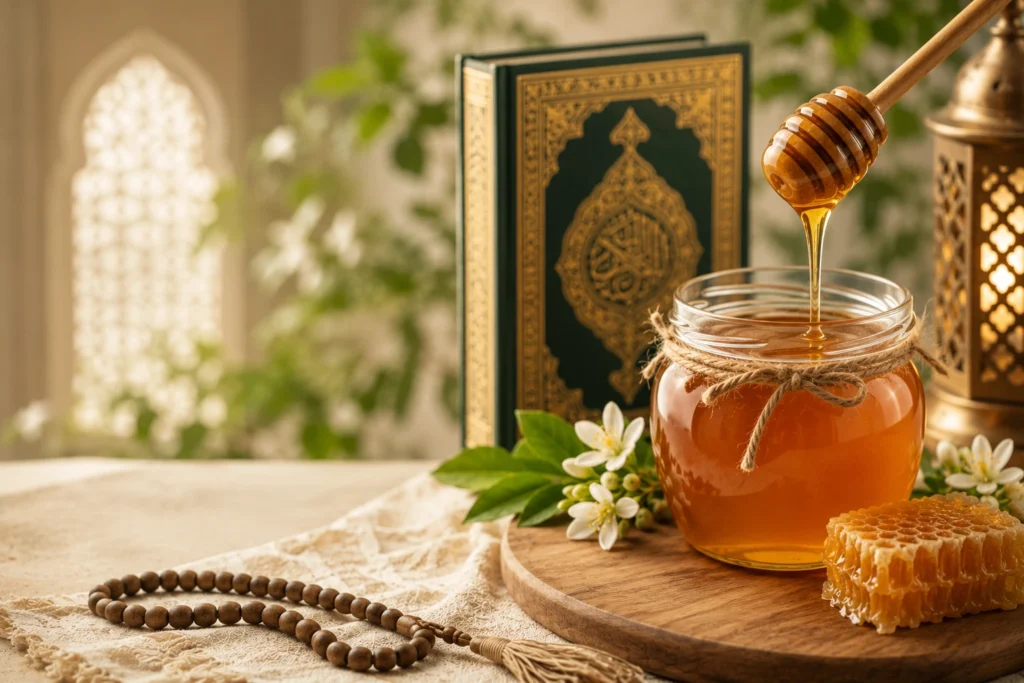
Allah dedicates a passage in Surah An-Nahl — The Bee to bees.
Quran 16:68
Meaning:
“Your Lord inspired the bee: ‘Make your homes in the mountains, in the trees and in what people build.’”
Then Allah says:
Quran 16:69
Meaning:
“Then eat from the fruits and follow the ways made easy for you by your Lord. From their bellies comes a drink of different colors in which there is healing for people. Surely in this is a sign for people who reflect.”
The Quran therefore draws attention to:
the bee’s homes,
its movement and behavior,
the production of honey,
the different colors of honey,
and benefit associated with honey.
This is one reason bees and honey have such a special place in Islamic discussions about creation and food.
Does the Quran Say Animals Are Only for Humans?
The Quran certainly describes many benefits humans receive from animals.
For example, Surah An-Nahl 16:5 says that Allah created livestock and that people derive warmth, benefits and food from them.
But this should not be understood as a license for cruelty or unnecessary suffering.
The Quran’s overall framework is one of responsible use.
Humans may benefit from creation, but they are also accountable for how they use Allah’s blessings.
Animals Provide Food and Other Benefits
Allah says:
Quran 16:5
Meaning:
“And He created livestock for you; in them there is warmth and many benefits, and from them you eat.”
This establishes that animals can legitimately provide:
- food,
- clothing/material benefits,
- transportation,
- and other useful benefits.
But Islamic ethics also teaches gratitude and responsibility.
The question is not simply:
“Can humans benefit from animals?”
The Quranic framework is also:
“How should humans use Allah’s blessings responsibly?”
The Quran Connects Animal Use With Gratitude
In Surah Al-Hajj 22:36, Allah discusses sacrificial animals.
Quran 22:36
Meaning:
“The sacrificial animals are among the symbols of Allah for you; in them there is good for you. Mention Allah’s name over them, then eat from them and feed the needy and the poor. Thus We have subjected them to you so that you may be grateful.”
There are several lessons here.
1. Allah’s name is mentioned
The animal is not treated as something independent of Allah’s authority.
2. Humans may eat
The Quran permits benefit from lawful animals.
3. The needy should receive food
Animal consumption is connected with social responsibility.
4. Gratitude is emphasized
The final purpose mentioned is gratitude.
This is a very important Islamic concept:
benefit should produce gratitude, not arrogance.
Islam Does Not Teach Wastefulness
The Quran also establishes a principle of avoiding waste.
Quran 6:141
Meaning:
“Eat from its fruit when it produces, give its due on the day of harvest, and do not waste. Surely He does not love those who waste.”
Although this verse is directly discussing agricultural produce, its principle of avoiding waste has broader relevance to responsible consumption.
This can apply to:
- food,
- water,
- agricultural resources,
- animal products,
- and other blessings.
If a person consumes more than necessary and wastes what remains, that behavior conflicts with the Quranic warning against extravagance and wastefulness.
Mercy Toward Animals: What Does the Hadith Add?
Here it is important to make a distinction.
The Quran establishes broad principles about:
- animals as communities,
- animals as Allah’s creation,
- provision,
- responsible use,
- gratitude,
- and avoidance of wrongdoing.
However, many specific stories about kindness and cruelty toward animals are found in authentic Hadith, rather than being direct Quranic verses.
For example, Islamic tradition includes well-known teachings about:
- giving animals food and water,
- avoiding unnecessary suffering,
- not using animals as targets,
- and treating animals with mercy.
Therefore, a complete Islamic discussion should use both Quran and authentic Sunnah, while clearly identifying which teaching comes from which source.
The Prophet Muhammad ﷺ and Mercy Toward Animals
The Prophet Muhammad ﷺ taught Muslims to show mercy toward living creatures.
One well-known authentic Hadith describes a person who gave water to a thirsty dog, and the Prophet ﷺ explained that Allah rewarded this act of kindness.
Another authentic narration describes a woman being punished because she confined a cat and did not properly feed it or allow it to find food.
These narrations are important because they demonstrate that animal welfare is not merely a modern environmental concept; mercy toward animals is part of Islamic moral teaching.
For a detailed article, these Hadith should ideally be cited from reliable collections such as Sahih al-Bukhari and Sahih Muslim, with the relevant Hadith numbers.
Is Killing Animals Always Forbidden in Islam?
No.
This is an important point of balance.
Islam permits humans to benefit from certain animals for legitimate purposes, including food.
Therefore, the Quran does not teach that every form of killing an animal is prohibited.
Rather, Islamic ethics distinguishes between:
lawful use
and
unnecessary cruelty or wrongdoing.
A Muslim may eat lawful meat when the Islamic conditions are fulfilled, but that does not mean an animal should be tortured, abused or killed merely for entertainment.
What About Hunting?
The Quran permits hunting under specific circumstances and provides rules concerning lawful hunting.
For example, Surah Al-Ma’idah 5:4 discusses lawful game and trained hunting animals.
This further demonstrates that Islam does not consider every killing of an animal inherently forbidden.
Instead, there are rules, boundaries and responsibilities.
Animals Are Not Human Beings, But They Are Still Allah’s Creation
A balanced Islamic understanding is important here.
Islam does not say that animals and humans have exactly identical roles or rights.
The Quran gives human beings a special position and responsibility.
At the same time, animals are not worthless objects.
They are:
Allah’s creation.
Communities.
Signs of His power.
Recipients of His provision.
Useful to humans in lawful ways.
Therefore, the correct Islamic attitude is neither:
“Animals have no value.”
nor:
“Animals and humans have exactly the same status.”
Instead, the Quran presents a relationship of benefit, responsibility and accountability.
Human Responsibility Toward the Environment
The Quran also teaches human beings not to spread فساد—corruption or destructive disorder—on Earth.
Quran 7:56
The Quran instructs believers not to cause corruption on Earth after it has been set right.
This principle is relevant to environmental responsibility because human actions can affect:
- animals,
- plants,
- water,
- agriculture,
- forests,
- and ecosystems.
Islamic environmental ethics can therefore be understood through the broader Quranic principles of responsibility, moderation and avoiding فساد.
Humans Have Been Given Responsibility
The Quran describes humanity as having a special position on Earth, but this position should not be interpreted as unlimited permission to destroy.
A person who has authority also has responsibility.
If Allah gives human beings:
- intelligence,
- resources,
- animals,
- agriculture,
- water,
- land,
then those blessings also create a responsibility to use them wisely.
This is particularly relevant today when discussing:
deforestation,
pollution,
animal cruelty,
water waste,
food waste,
and destruction of habitats.
What Does Islam Say About Kindness in Everyday Life?
The Quranic approach can be translated into everyday behavior.
A Muslim should try to:
With parents
Speak respectfully and avoid harshness.
With neighbors
Show kindness and avoid harm, whether the neighbor is close or distant.
With poor people
Help rather than humiliate them.
With people of different backgrounds
Do not use race, tribe or nationality as a reason for arrogance.
With peaceful people of other religions
Deal with them with kindness and justice.
With people we dislike
Do not allow hatred to make us unjust.
With animals
Recognize them as Allah’s creation and communities, use them lawfully and avoid unnecessary harm.
Does Respect Mean Agreeing With Everyone?
No.
This distinction is very important.
Islam can teach Muslims to maintain justice, kindness and respectful conduct without requiring them to agree with every belief, practice or opinion.
A person can disagree with someone while still:
- speaking respectfully,
- avoiding insults,
- being fair,
- keeping promises,
- respecting rights,
- and avoiding oppression.
The Quran itself instructs Muslims to engage in discussion with the People of Scripture in the best manner, while making an exception for those who commit wrongdoing.
Therefore:
Respectful disagreement is possible.
The Quran’s Ethical Message Is Broader Than Religion Alone
One of the most beautiful aspects of these teachings is that the Quran connects religious faith with practical morality.
Faith is not presented as simply:
prayer + fasting + religious identity.
It also affects how a person:
- treats parents,
- treats neighbors,
- speaks to people,
- handles disagreements,
- treats the poor,
- uses wealth,
- treats animals,
- consumes food,
- and manages the blessings of the Earth.
This creates an integrated Islamic worldview in which worship and character are deeply connected.
A Simple Quranic Framework for Treating Humans and Animals
We can summarize the principles like this:
| Principle | Quranic Teaching |
|---|---|
| Human dignity | Allah honored the children of Adam — 17:70 |
| Human diversity | Nations and tribes should know one another — 49:13 |
| Justice | Do not abandon justice because of hatred — 5:8 |
| Kindness | Allah commands justice and ihsan — 16:90 |
| Religious coexistence | Be kind and just toward peaceful non-Muslims — 60:8 |
| Respectful speech | Do not mock or insult others — 49:11 |
| Parents | Speak to them respectfully — 17:23 |
| Neighbors & needy | Show goodness to them — 4:36 |
| Animals | They are communities like you — 6:38 |
| Birds | They glorify Allah — 24:41 |
| Ants | Their community and homes are mentioned — 27:18 |
| Bees | Allah describes their homes and honey — 16:68–69 |
| Livestock | They provide food and other benefits — 16:5 |
| Sacrificial animals | Eat from them and feed the needy — 22:36 |
| Avoid waste | Do not waste — 6:141 |
What Is the Main Lesson?
When all these verses are considered together, a clear picture emerges.
The Quran teaches that human beings should not build their relationships around arrogance, hatred, cruelty and injustice.
Instead, they should strive for:
Justice
Mercy
Kindness
Respect
Dignity
Responsibility
Moderation
Gratitude
and avoidance of oppression.
The same moral framework also changes how Muslims look at animals.
An animal is not simply a product.
It is a creature of Allah.
The Quran calls animals communities, mentions their worship and glorification, describes their provision, and explains the benefits humans receive from them.
Humans may benefit from animals in lawful ways, including food and other benefits, but this benefit comes with responsibility and gratitude, not permission for unnecessary cruelty.
Conclusion: How Should We Treat Humans and Animals According to the Quran?
The Quran presents a powerful moral vision in which justice and mercy are central to human behavior.
A Muslim is taught to respect human dignity, care for parents and neighbors, help vulnerable people, avoid insulting others, and remain just even toward people whom they dislike.
The Quran also provides guidance concerning people of other religions. Peaceful people who have not fought or expelled Muslims are not to be treated unjustly; rather, the Quran permits and encourages kindness and justice toward them.
Animals, meanwhile, are described as communities like human beings. Birds glorify Allah, ants have their communities and homes, bees receive divine inspiration concerning their behavior, and livestock provide humans with food and other benefits.
The Quran therefore teaches a relationship with creation based on responsible use rather than careless exploitation.
The ultimate lesson is simple:
A person’s faith should be visible in the way they treat Allah’s creation—with justice, mercy, gratitude and responsibility.
And for your website, I would strongly recommend adding a small “Quran References” section at the end with links to the individual verses, rather than presenting the article as if every practical animal-welfare rule comes directly from the Quran. The Quran establishes the foundational principles, while the Hadith and Sunnah provide additional practical details about mercy toward animals. This distinction will make the article much more accurate and trustworthy.
Explore More About the Quran
Continue your journey of learning by exploring our helpful articles about the Holy Quran, its meanings, understanding, and guidance for everyday life.
-
The Quran: A Light for Every Heart
Discover why the Holy Quran is a timeless source of guidance, hope, and spiritual peace for every believer. -
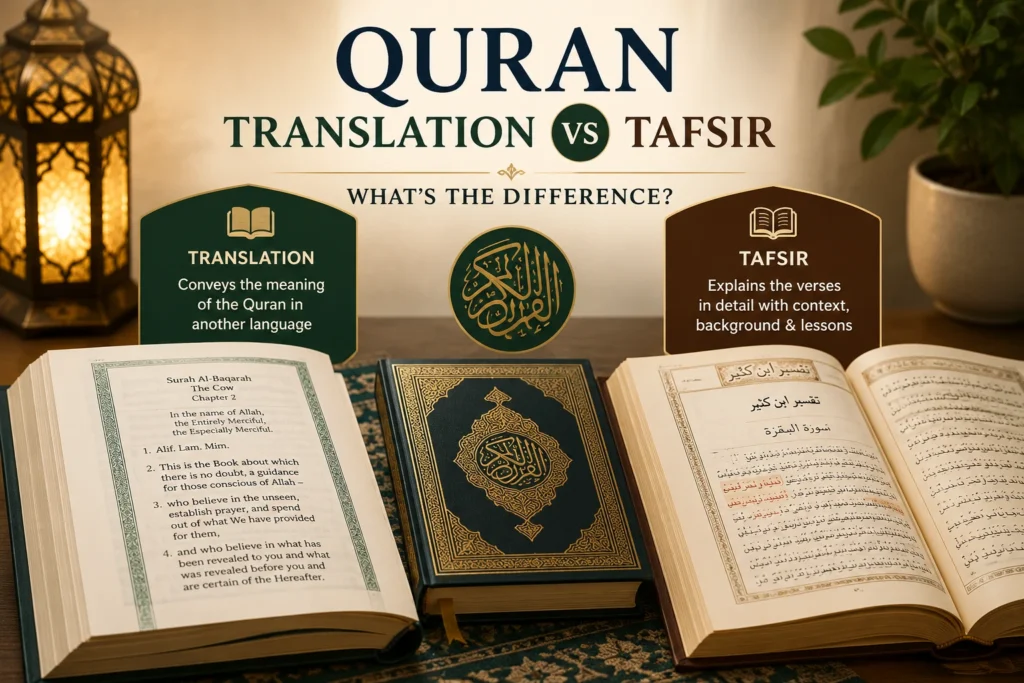
Quran Translation vs Tafsir
Understand the difference between reading a translation of the Quran and studying its detailed explanation through Tafsir. -
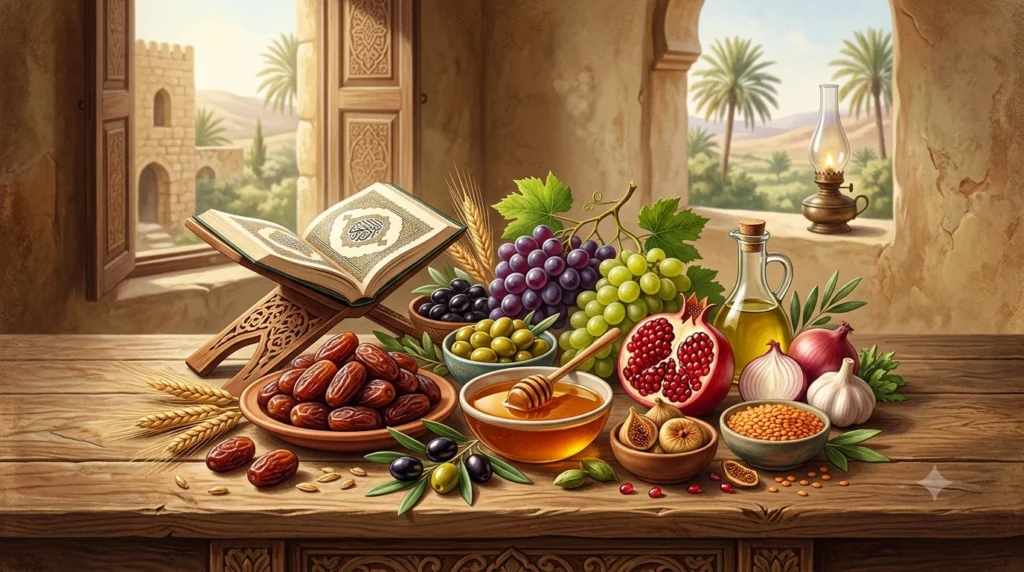
10 Foods Mentioned in the Quran and Their Benefits
Learn about the blessed foods mentioned in the Quran and explore their significance in Islamic tradition and everyday life.