Introduction
The Holy Quran is much more than a book of guidance for worship—it also encourages believers to reflect upon the countless blessings that Allah (SWT) has created for humanity. Among these blessings are foods mentioned in the Quran, which are not only part of everyday nourishment but also serve as signs of Allah’s wisdom, mercy, and provision.
Many of these foods have been enjoyed for thousands of years and continue to play an important role in healthy diets around the world. Some are directly mentioned by name in the Quran, while others are highlighted as blessings that sustain human life and remind us to be grateful to our Creator.
Although the Quran is not a medical or nutrition textbook, modern nutritional research has shown that many of these foods contain valuable vitamins, minerals, antioxidants, healthy fats, and other nutrients that support overall well-being. For Muslims, these foods also carry spiritual significance because they are mentioned in the Book of Allah.
In this guide, we’ll explore 10 foods mentioned in the Quran, learn where they are referenced, understand their importance in Islamic tradition, and discover the nutritional benefits they offer as part of a balanced lifestyle.
1. Honey (العسل)
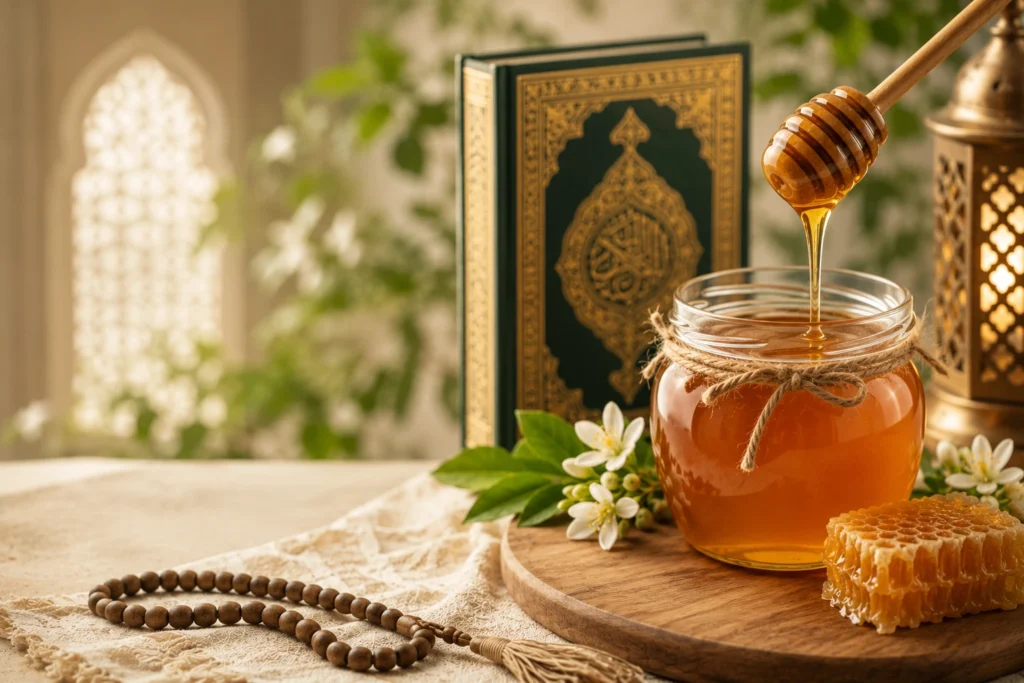
Honey is one of the most well-known natural foods mentioned in the Quran.
Allah (SWT) describes how bees produce honey of different colors and mentions that it contains healing for people.
Honey has been valued for centuries as a natural sweetener and is also appreciated in Islamic tradition due to its mention in the Quran and authentic Hadith.
Nutritional Benefits
Honey naturally contains:
- Antioxidants
- Natural sugars for energy
- Small amounts of vitamins and minerals
- Beneficial plant compounds
Many people enjoy honey as a healthier alternative to refined sugar when consumed in moderation.
Common Uses
- Mixed with warm water
- Added to herbal tea
- Spread on bread
- Used in desserts
- Natural sweetener
2. Dates (التمر)
Dates are among the most beloved foods in Islamic tradition.
The Quran mentions the date palm numerous times as one of Allah’s blessings.
Dates were also a favorite food of Prophet Muhammad (ﷺ), who often broke his fast with fresh or dried dates.
Nutritional Benefits
Dates provide:
- Natural energy
- Dietary fiber
- Potassium
- Magnesium
- Antioxidants
They are an excellent snack and are especially popular during Ramadan.
3. Olives (الزيتون)
The olive tree is described in the Quran as a blessed tree.
Olives and olive oil have been valued for thousands of years throughout the Mediterranean region.
Nutritional Benefits
Olives contain:
- Healthy monounsaturated fats
- Vitamin E
- Polyphenols
- Antioxidants
Extra virgin olive oil is widely recognized as an important component of a heart-healthy diet.
4. Grapes (العنب)
Grapes are mentioned multiple times in the Quran among the beautiful gardens and fruits that Allah provides.
They are enjoyed fresh, dried as raisins, or pressed into juice.
Nutritional Benefits
Grapes contain:
- Vitamin C
- Vitamin K
- Antioxidants
- Water
- Fiber
Their natural sweetness makes them a refreshing fruit for all ages.
5. Figs (التين)
Allah (SWT) even swears by the fig in Surah At-Tin, highlighting its significance.
Figs have been cultivated since ancient times and remain one of the world’s oldest fruits.
Nutritional Benefits
Figs are rich in:
- Fiber
- Calcium
- Potassium
- Iron
- Antioxidants
They can be eaten fresh or dried.
6. Pomegranates (الرمان)
The Quran mentions pomegranates among the beautiful fruits found in gardens.
Their unique appearance and refreshing taste have made them popular for centuries.
Nutritional Benefits
Pomegranates provide:
- Vitamin C
- Vitamin K
- Fiber
- Powerful antioxidants
Many people enjoy fresh pomegranate seeds or natural juice.
7. Bananas (طلح)
Many scholars understand the reference to “Talh” in Surah Al-Waqi’ah as referring to banana trees, although there are scholarly discussions regarding its exact interpretation.
Bananas are one of the world’s most popular fruits.
Nutritional Benefits
Bananas contain:
- Potassium
- Vitamin B6
- Vitamin C
- Natural carbohydrates
- Fiber
They are an excellent source of quick energy.
8. Garlic (الثوم)
Garlic is mentioned in the story of the Children of Israel in Surah Al-Baqarah.
It has been used for both cooking and traditional purposes for thousands of years.
Nutritional Benefits
Garlic contains:
- Vitamin C
- Vitamin B6
- Manganese
- Sulfur compounds
It adds flavor to many healthy meals.
9. Lentils (العدس)
Lentils are also mentioned in Surah Al-Baqarah.
They remain one of the most nutritious plant-based foods.
Nutritional Benefits
Lentils are rich in:
- Plant protein
- Fiber
- Iron
- Folate
- Magnesium
They are an excellent choice for balanced meals.
10. Cucumbers (القثاء)
Cucumbers are mentioned together with other foods requested by the Children of Israel.
Today they are enjoyed worldwide because of their refreshing taste.
Nutritional Benefits
Cucumbers provide:
- Water
- Vitamin K
- Vitamin C
- Potassium
Their high water content makes them ideal for hydration.
Why These Foods Matter
The Quran reminds believers to appreciate Allah’s countless blessings.
These foods teach us gratitude, moderation, and reflection upon creation.
Many of them continue to be enjoyed today as part of healthy eating patterns around the world.
Important Reminder
Although many Quranic foods are nutritious, the Quran should not be viewed as a medical textbook.
No single food can prevent or cure every disease.
A balanced diet, regular physical activity, healthy habits, and appropriate medical care remain essential for overall well-being.
The greatest benefit of these foods is that they remind us of Allah’s blessings while encouraging gratitude and moderation.
Conclusion
The Holy Quran beautifully highlights many natural foods that continue to nourish people across the world. Honey, dates, olives, grapes, figs, pomegranates, bananas, garlic, lentils, and cucumbers all demonstrate Allah’s wisdom in creating wholesome provisions for humanity.
By enjoying these foods responsibly as part of a balanced lifestyle, we not only benefit from their nutritional value but are also reminded of the countless blessings that surround us every day.
Whether you enjoy a spoonful of pure honey, break your fast with dates, drizzle olive oil over a meal, or share fresh fruit with family, each bite can become an opportunity to reflect upon Allah’s generosity and give thanks for His provisions.
Explore More About the Quran
Continue your journey of learning by exploring our helpful articles about the Holy Quran, its meanings, understanding, and guidance for everyday life.
-
The Quran: A Light for Every Heart
Discover why the Holy Quran is a timeless source of guidance, hope, and spiritual peace for every believer. -
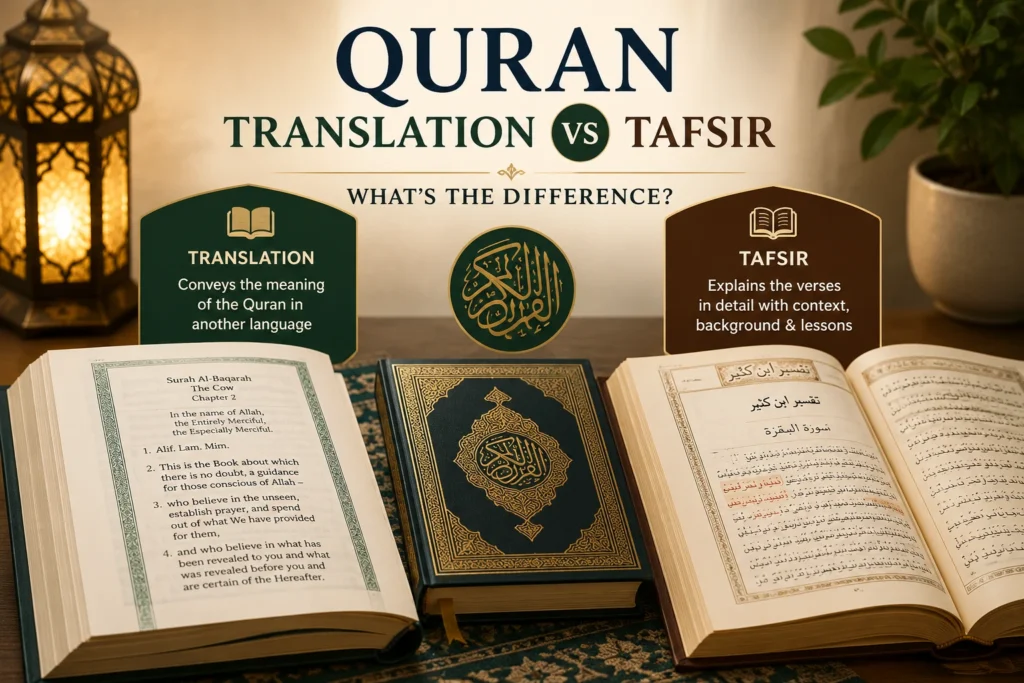
Quran Translation vs Tafsir
Understand the difference between reading a translation of the Quran and studying its detailed explanation through Tafsir.
🌴 Islamic Text & Nutritional Authority References
Quran.com (Surah An-Nahl & Verse Index)
ScriptureDirect Quranic verses detailing natural foods such as honey (Surah An-Nahl 68-69), olives, dates, pomegranates, and figs.
Sunnah.com (Hadith Collections)
Prophetic TraditionsAuthentic prophetic references regarding the medicinal benefits and dietary recommendations of dates, honey, and olive oil.
USDA FoodData Central (Nutritional Profiles)
Nutritional DataComprehensive micronutrient, fiber, and antioxidant breakdowns for dates, figs, olive oil, black seed, and raw honey.